
目次
- 渋谷家文書・有珠会所関係資料
- 木戸孝允の書と江戸~大正期の書画資料
- 伊達市上長和町・過去帳と弘前藩につながる家系資料
- 伊達市末永町・開拓当時の室蘭を伝える過去帳
- 長家関係資料「後生のために」
- 『コタンの痕跡――アイヌ人権史の一断面』
- ビルマ派遣・第121兵站病院関係資料
- 角田石川氏・分家家系図
- 2026年 9月
- これまでに確認・救出してきた資料
- 故人が生きた証を、未来へ
- Historical Materials & Records Rescue Achievements
- The Shibuya Family Documents and Records Related to the Usu Trading Post
- A Calligraphic Work by Kido Takayoshi and Other Edo-to-Modern Period Artworks
- A Buddhist Death Register Revealing Family Connections to the Hirosaki Domain
- A Record of Life in Muroran During the Early Development of Hokkaido
- Family Records Preserved for Future Generations
- Traces of Kotan: A Cross-Section of Ainu Human Rights History
- Wartime Records Related to the Burma Campaign and the 121st Field Supply Hospital
- A Family Genealogy Connecting the Ishikawa Family to the Date Clan
- September 2026
- Several Hundred Historical and Personal Records
- Preserving the Evidence of Lives Lived
――廃棄から救った資料群は数百点。遺品整理の現場から、失われるはずだった記憶を未来へ
LRAでは、遺品整理・生前整理の現場で処分される可能性のある歴史資料・記録資料を確認した場合、必要に応じて一時的に保全し、調査・専門家への照会・関係機関や当事者への連絡を行っています。
故人や先人が残した文書、過去帳、家系図、書画、写真、戦争関係資料など、歴史や人生を伝える記録に出会ってきました。
これまでに確認・救出・保全につながった資料・記録類は、諸々の記憶資料を含め数百点に及びます。
ここでは、その中から主な事例を年代順に記録します。
2023年11月
渋谷家文書・有珠会所関係資料
北海道伊達市
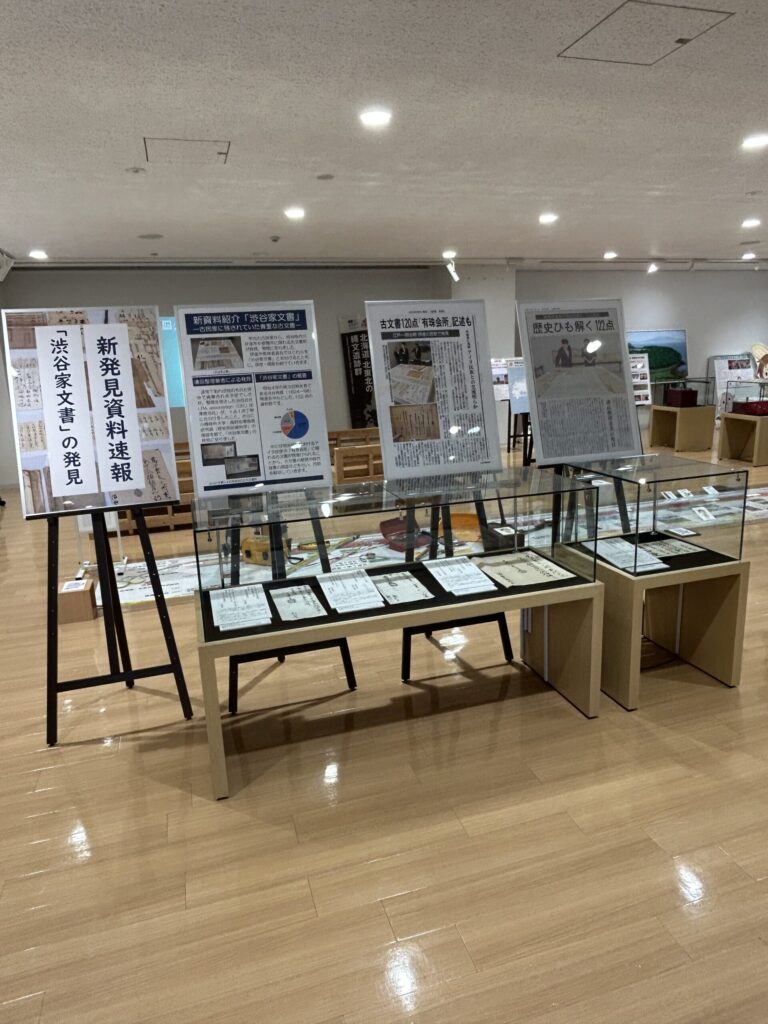
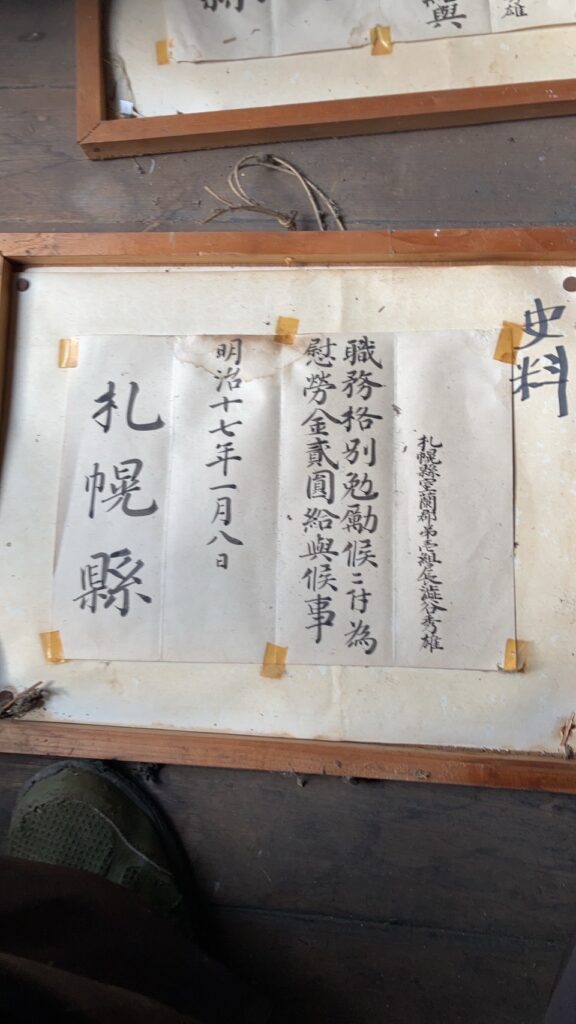
江戸末期から明治初期にかけての渋谷家関係文書など、122点を確認・救出しました。
資料には、地域の歴史を伝える古文書のほか、アイヌ民族に関する記録や、松浦武四郎に関係する記述なども含まれていました。
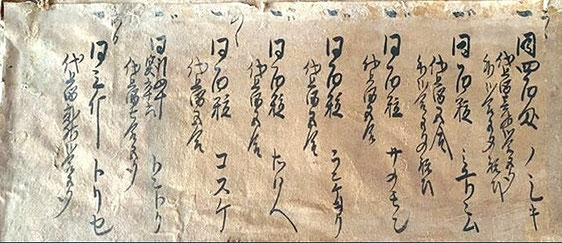
※松浦武四郎の著書に出てくるアイヌの青年「サメモン」が発見した下記の古文書に名前が記載されている。
その後、関係機関との調査・協議を経て、公的な保存につながった資料群です。
発見時、撮影したものを全て載せます。無私の心で伊達市の為にと寄贈を決意した澁谷様の誠実さを無駄にする事なく、また、直接の子孫の可能性が高い伊達市に住むアイヌ民族の方々に「タンダンヤ・アデレード宣言」という2019年10月に国際公文書館会議(ICA)の先住民族問題専門家グループによって採択された、公文書・歴史資料管理における先住民族の権利に関する初の国際宣言の理念の下、伊達市におかれましては展示公開が一刻も早くなされる事を切に願います。
寄贈主澁谷様は、完全な目録や、亘理伊達家家臣渋谷家の軌跡を綴ったホームページがございます。是非御回覧なされます様、宜しくお願い申し上げます。
渋谷家文書サイトはこちら。
https://shibuyake.jimdofree.com
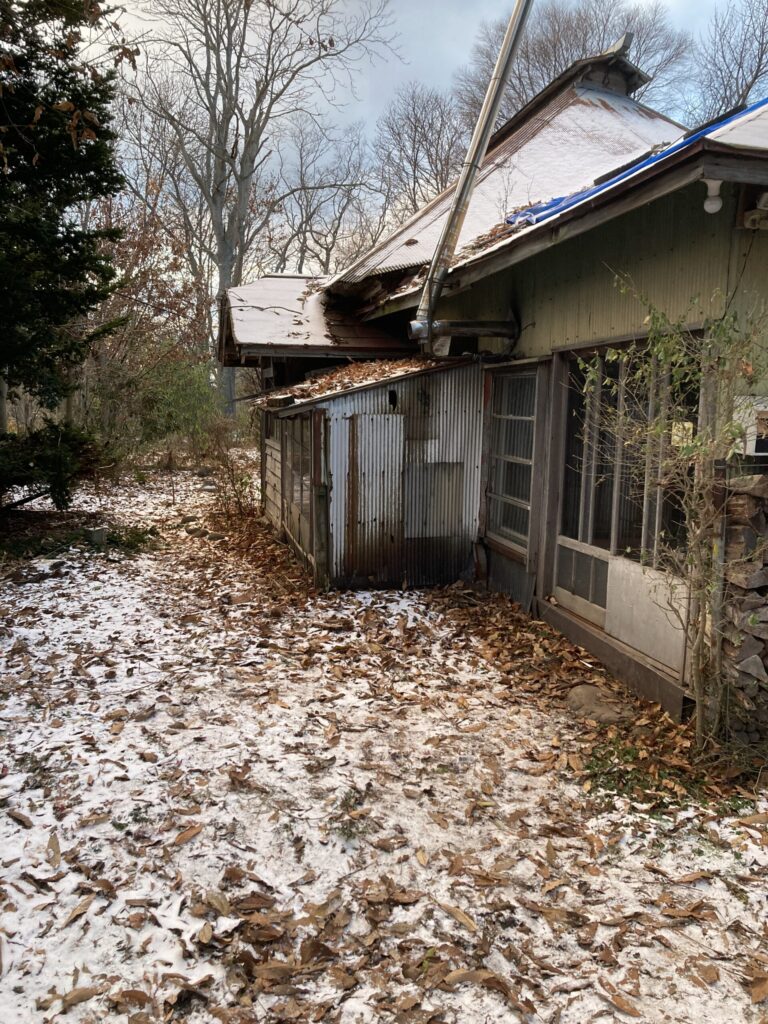
2023年11月末。伊達市松ヶ枝町。渋谷家文書を発見した古民家。築130年を越える私にも思い出深い古民家。現在は更地。
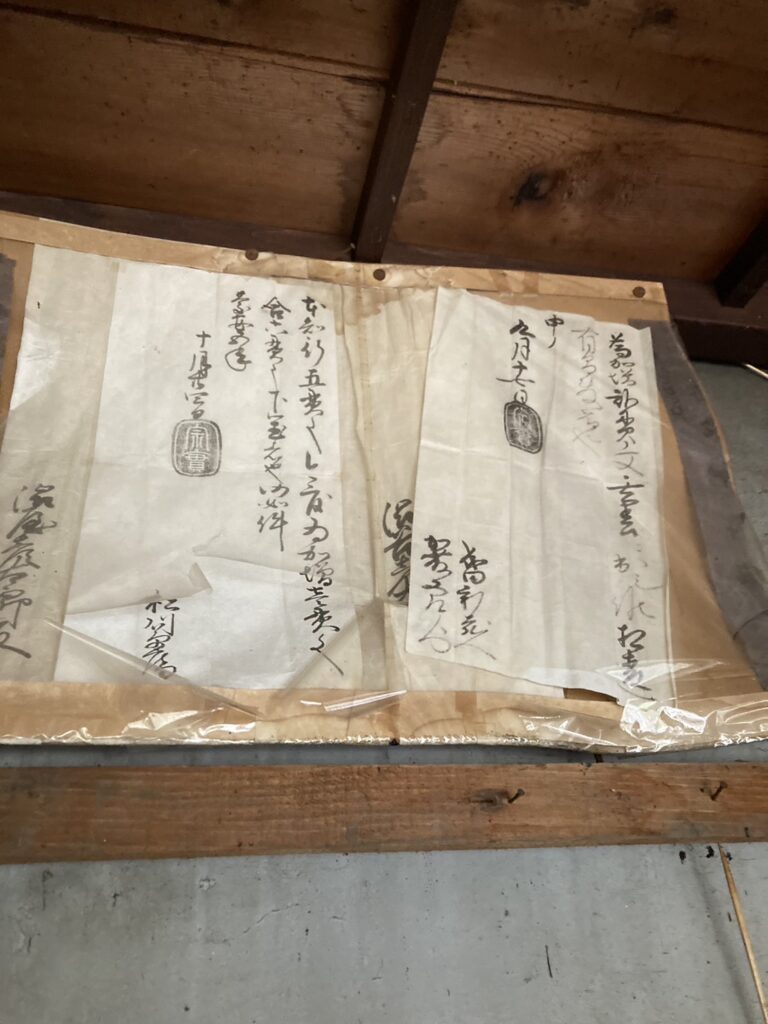
2023年11月15日頃。欄間文書発見時。奥の部屋にて窓際の隅に不用品と混ざっていた状態で発見。襖に貼られた古文書群。寄贈主様のお父様が書斎で飾られていたそうです。お父様が貼られてなければ逆に希少なウス會所の資料や、アイヌ民族の個人名が数十名載った尊厳ある古文書は現在なかった可能性が高い。
親戚であった小樽商科大学客員研究員の方に鑑定を依頼し、希少な古文書群と断定。その後寄贈主澁谷様は、研究の為と、博士に寄贈を申し出るが親戚だった博士が伊達市の発展の為にと伊達市に連絡。学芸員が来たのが28日頃、当時は目を輝かせ、顔を赤くし、「これは非常に希少なものです!アイヌ民族の個人名やウス會所の記述がある!」と、目を輝かせていた。寄贈主澁谷様も喜んでいた。博士は出張にて一度も来れなかった。
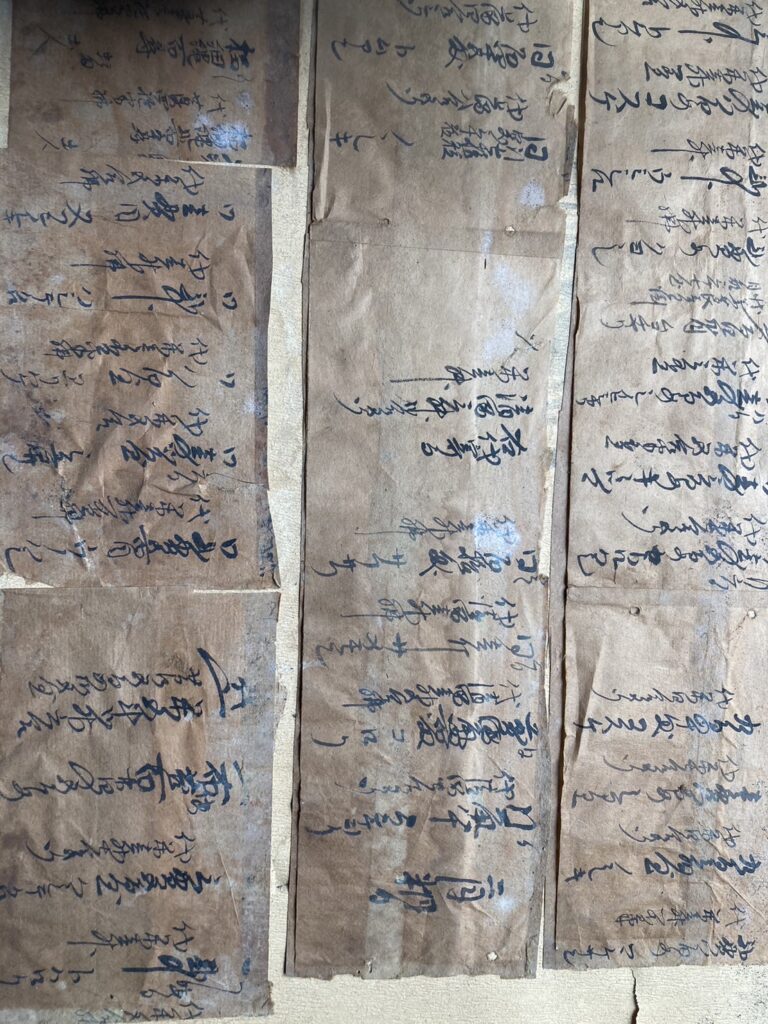
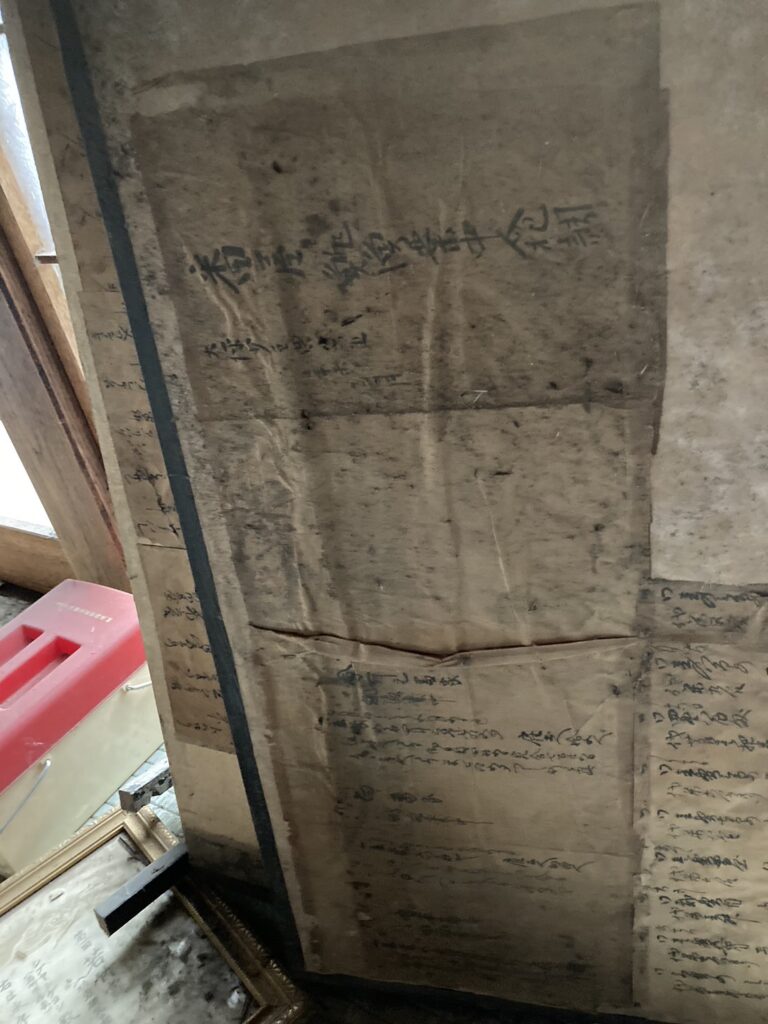
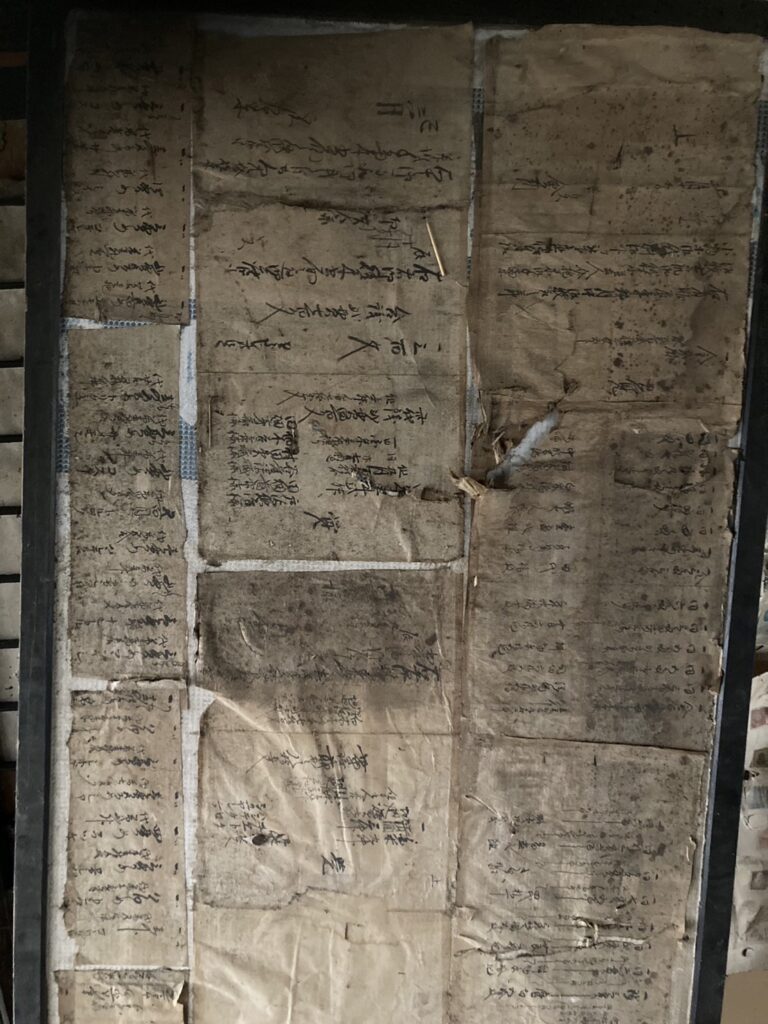
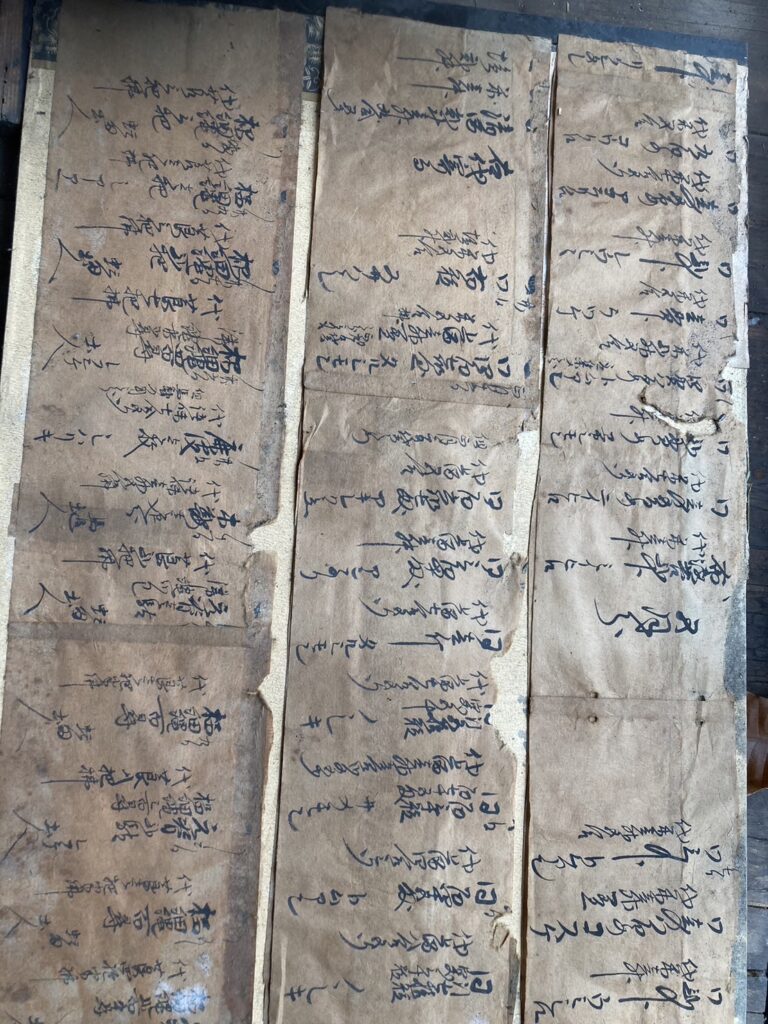
2023年11月 欄間に貼られていた1600年代の、亘理伊達家2代:伊達宗実(1613-1655)の刻印状
もっとも著名な人物で、伊達政宗の九男です。
事績: 亘理領(現・宮城県亘理町周辺)の検地や新田開発、知行の再編を行い、領地を発展させました。彼の血統が、明治時代に北海道伊達市を開拓することになる「亘理伊達氏(のちの伊達邦成ら)」へと繋がっていきます。
経歴: 仙台藩初代藩主・伊達政宗の子として誕生。のちに、政宗のいとこであり「伊達三傑」の一人として名高い武将・伊達成実(初代当主)の養子となり、跡を継ぎました。 澁谷様の御先祖様から受け継いだものです。
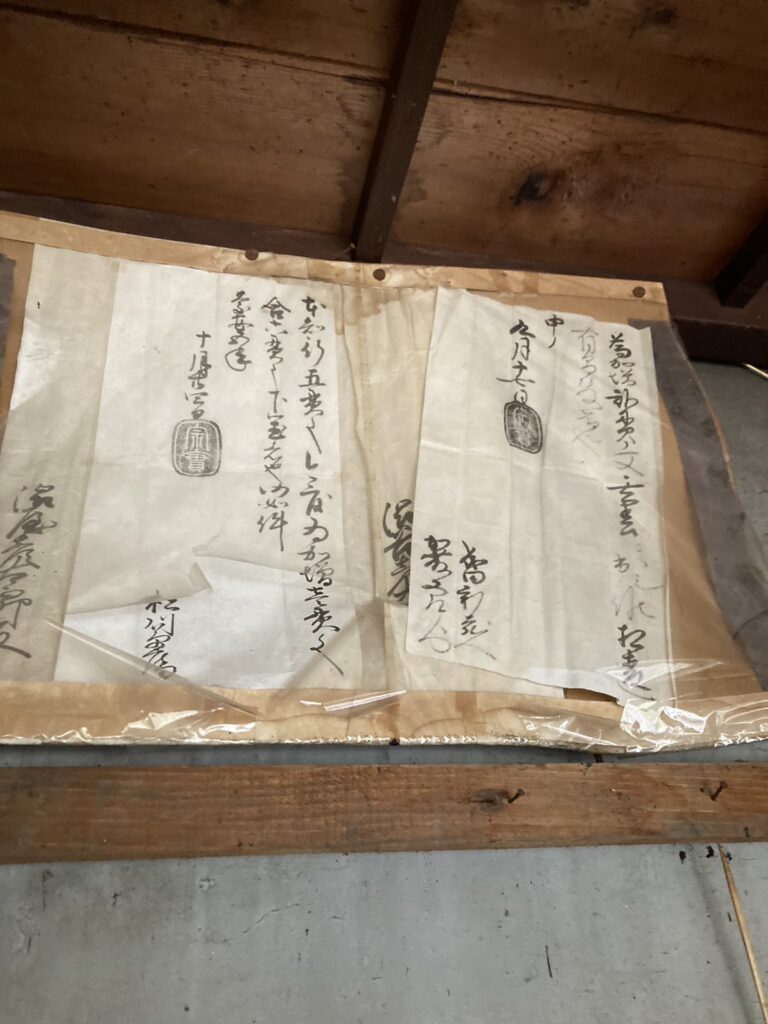
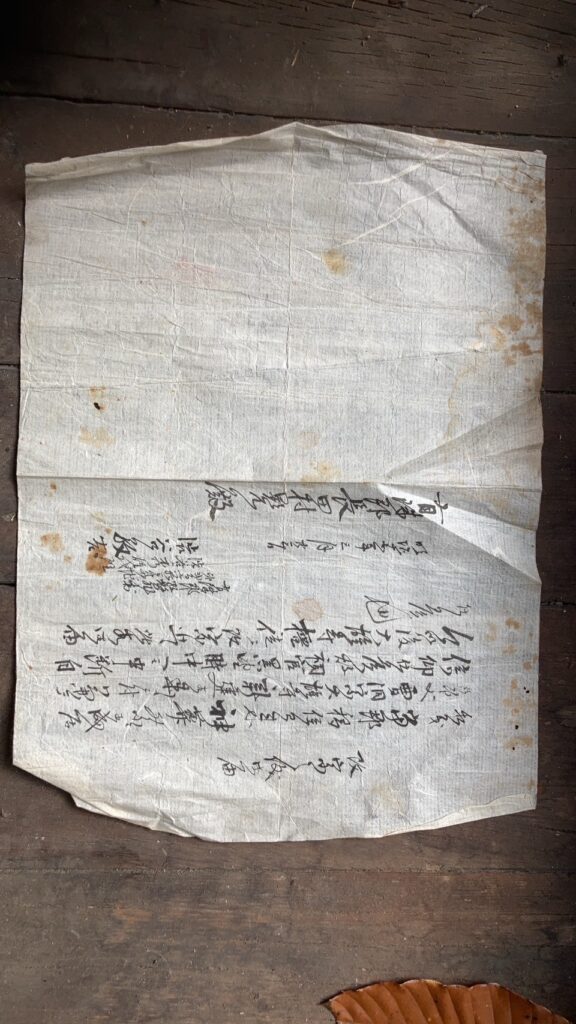
整理をしていると、古文書群が至る所から発見。暗がりの中、丁寧に仕分けをし、様々な時代の古文書群が姿を現しました。
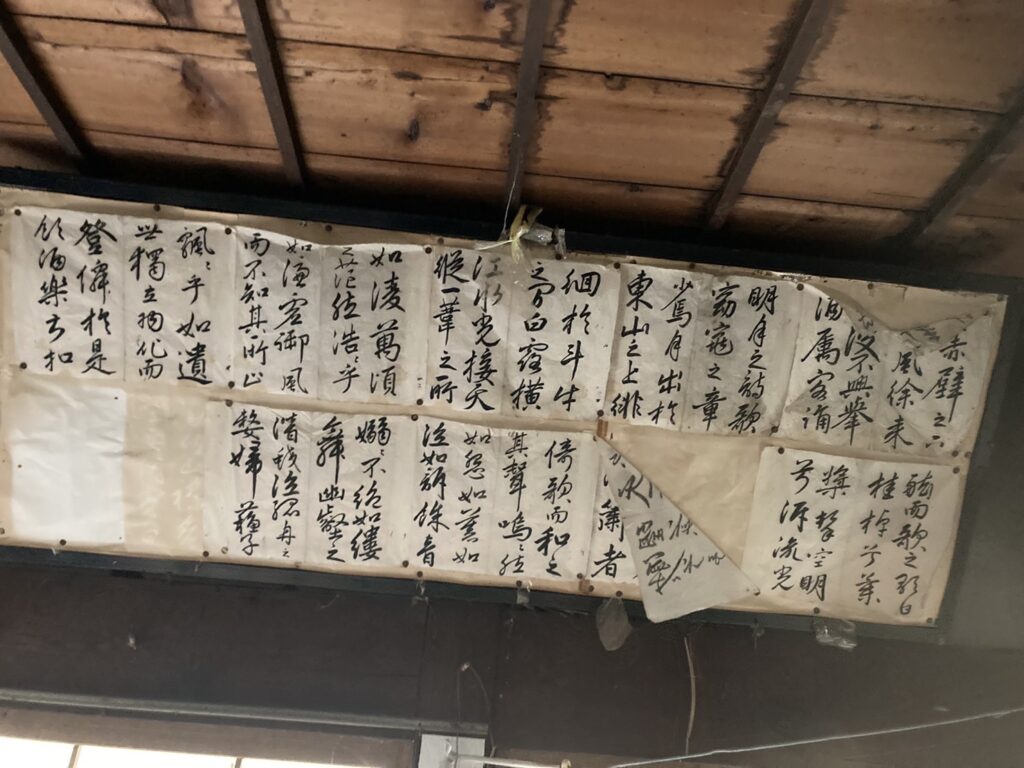
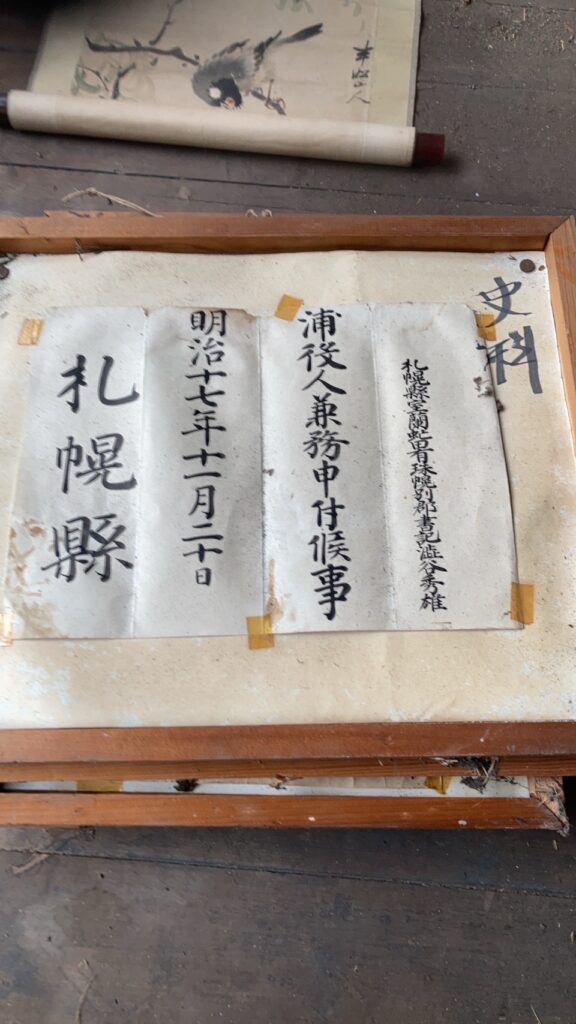
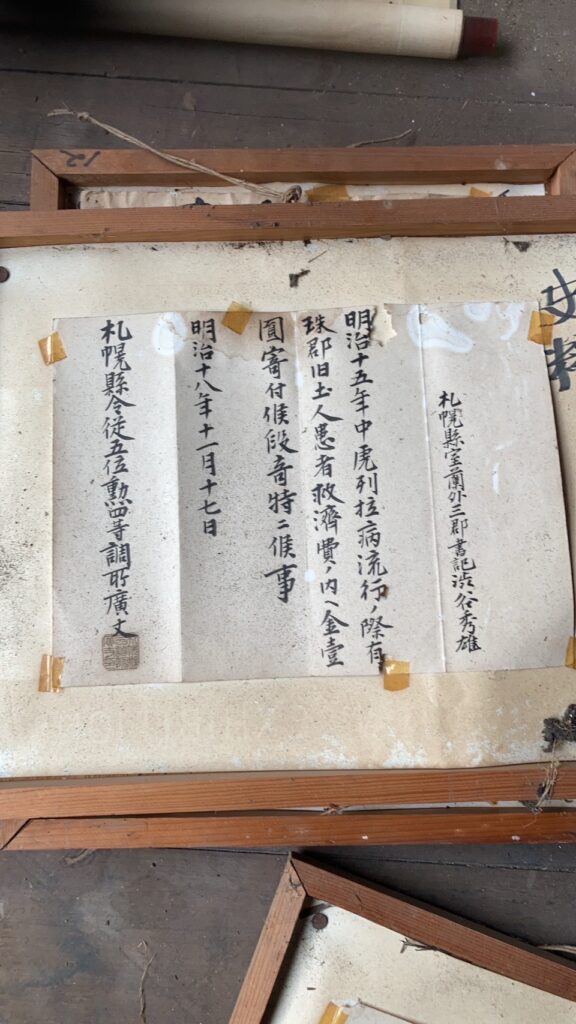
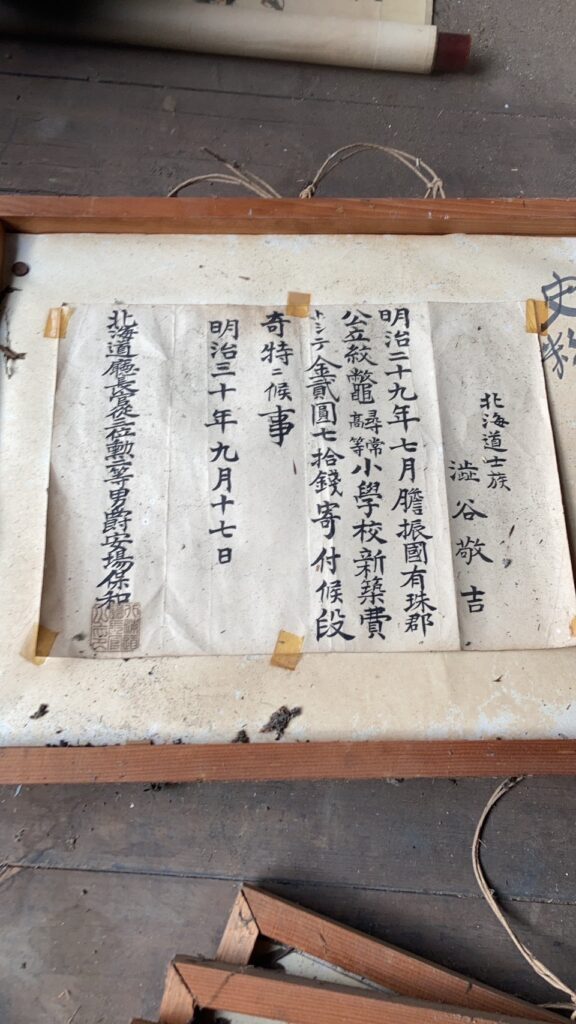
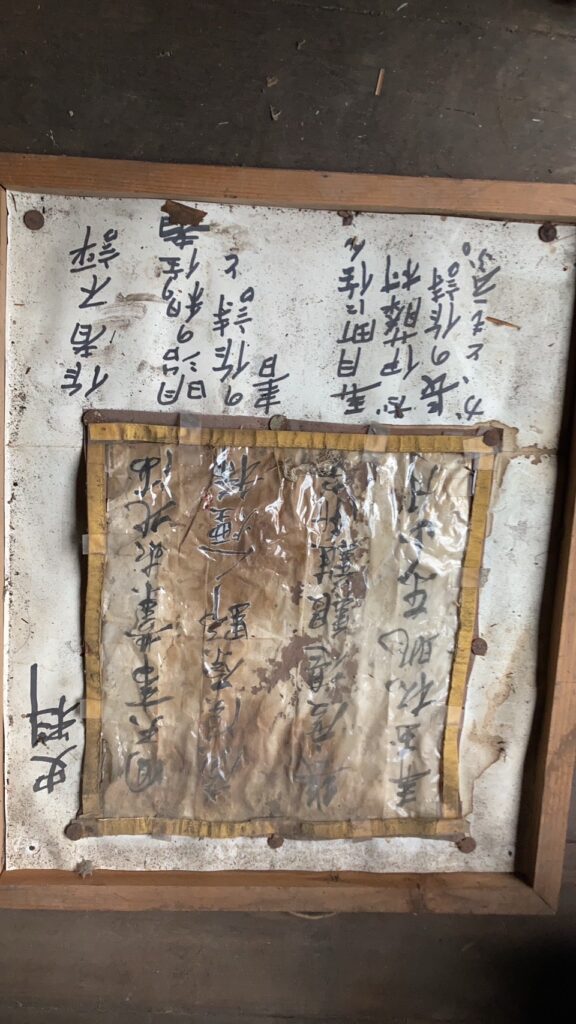
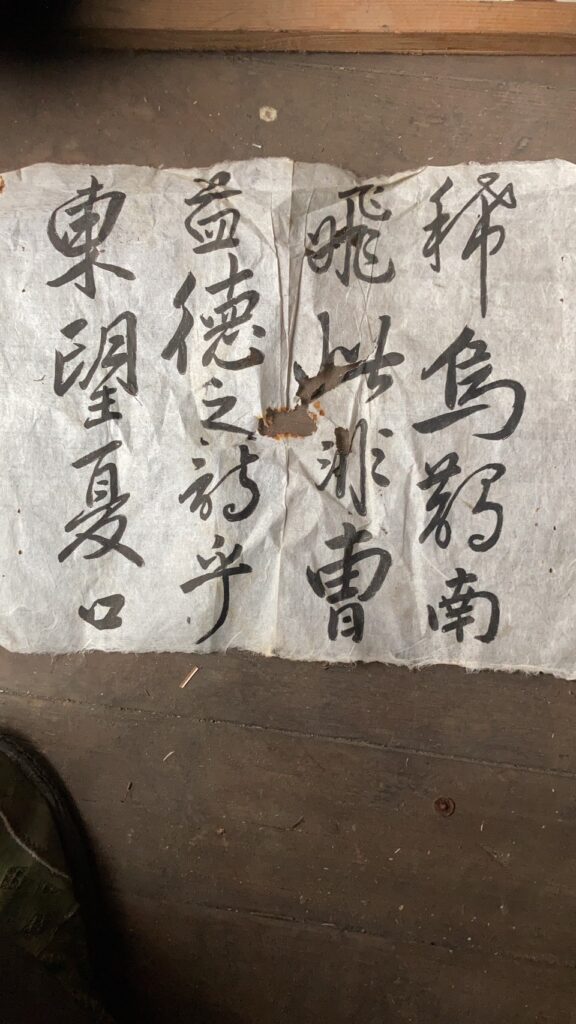
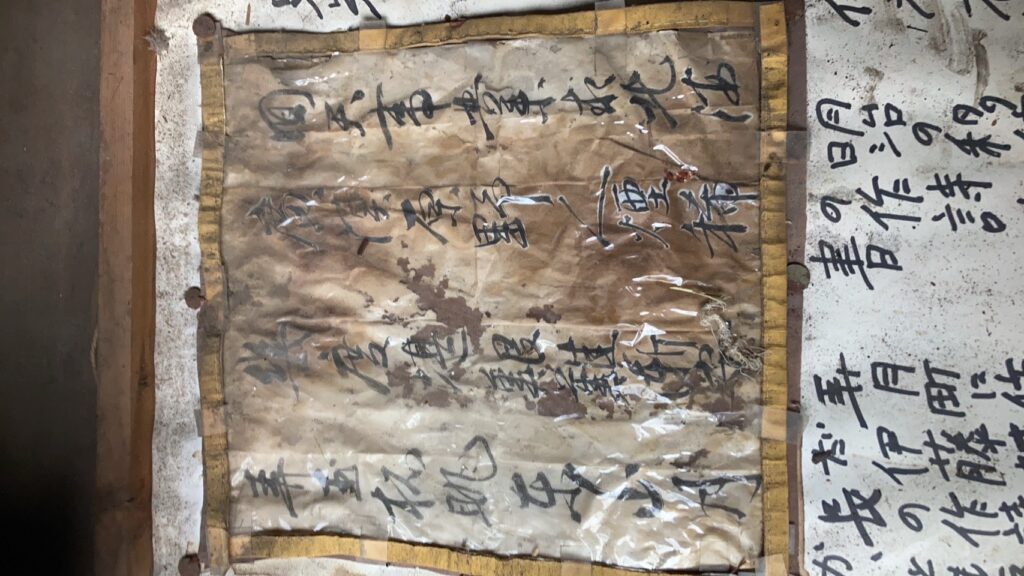
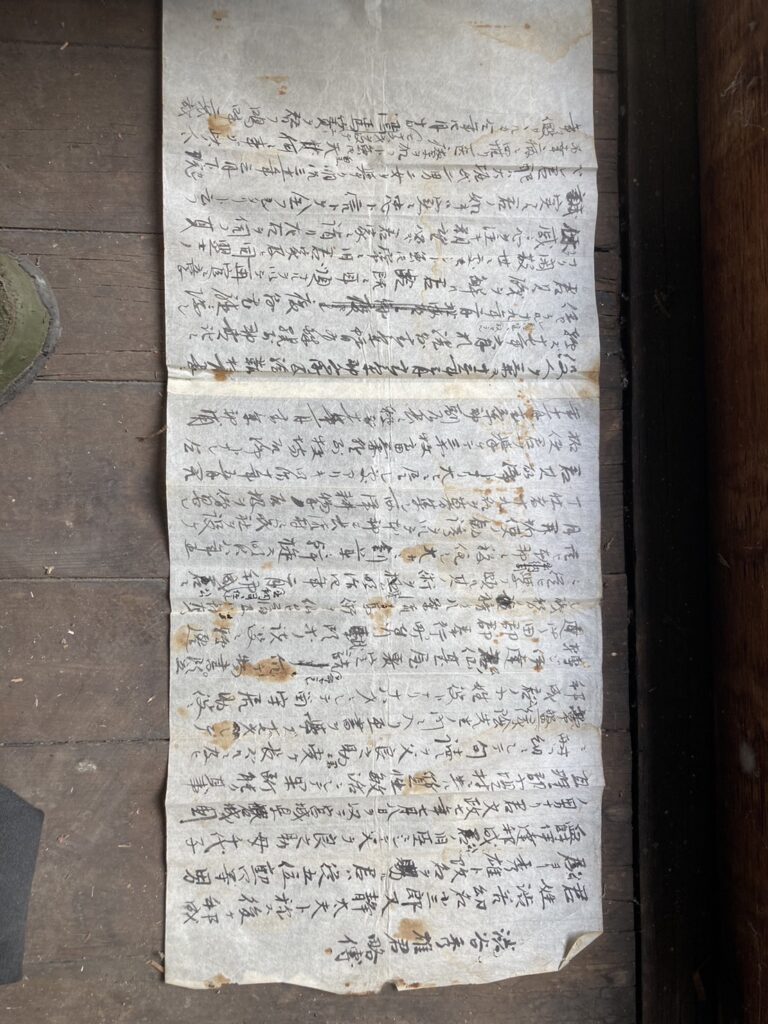
長期間、一般の家庭に伝えられてきた記録が、廃棄を免れ、後世へ残されることとなりました。
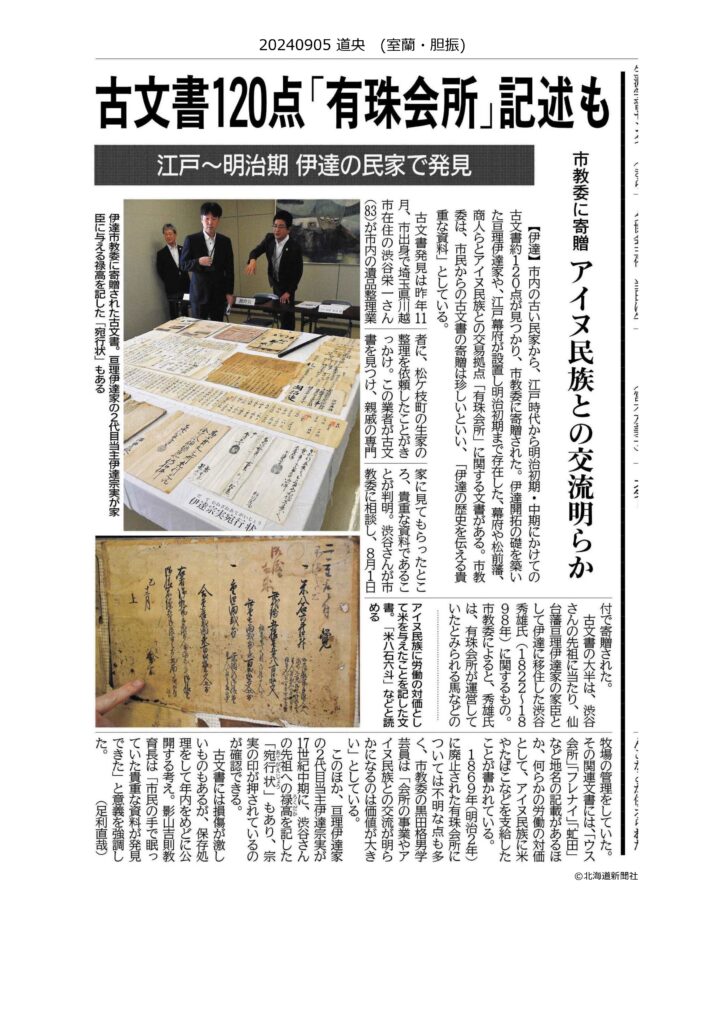
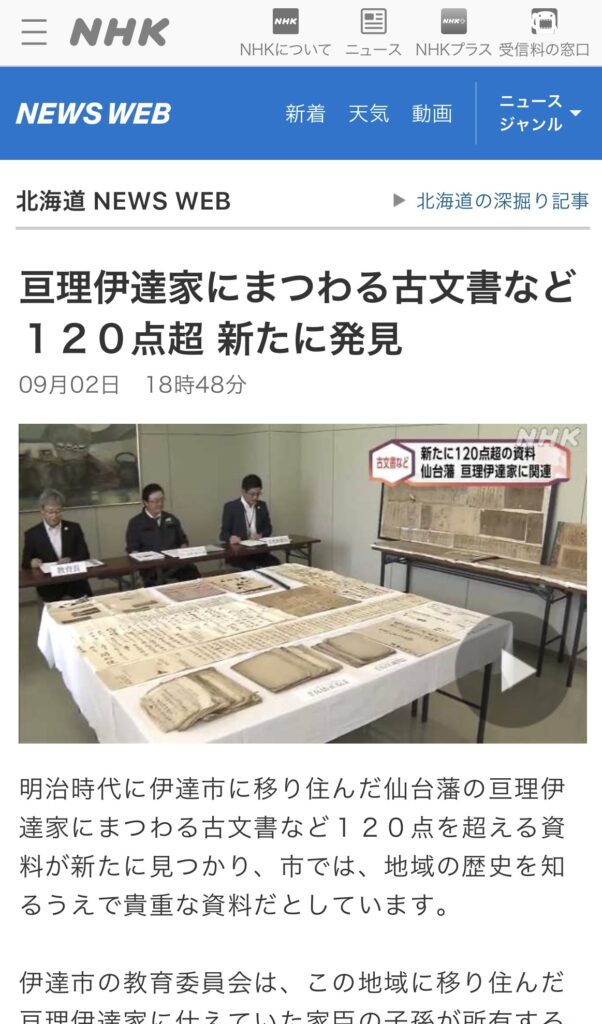
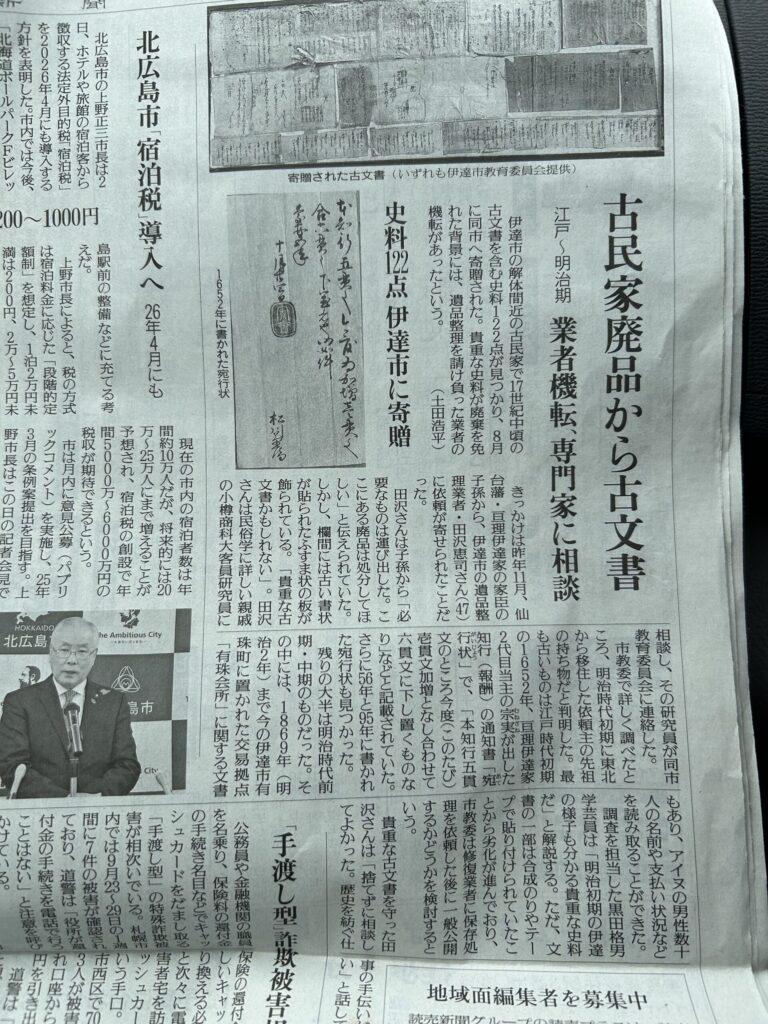
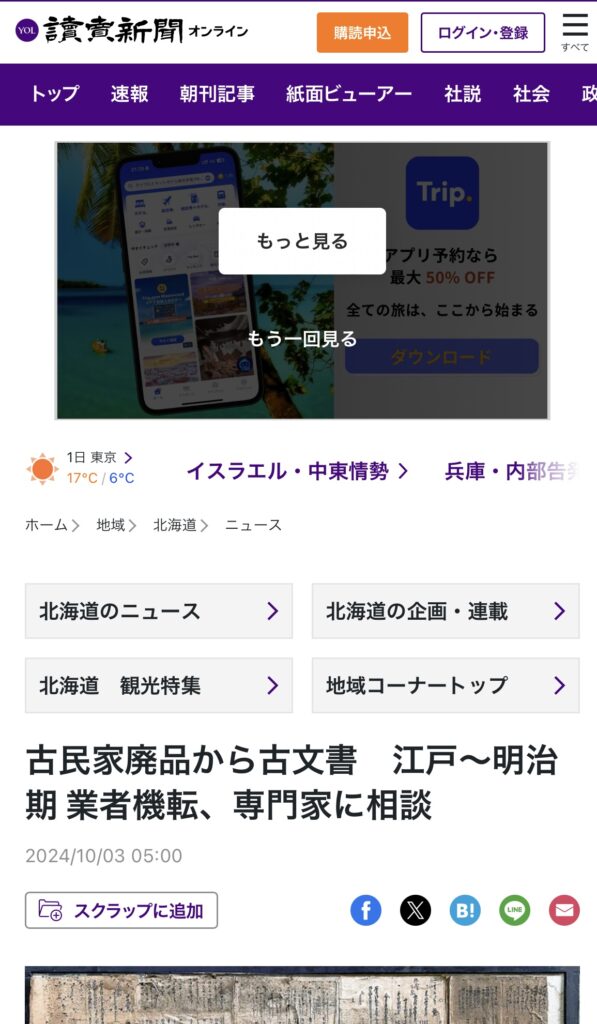
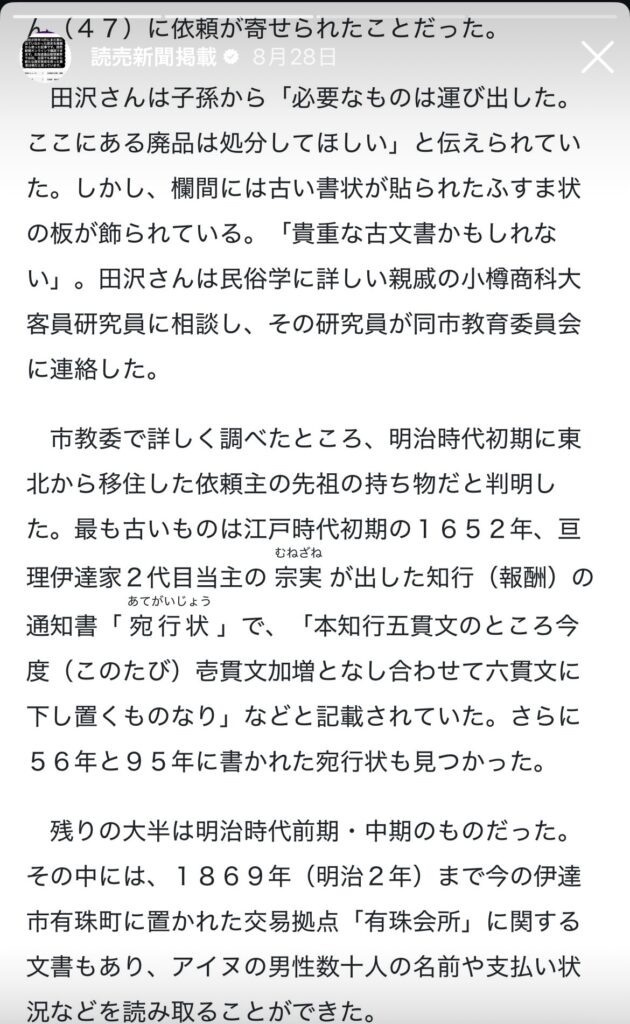
そして、2024年9月、伊達市教育委員会主導で記者会見が行われ、室蘭民報、北海道新聞、NHK、読売新聞などに掲載される事となりました。
※室蘭民報 現在アーカイブで回覧可能。
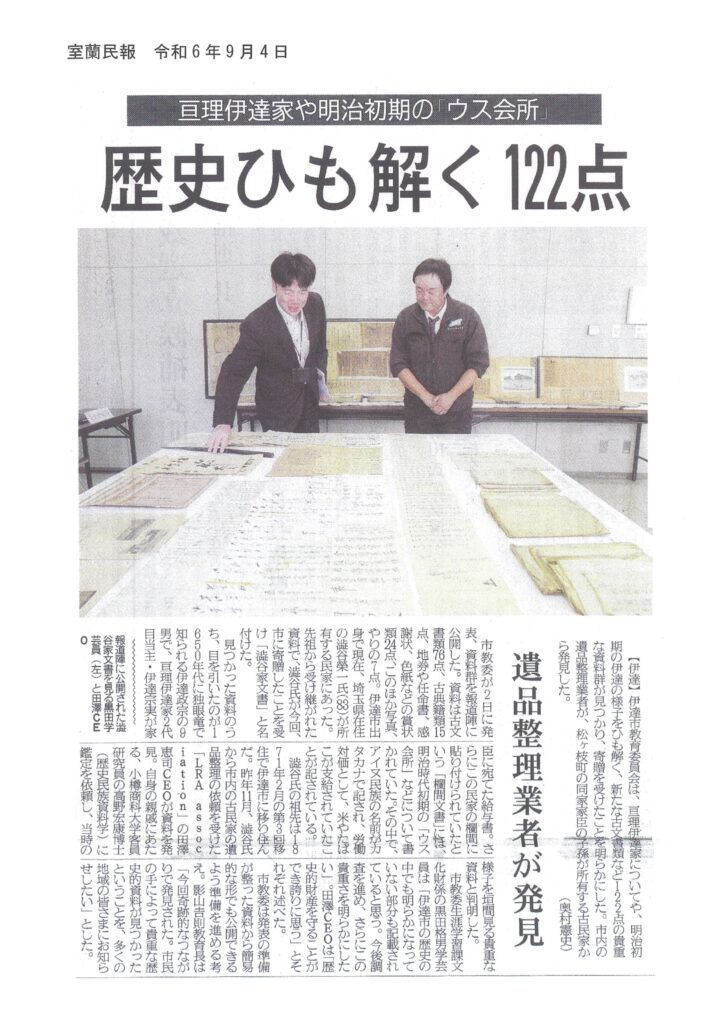
※北海道新聞 現在アーカイブで回覧可能
※NHK 記者会見模様
※読売新聞・読売新聞オンライン掲載 現在アーカイブ
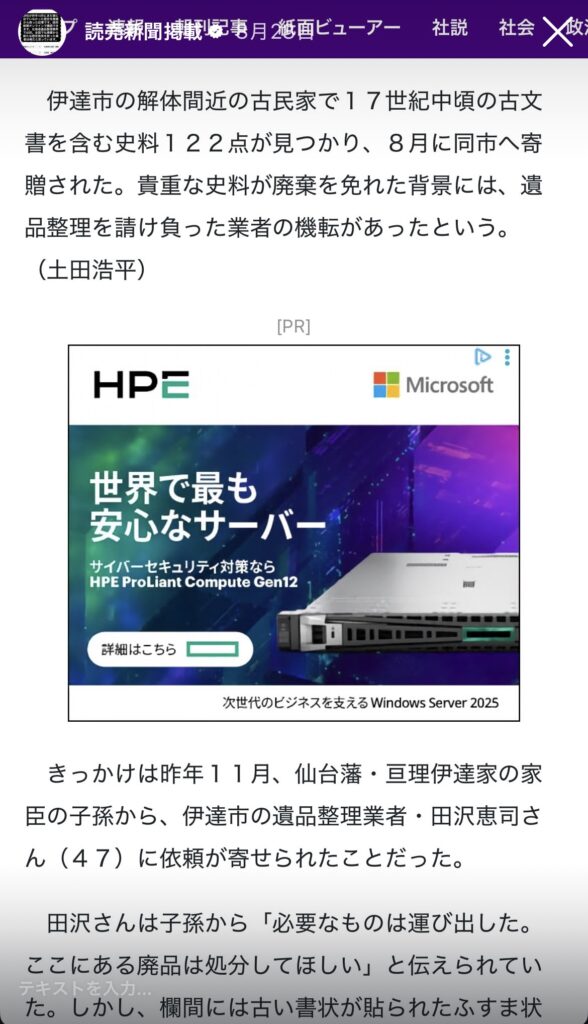
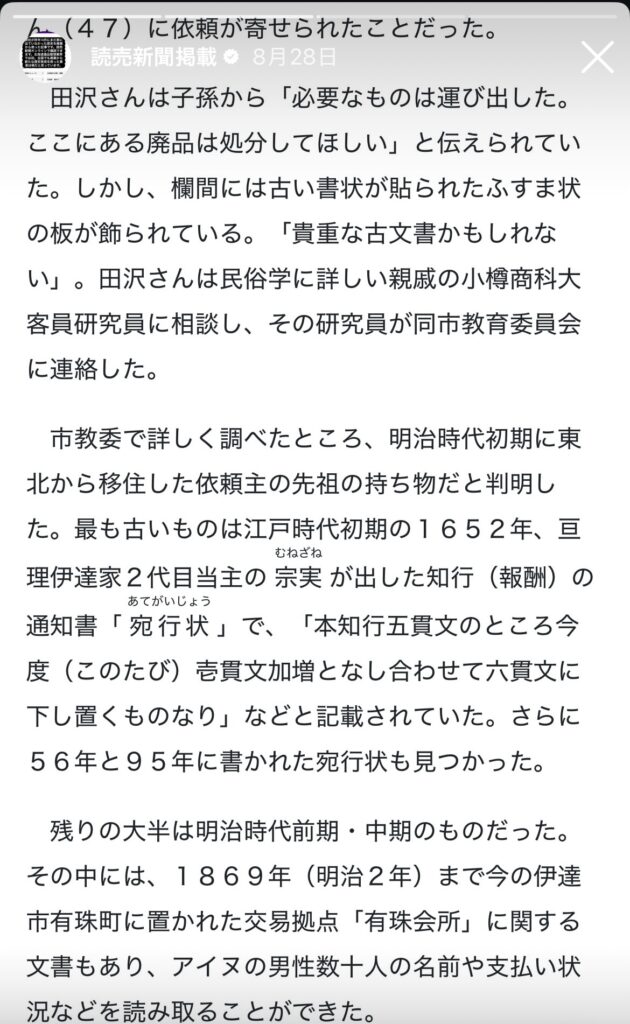
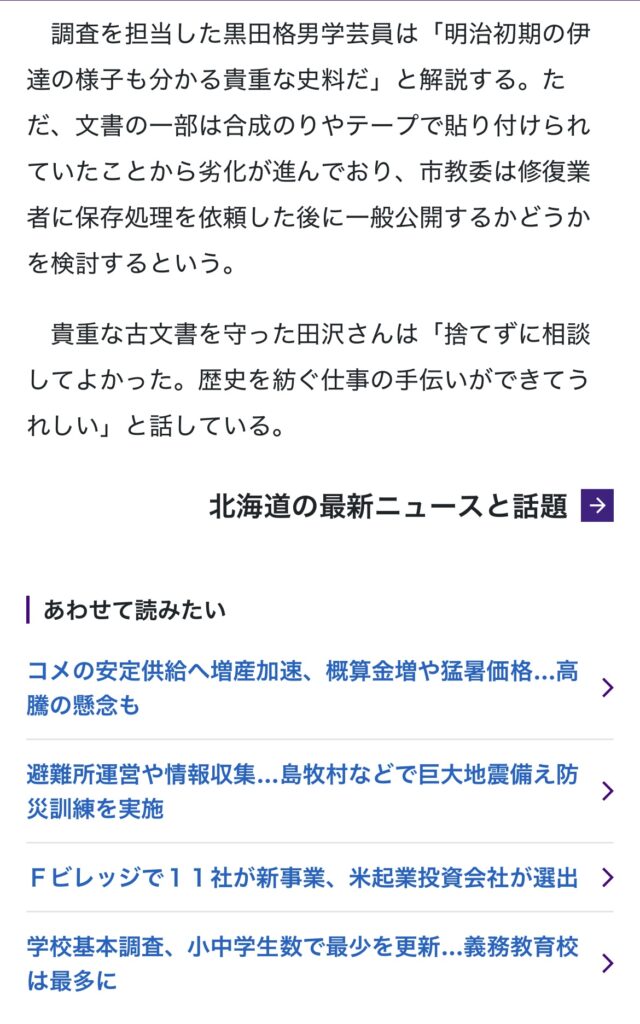
遺品整理士認定協会にレポートを提出したかった為、北大、ウポポイなど国内の機関に資料の詳細をレファレンスしたところ、
北大では、「非常に希少な資料群なのは間違いないと推察」
ウポポイでは、アイヌ民族の事を遺品整理士認定協会のレポートに書く事を大変喜ばれ、快くレファレンスをして下さり、お時間を使っていただきながら一部の部分を解説して下さいました。
「伊達邦茂が北海道に渡った前後、イリコ貿易の事とウス牧場の資料と拝見され、希少な地域史並びに「希少な北方史」との見解を頂きました。
また、伊達宗実の刻印状や、兵学彧問、兵法正傳巻第五等、明治期の澁谷秀雄様の資料、ならびに全国所蔵館が極めて少ない資料なども122点の群にある事から、江戸時代から明治大正、昭和にかけて途切れる事のない複合アーカイブと思っております。
発見の記録を後世に残す為、後ほどわかった事など随時追加していきたいと思います。
2024年10月
木戸孝允の書と江戸~大正期の書画資料
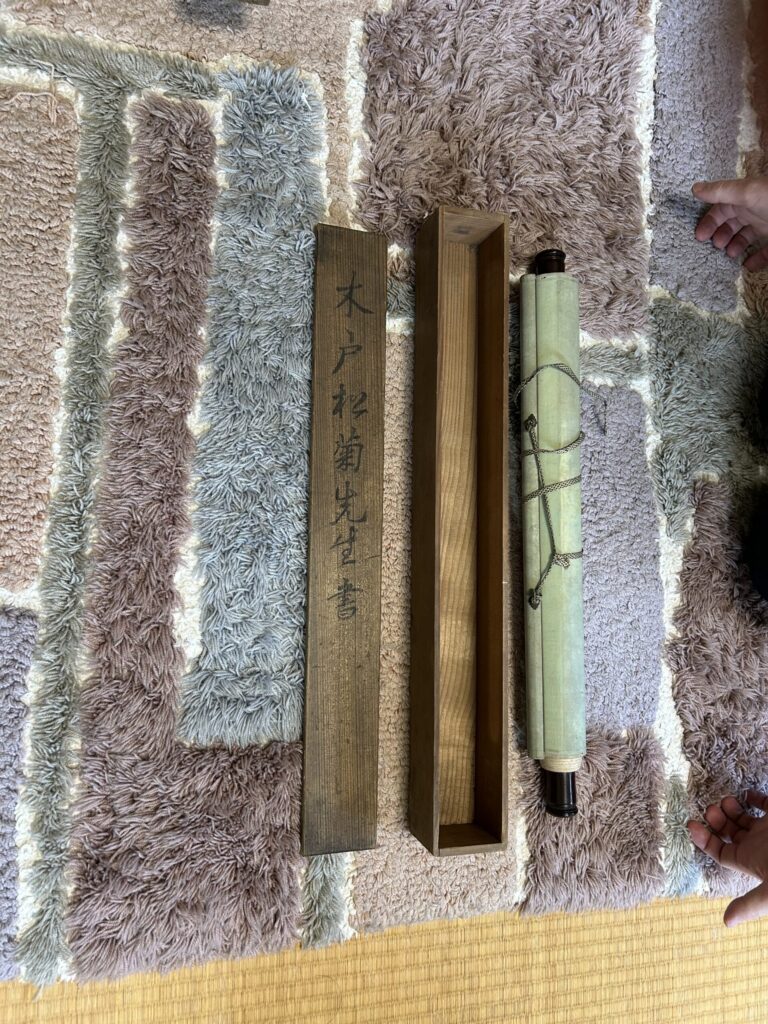
北海道伊達市
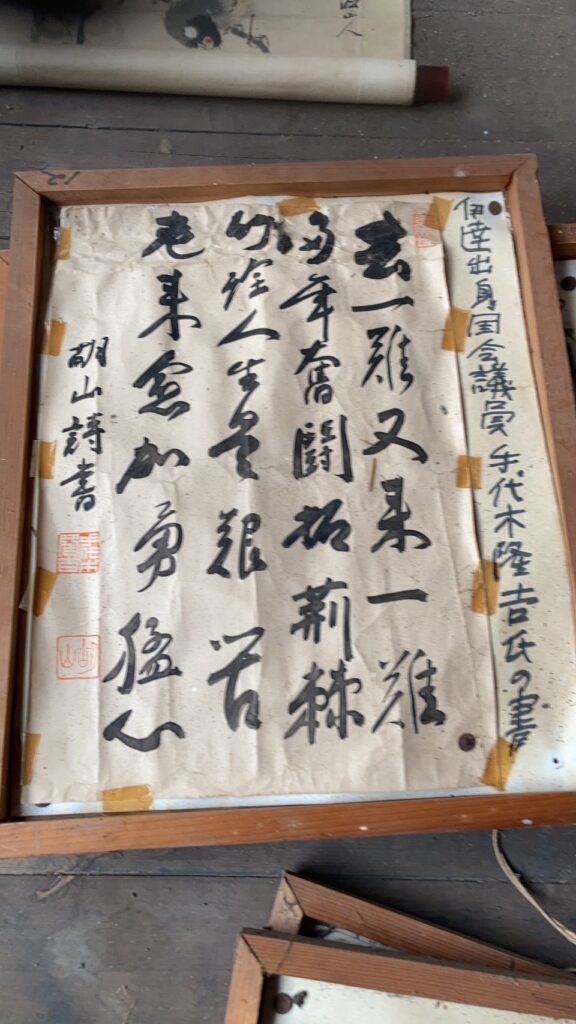
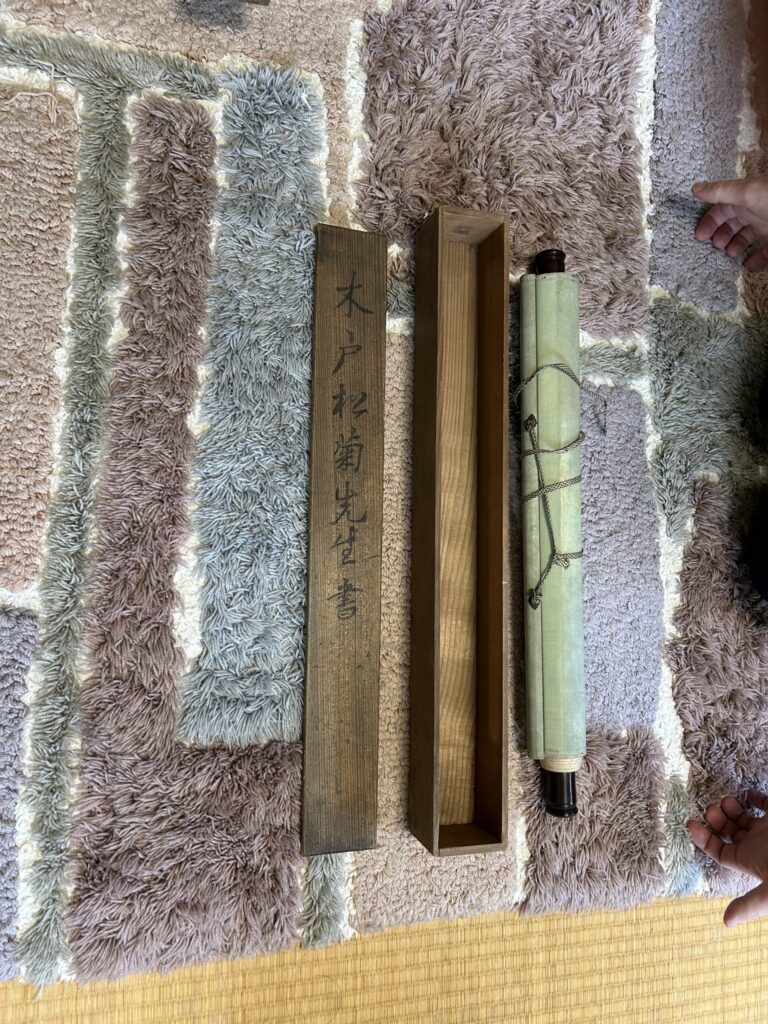
明治期に北海道へ開拓に入った家に代々伝えられてきた、複数の掛け軸・書画類を確認しました。
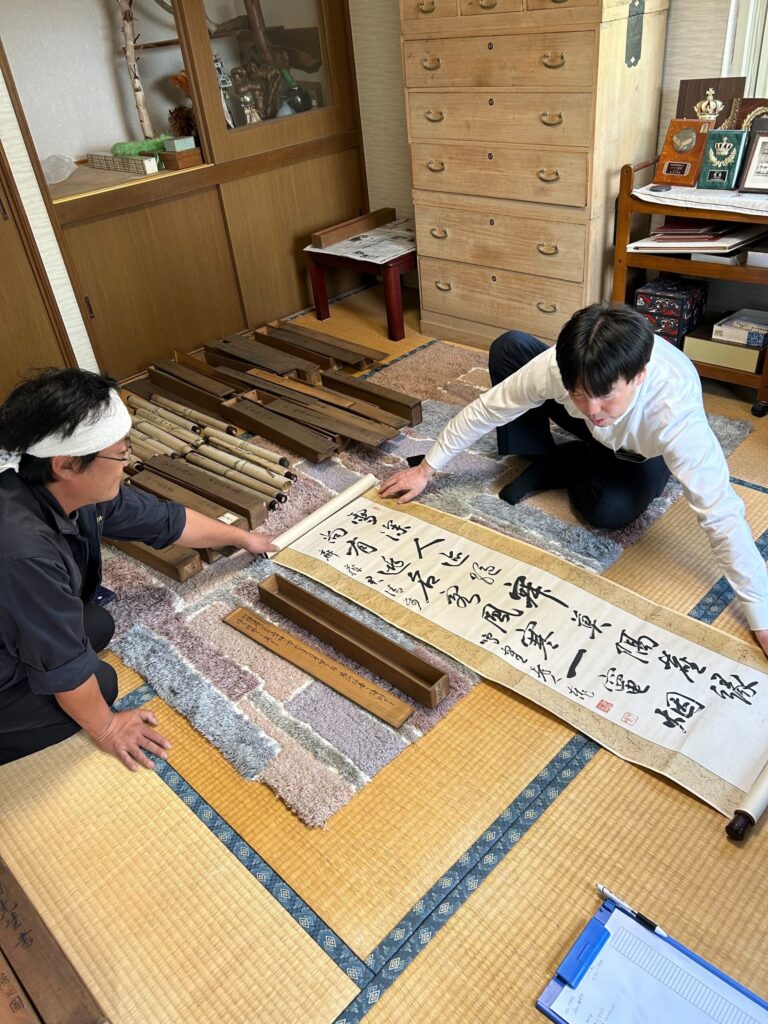
その中でも特に注目されたのが、維新三傑の一人・木戸孝允(桂小五郎)の書です。
この書については、ご依頼者様が以前から木戸孝允の書として把握し、大切に保管されていました。
鑑定の機会に際しては、ご依頼者様が札幌で保管していた掛け軸を、わざわざ鑑定のために持参してくださいました。
このほか、
- 菅茶山と記された書
- 品川篁圃に関係する掛け軸
- 原月佳に関係する作品
- その他、作者や内容を当時の段階では正確に読み取ることができなかった掛け軸・書画類
など、20点余りの資料を確認しました。
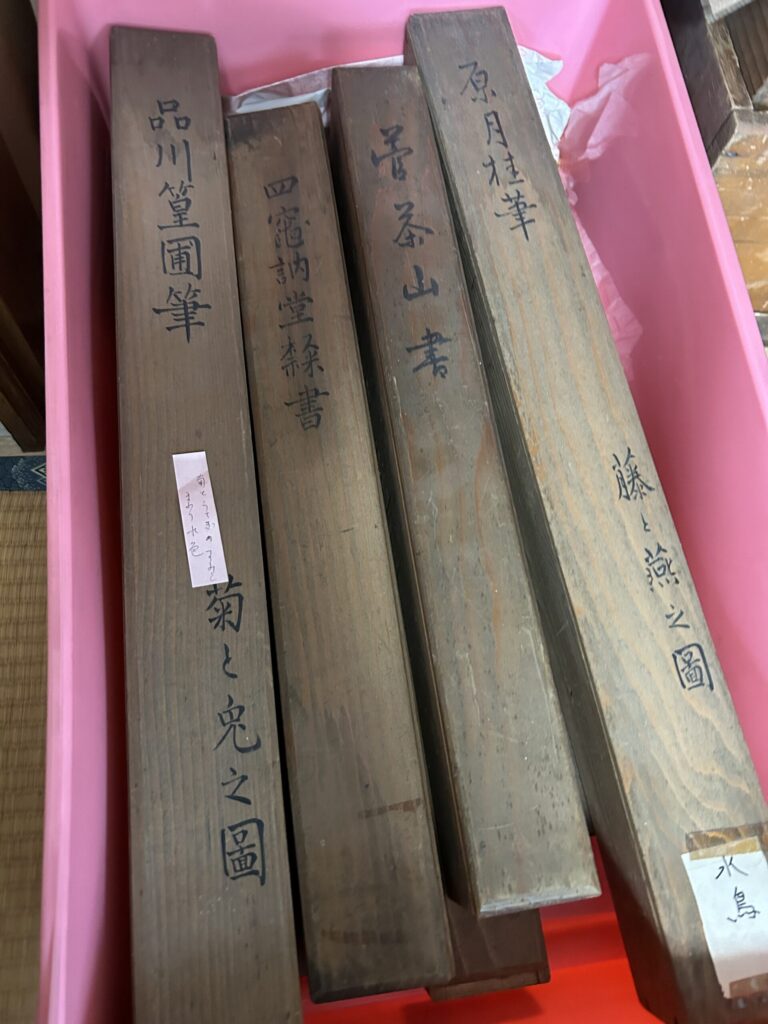
これらは、丸亀藩から北海道へ開拓に入った家に伝えられてきた家伝資料であり、北海道開拓と、本州から北海道へ移住した人々の歴史を考えるうえでも興味深い資料群です。
歴史的・文化的価値を持つ可能性のある資料について、専門家による確認・鑑定へとつながりました。
2025年12月
伊達市上長和町・過去帳と弘前藩につながる家系資料
北海道伊達市上長和町
生前整理の現場から、一冊の古い過去帳が確認されました。
そこには、先祖が青森県弘前から北海道へ移住したことを示す記録が残されていました。
過去帳の冒頭には、当時の教育や藩政に関係する記録として、
「殿様の命により、弘前の学校の先生の給料はお米65石であった」
という趣旨の記述も残されていました。
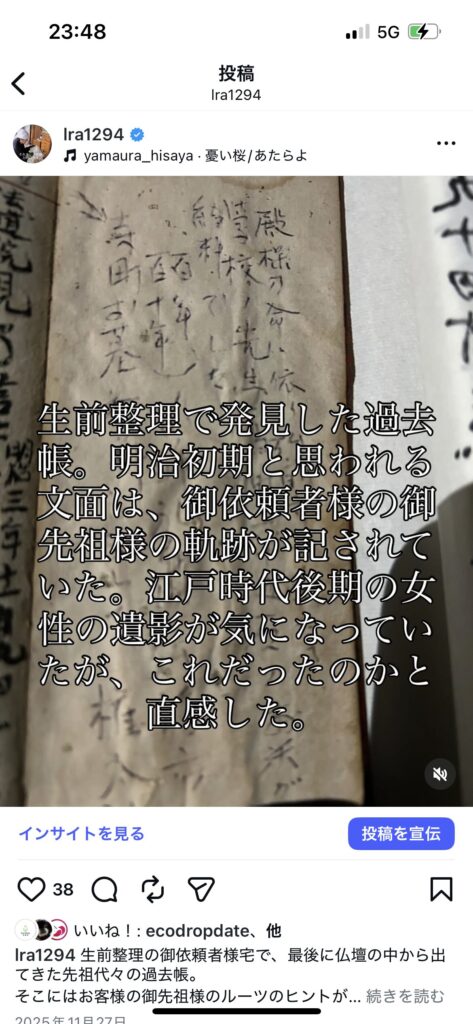
その後、弘前市の学芸員との照会を行い、現地に同じ名字の村が存在すること、さらに津軽藩士の名簿にも同姓の藩士が記載されていることが確認されました。
一冊の過去帳をきっかけに、約160年前の家族の歴史と、北海道開拓につながるルーツが再び明らかになった事例です。
発見された資料は、ご依頼者様へお渡しし、次の世代へ家族の歴史を伝える記録として残されることになりました。
2025年10月~11月
伊達市末永町・開拓当時の室蘭を伝える過去帳
北海道伊達市末永町
4LDK住宅に加え、外回り・ガレージ・物置を含む大規模な遺品整理の現場から、ご遺族が探していたご先祖様の日記をもとにした出版物・過去帳が確認されました。
資料には、
- 開拓当時の室蘭での生活記録
- 家系図
- 当時の生活用品の写真
- 地域の歴史を伝える記録
などが残されていました。
長年探されていた資料が遺品整理の中から発見され、ご遺族のもとへ戻されたことで、家族の歴史だけでなく、北海道開拓期の室蘭で人々がどのように暮らしていたのかを知る手掛かりが残されることになりました。
2026年2月
長家関係資料「後生のために」
北海道伊達市上長和町
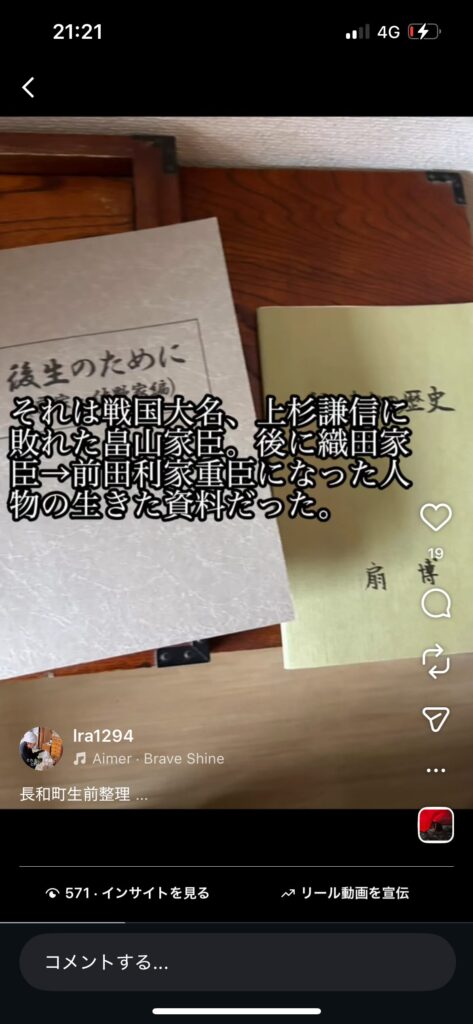
明治初期に生まれた先祖が残した記録をもとに、後世のためにまとめられた家系資料「後生のために」を確認しました。
資料には、加賀藩重臣・長連龍につながる長家の系譜や、石川県から北海道へつながる一族の歴史、家系図などが記録されていました。
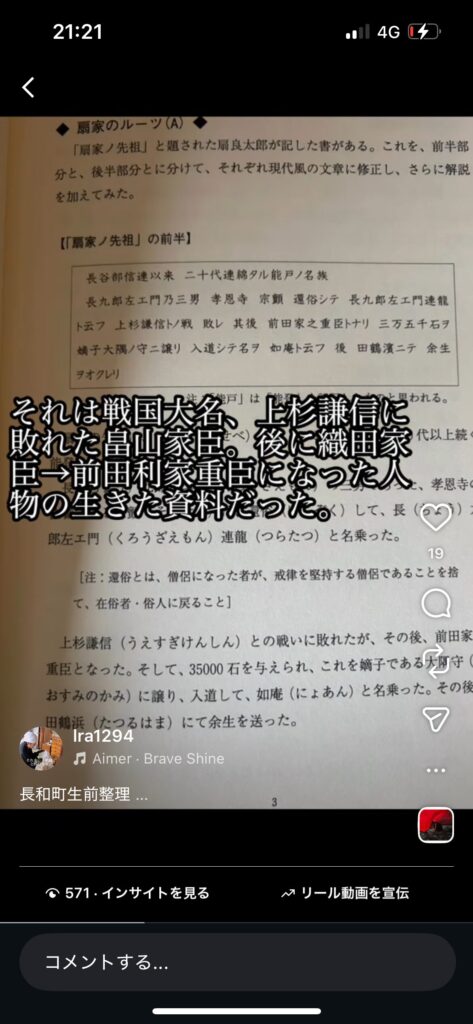
ご依頼者様の了承のもと、資料館への寄贈につながった資料です。
2026年5月
『コタンの痕跡――アイヌ人権史の一断面』
北海道室蘭市
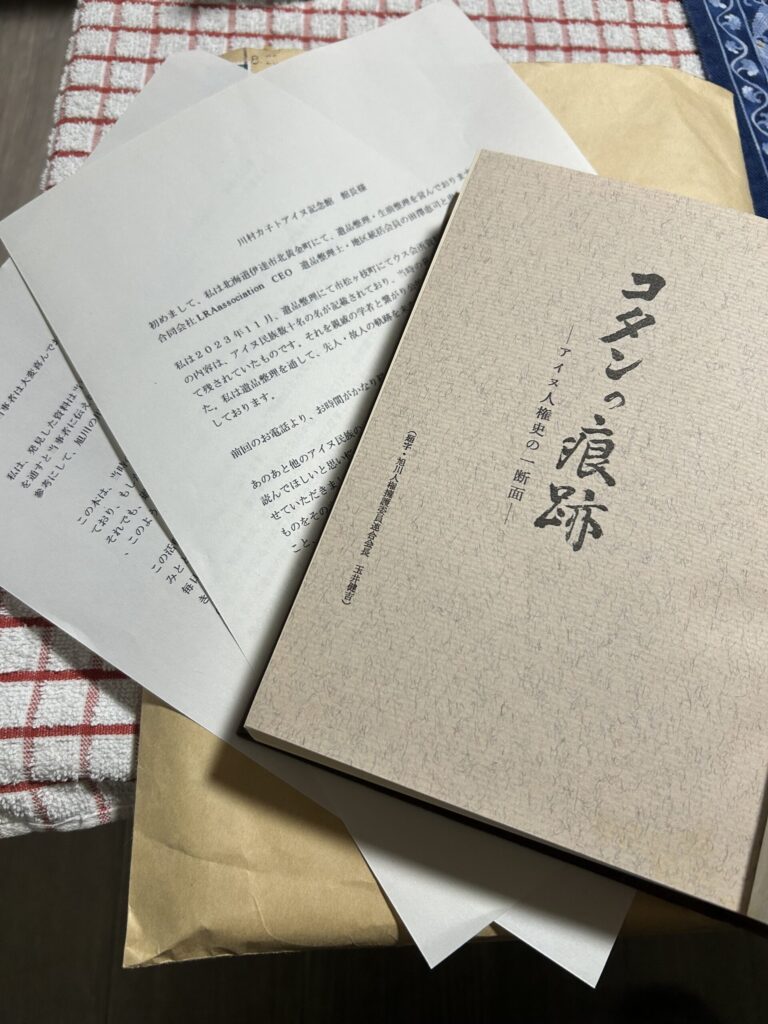
昭和46年(1971年)に発行された非売品の記録文集、『コタンの痕跡――アイヌ人権史の一断面』を確認しました。
当時のアイヌ民族の方々による証言や記録を含む資料で、地域の歴史と人権史を伝える記録です。
その後、資料を必要とする地域の施設への寄贈につながりました。
2026年5月
ビルマ派遣・第121兵站病院関係資料
北海道室蘭市
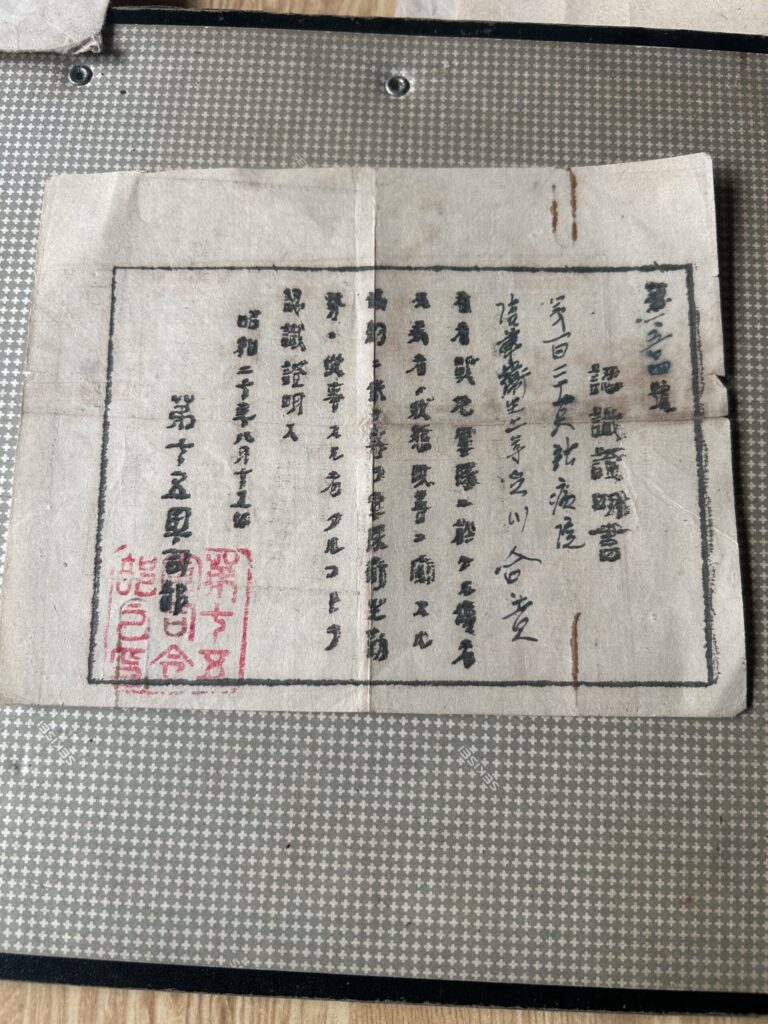
第二次世界大戦期にビルマへ派遣された元衛生兵の遺品から、まとまった戦争関係資料群を確認しました。
資料には、
- 第121兵站病院関係資料
- 第15軍関係資料
- 衛生兵としての軍務を示す記録
- 戦地・復員関係資料
- 収容所関係資料
- 故人自身による「ビルマの想い出」
- 『ビルマ戦陣回顧録』
- 戦友会関係資料
- 戦友会の写真
- 北力会20周年記念集合写真
- 戦友から贈られた私家本
などが含まれています。
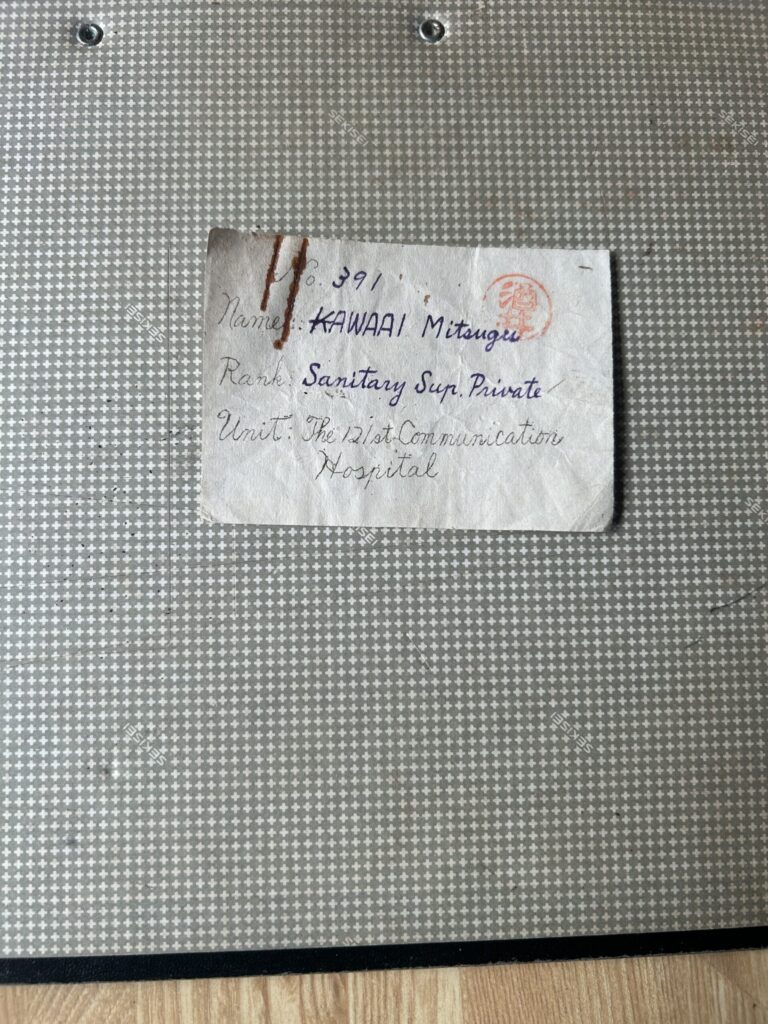
これらの資料から、故人が戦場へ向かう前の人生から、衛生兵としての軍務、ビルマ派遣、終戦、復員、帰郷、戦後の生活、そして戦友との交流まで、一人の人間の人生をたどることができる資料群が形成されています。
また、戦友会そのものが時代とともに失われていく中で、残された資料によって、戦場を経験した人々の記憶が現在へとつながりました。
2026年
角田石川氏・分家家系図
北海道室蘭市幌萌町
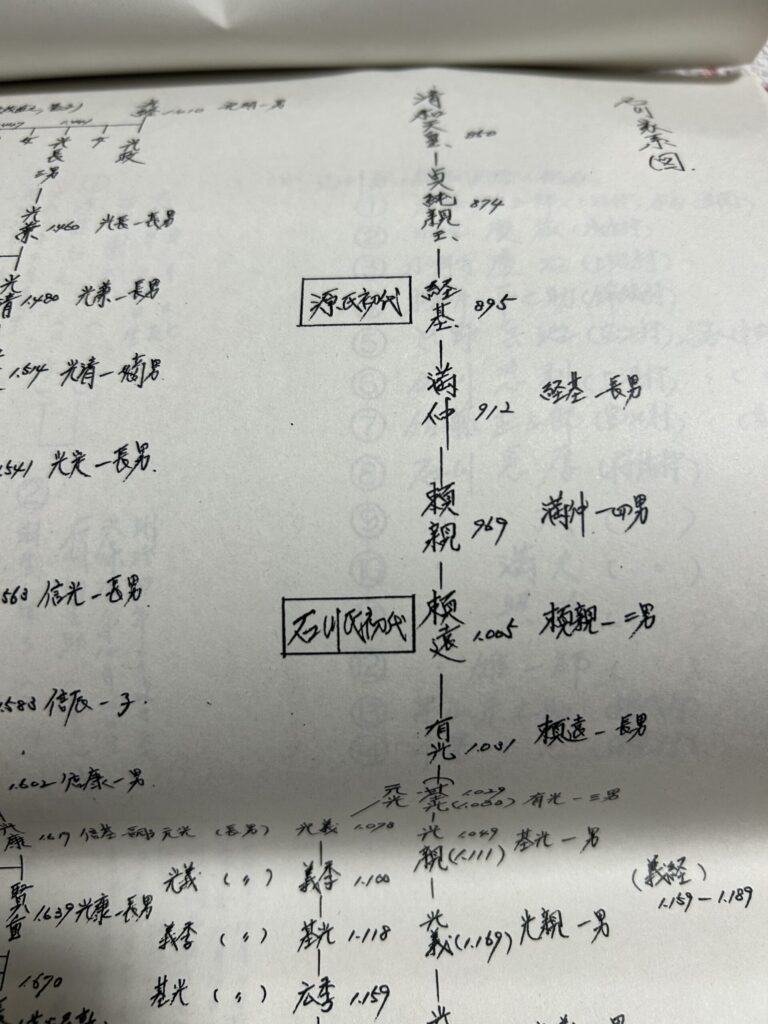
生前整理の現場から、長年ご家族も存在を把握していなかった家系図・歴史資料を確認しました。
資料には、仙台藩の重臣である石川氏につながる系譜や、一族が北海道へ移住していくまでの歴史が記されています。
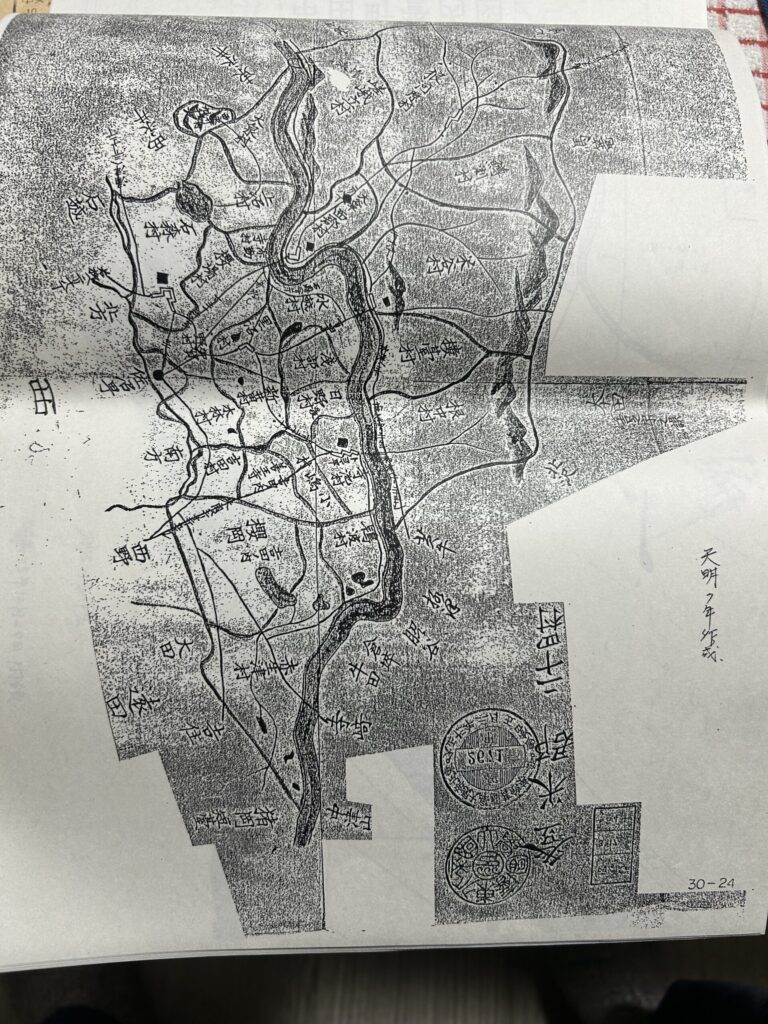
戦国期から江戸時代、幕末、そして北海道開拓へと続く一族の軌跡をたどることのできる記録です。
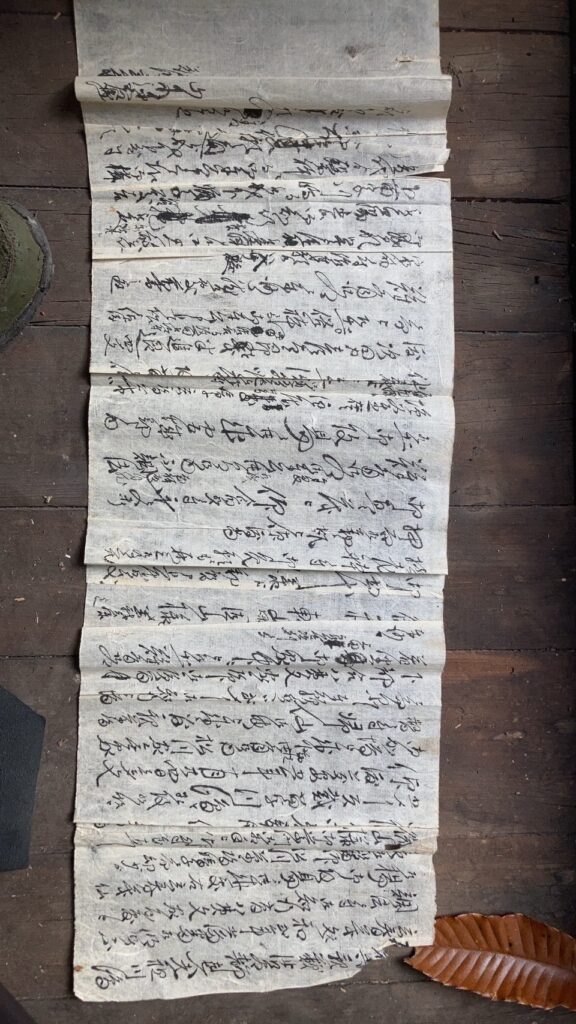
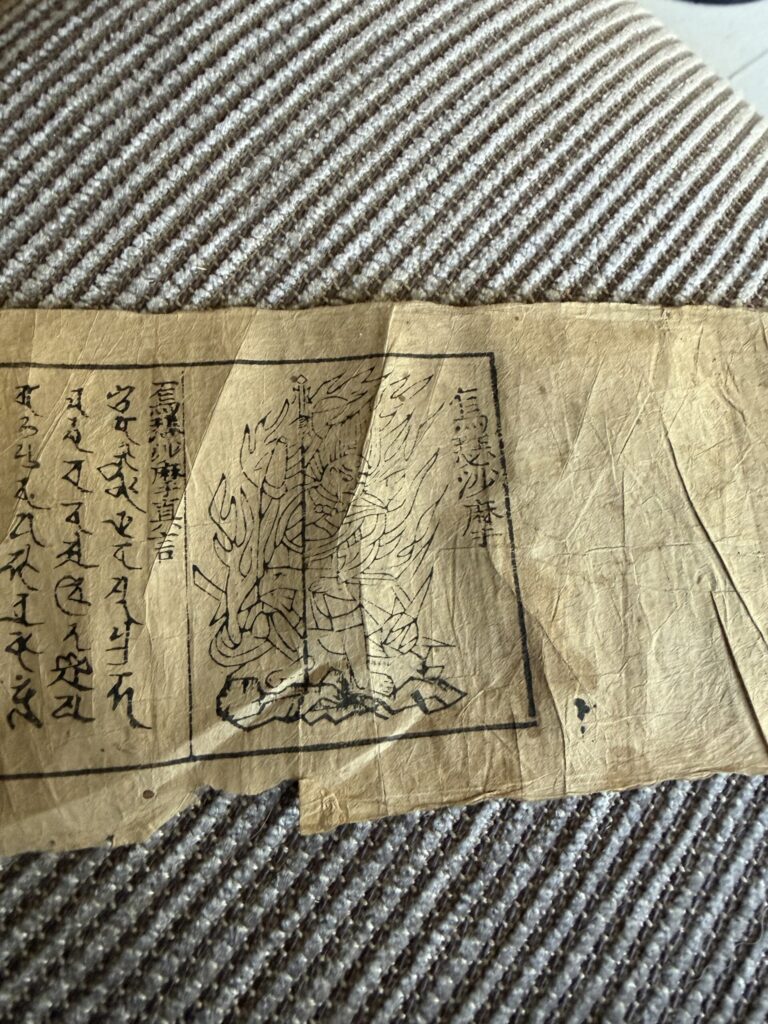
石川家の支族が江戸時代後期から、明治にかけて購入したと思われる、日本最強と名高い「九重守」を仏壇の隠し扉から発見。真言がビッシリと書かれた御守りで、各神様が列を成して書かれている様は圧巻。
長さが5メートルくらいある包帯くらいの巻物で、長いものだともっと長いと聞いております。こちらはご依頼者に保全。

そして、ご依頼者様の直近の御先祖様が残した自分史、私家本も保全。

ルーツを途切れさせず、先人のルーツ、想いを御子孫に紡ぎました。
2026年 9月
室蘭市 鈴掛団地|生前整理
今回の生前整理では、長年にわたりご家族のもとで大切に保管されてきた古い紙資料の中から、戦時下から戦後にかけての社会や暮らしを知ることのできる資料を発見しました。

確認された資料には、戦時下の女性向け雑誌に掲載された「決戦下の結婚禮法」や、当時の厚生省が提唱した「結婚十訓」を掲載した紙資料があります。

結婚や家庭生活、健康や遺伝、出産に対する当時の考え方が記されており、戦時下において国家の思想や政策が、人々の身近な生活にまで及んでいたことを知ることができます。

また、同じ現場からは昭和25年頃のものと考えられる古い新聞も発見されました。朝鮮戦争に関する戦況を伝える記事が掲載されており、戦後間もない時代の社会情勢を伝える資料の一つと考えられます。

『皇室御寫眞集』――昭和26年発行の記録
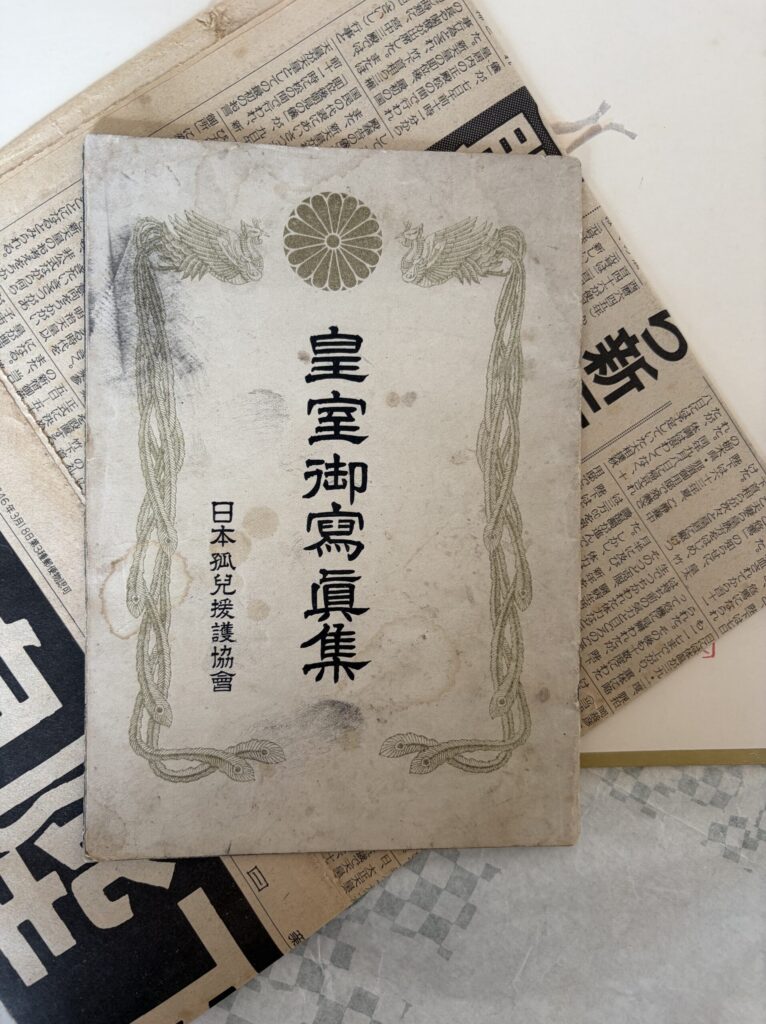
遺品整理・生前整理の現場から、昭和26年(1951年)に発行された『皇室御寫眞集』を確認しました。
本書は、日本孤児援護協会が発行した16ページの写真集で、美平晴道氏が編集・発行人として記載されています。
皇居二重橋をはじめ、天皇・皇后両陛下、皇太子殿下、皇族方の姿、ひな祭りの様子、児童福祉に関わる写真などが収められています。
巻末の奥付から、発行元や印刷所、各地の支部所在地なども確認することができます。
今回の資料は、単なる古い写真集として処分される可能性もありましたが、発行当時の社会や児童福祉、戦後の皇室に対する社会のまなざしを考えるうえで、一つの時代を伝える記録でもあります。
また、この一冊は昭和26年に発行された後、長い年月を経て、昭和64年(1989年)1月7日付の新聞紙に包まれた状態で残されていました。
昭和の始まりから戦後を経て、そして昭和という時代が終わったその日に包まれた新聞。
一冊の写真集と一枚の新聞が、長い時間を隔てて偶然重なっていたことにも、この資料が歩んできた時間を感じます。
遺品整理の現場には、家族にとっての思い出だけではなく、その時代を生きた人々や社会の姿を伝える記録が残されていることがあります。
LRAでは、処分される物の中に残された歴史的・社会的な記録にも目を向け、必要に応じて調査・確認を行いながら、次の世代へつなぐ活動を続けています。
公開データ上で、同一資料と確認できる現存個体は少なくとも2件。
- 国立国会図書館「島内志剛関係文書」 ― 1冊
- 九州歴史資料館系「安高文書」 ― 1冊
そして現在の市場では、
- 日本の古本屋・ぼおぶら屋古書店 ― 1冊
- 日本の古本屋・永森書店 ― 1冊
- 日本の古本屋・千机書房 ― 1冊
- メルカリ ― 少なくとも1件(ただし「2冊セット」のうち1冊が対象)
が確認できた。
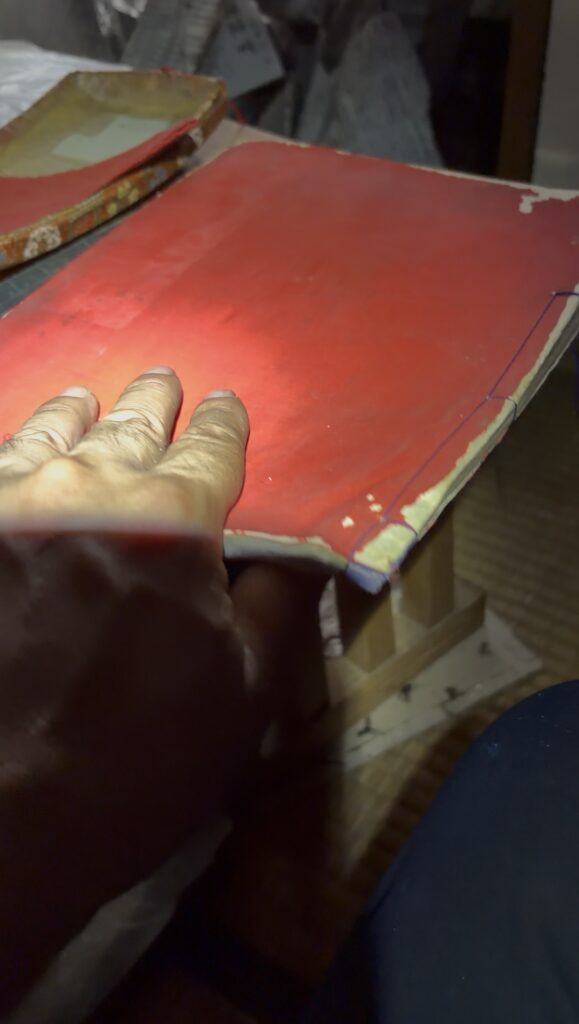
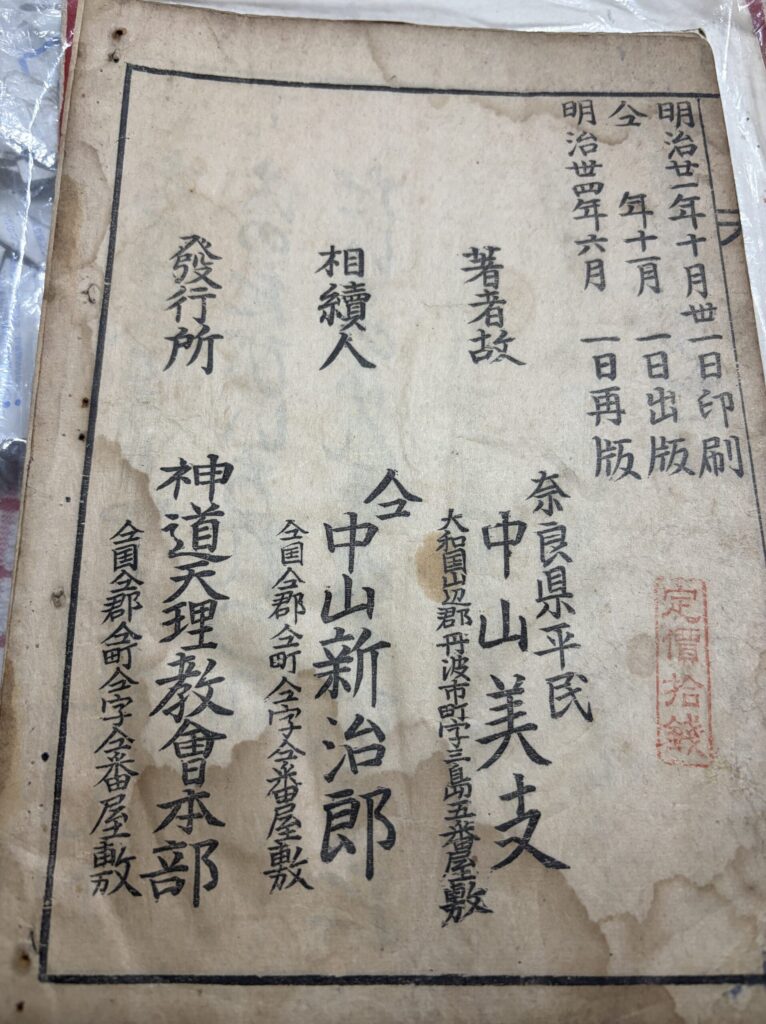
『御かぐら歌』明治34年再版
生前整理の現場から、明治34年(1901年)6月1日再版発行の『御かぐら歌』を確認しました。
本書は天理教教祖・中山みき(奥付表記「中山美支」)によるもので、初版は明治21年(1888年)。今回の再版は明治34年5月26日再版印刷、6月1日再版発行、定価10銭。奥付には「著者故 奈良縣平民 中山美支」「相續人兼発行者 中山新治郎」と記され、後見返しには「神道直轄 天理教會所本部藏版」とあります。
公開書誌では、明治34年版の所蔵はCiNii Books上で天理大学附属天理図書館1館が確認されています。市場についても調査しましたが、現時点で同一の1901年版と確実に確認できる現行出品は確認できませんでした。なお、古書市場には後年版の『御かぐら歌』が流通しています。また、外国だと思いますが同版の資料が販売されている形跡がありました。
明治期の天理教草創期における出版と継承を伝える、書誌的にも興味深い資料です。
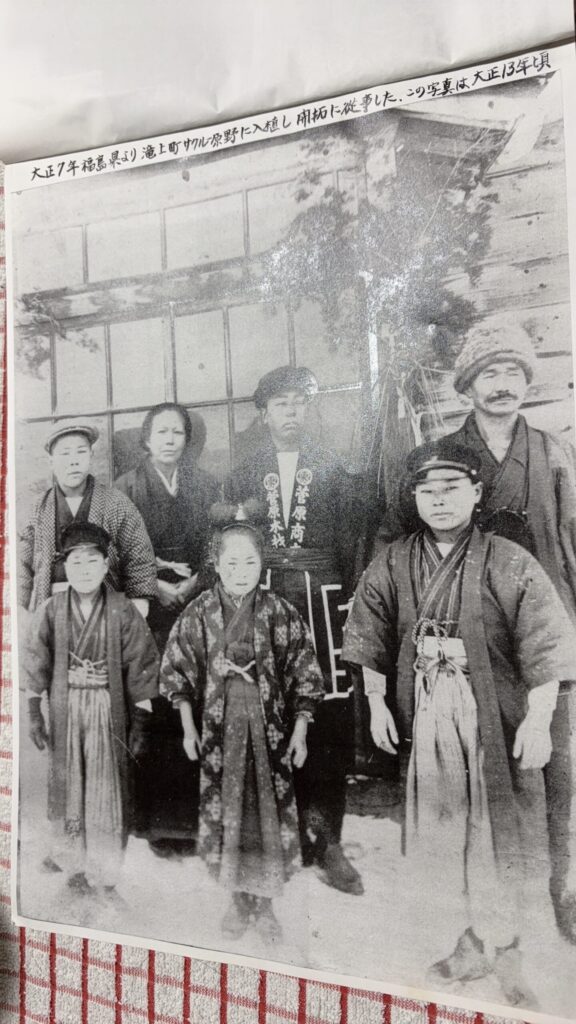
酒井家に残されていた滝上・サクル原野の記録
遺品整理・生前整理の現場から、酒井家に代々残されていた滝上町・サクル原野の開拓と暮らしを伝える記録・写真資料を確認しました。
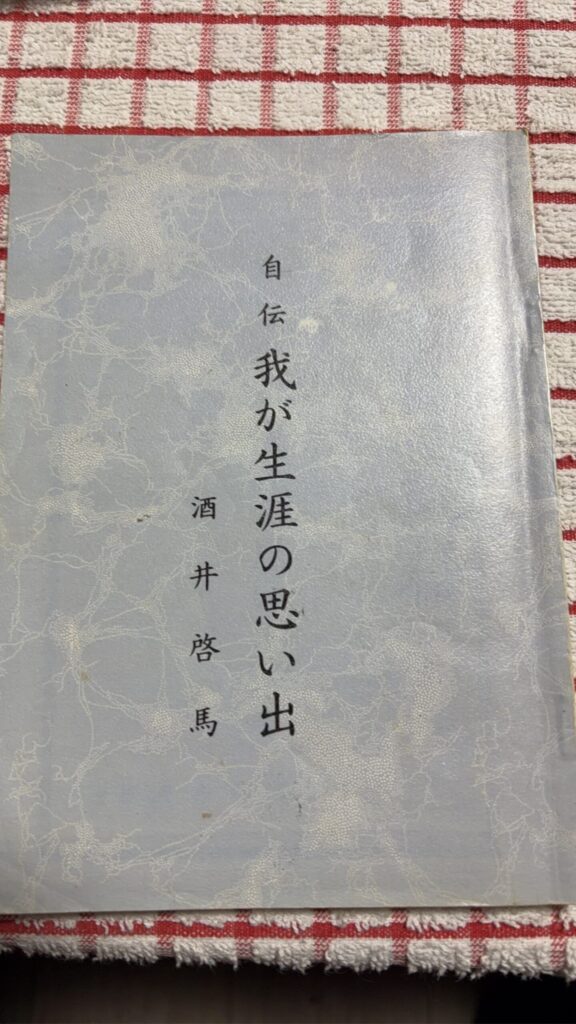
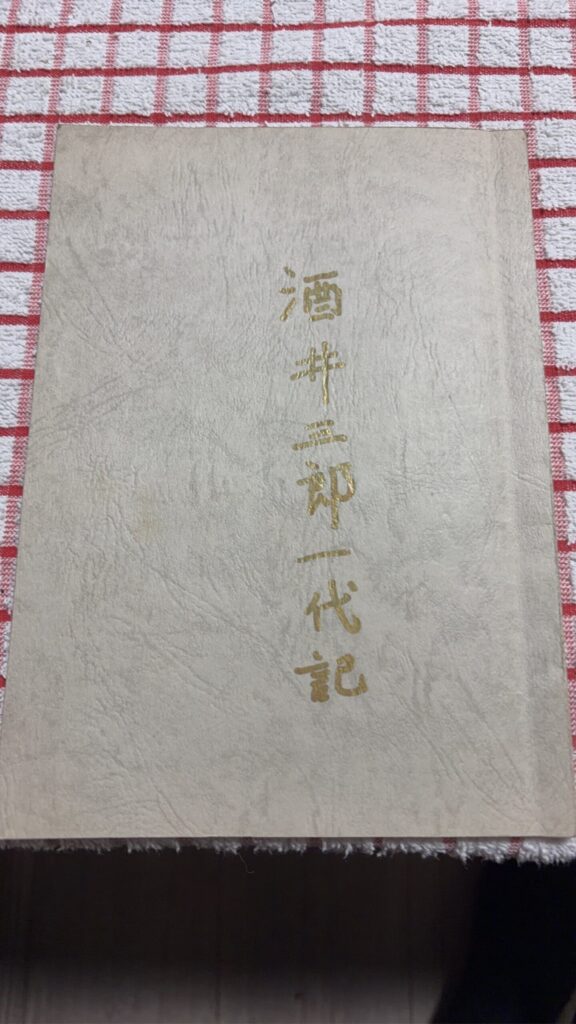
資料には、酒井啓馬氏の「自伝 我が生涯の思い出」(北海道立図書館北の資料所蔵、滝上図書館所蔵確認)や、弟である酒井三郎氏が残した『酒井三郎一代記』(所蔵未確認)をはじめ、酒井毅氏による補足記録、サクル原野で開拓に携わった酒井きいち氏に関する記録、開拓地の位置を特定できる記載や写真、当時の暮らしを伝える多数の写真が残されています。
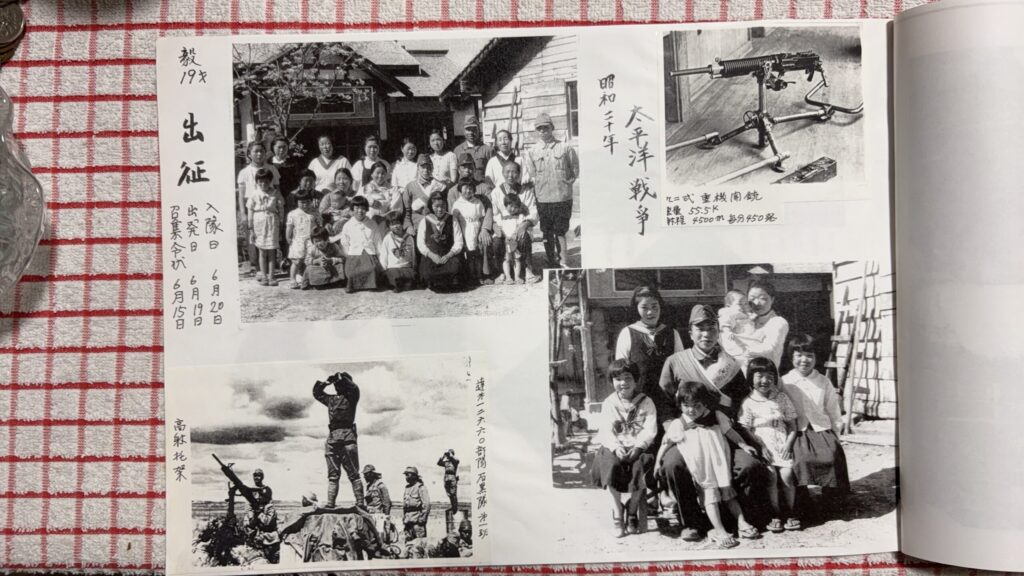
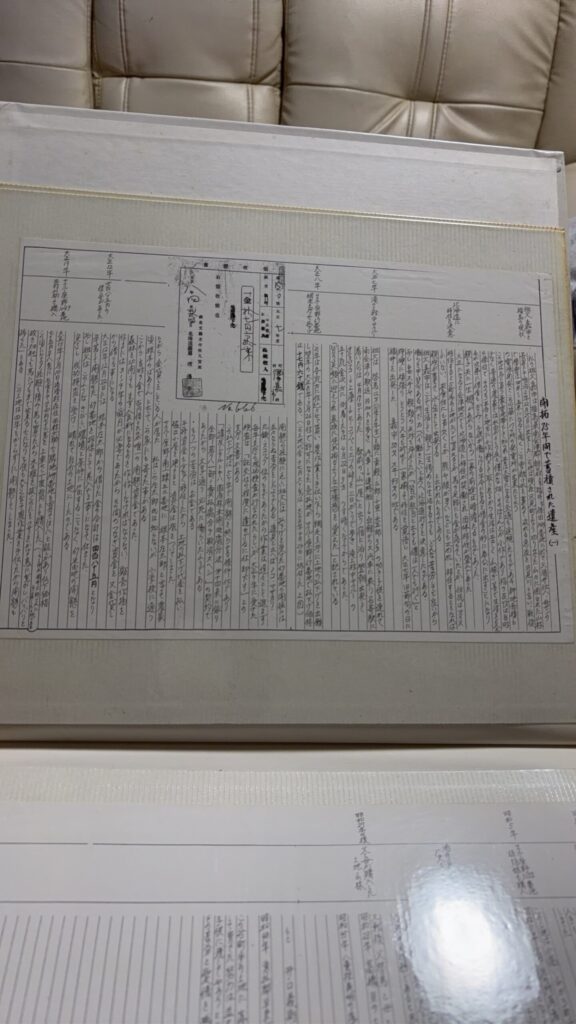
こちらの資料に関して、啓馬氏の長男が当時を振り返り、当時の希少な写真と人物名、何が起きたか長男の視点で解説付きで残されており、地域史を見る上で啓馬氏の残した開拓史を補完する資料となっています。
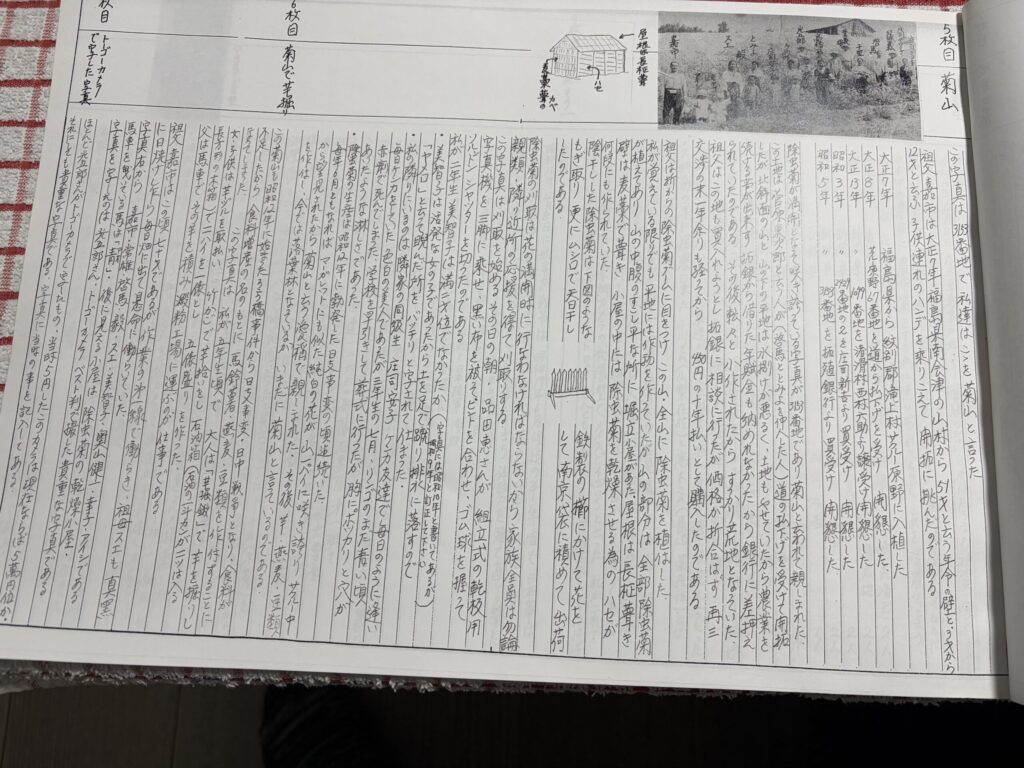
僕個人の意見ですが、開拓からの生活を写真と解説で網羅されている為、貴重な地域史となる可能性があるとみています。
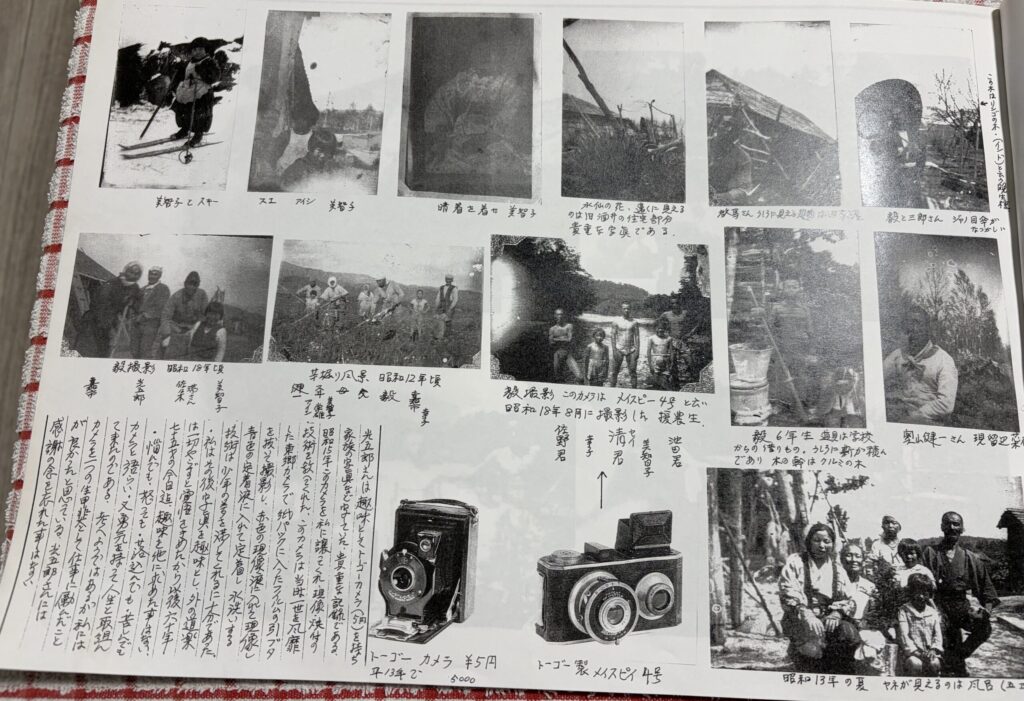
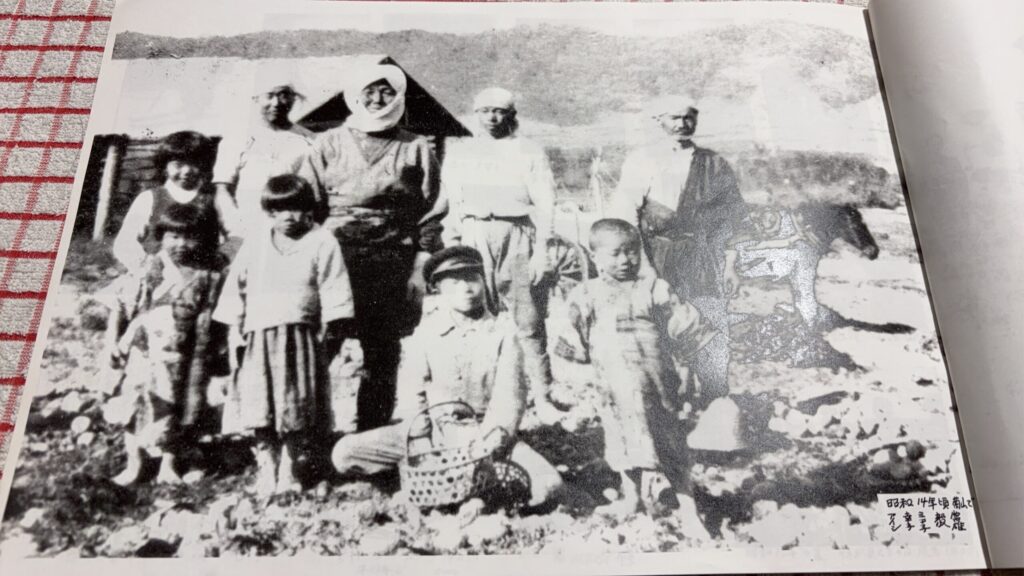
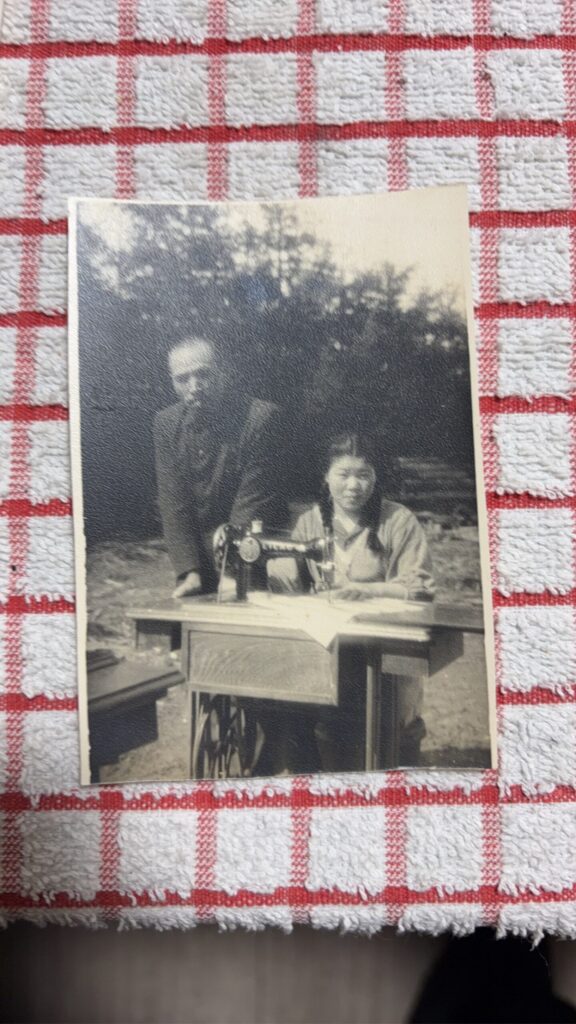
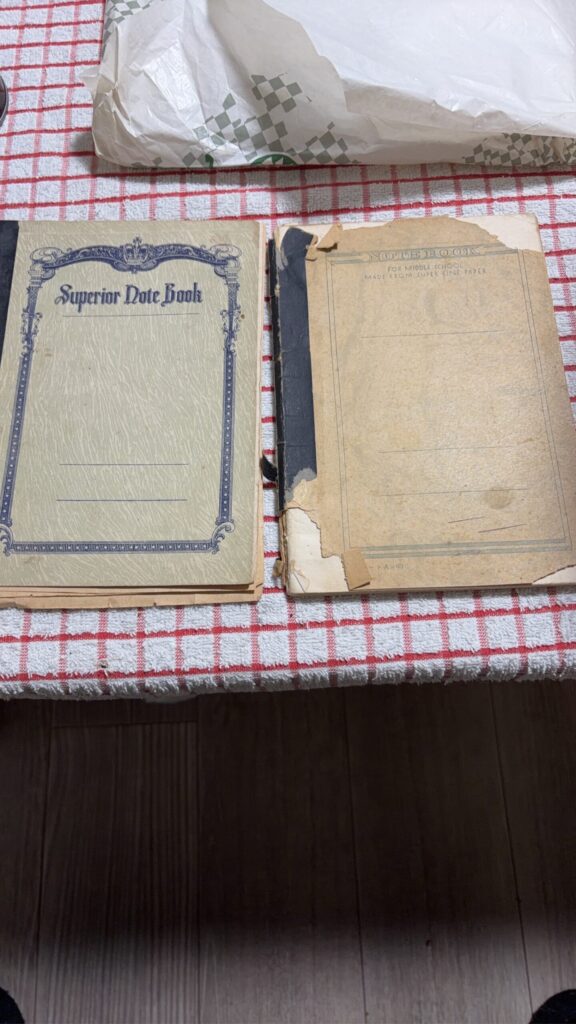
また、滝上町の裁縫・洋裁に関する資料として、94歳の依頼者が保管していた裁縫・洋裁の修了証書や、指導を受けている様子を写した写真、水引台帳、水引に関する写真なども確認しました。
さらに、写真の中には「食糧配給公団 北海道 滝上支所」と記されたものもあり、戦後の滝上地域における生活・物資供給の一端を伝える資料と考えられます。
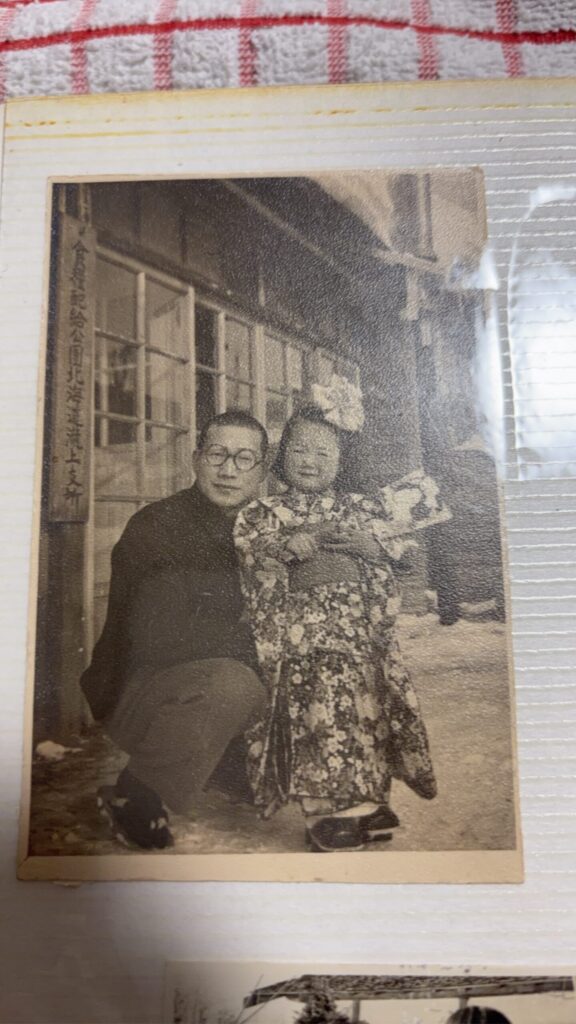
これらは、単なる家族写真や古い書類ではなく、滝上・サクル原野の開拓、家族の歩み、地域の暮らし、戦後社会の一端を具体的に伝える地域史資料です。
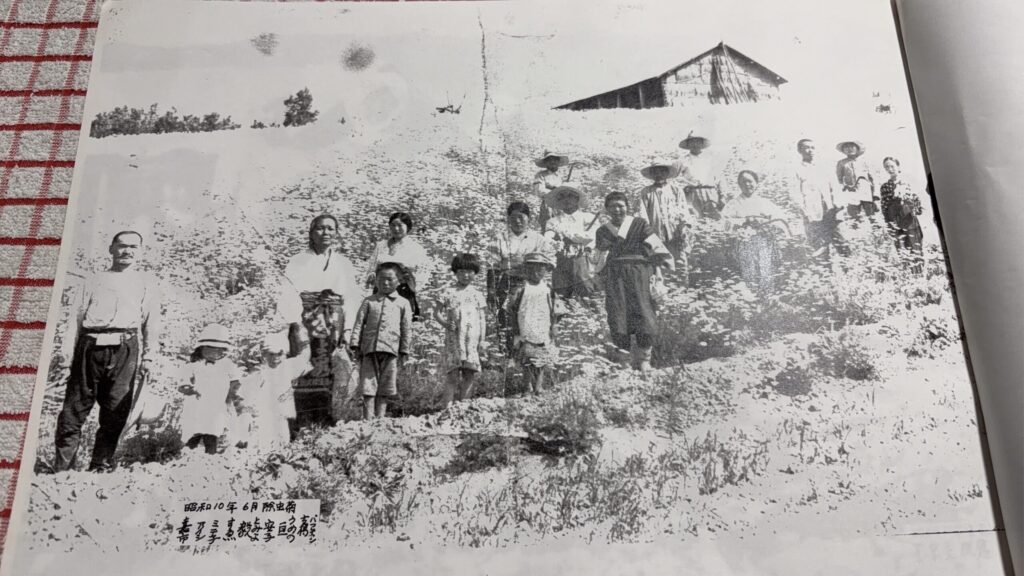
一冊の家族史と、そこに残された写真や記録から、これまで知られていなかった地域の記憶が浮かび上がりました。現在精査中にて、目録も作成したいと思います。全て合わせ100点以上の保全となります。
現在滝上教育委員会と連絡を取り、寄贈にむけて御依頼者の意思の下、ご相談させていただいております。
LRAでは、遺品整理の現場から失われる可能性のある地域の記録を確認し、必要に応じて調査・照会を行いながら、次の世代へつなぐ活動を続けています。
高野友治氏の著書をつなぐ
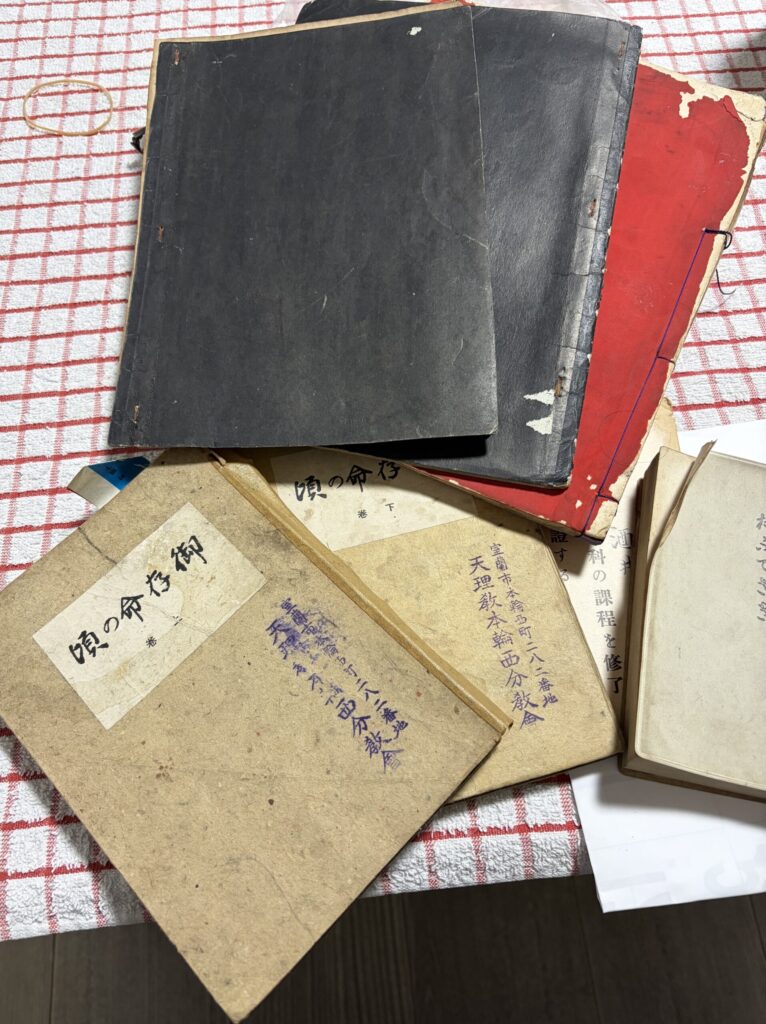
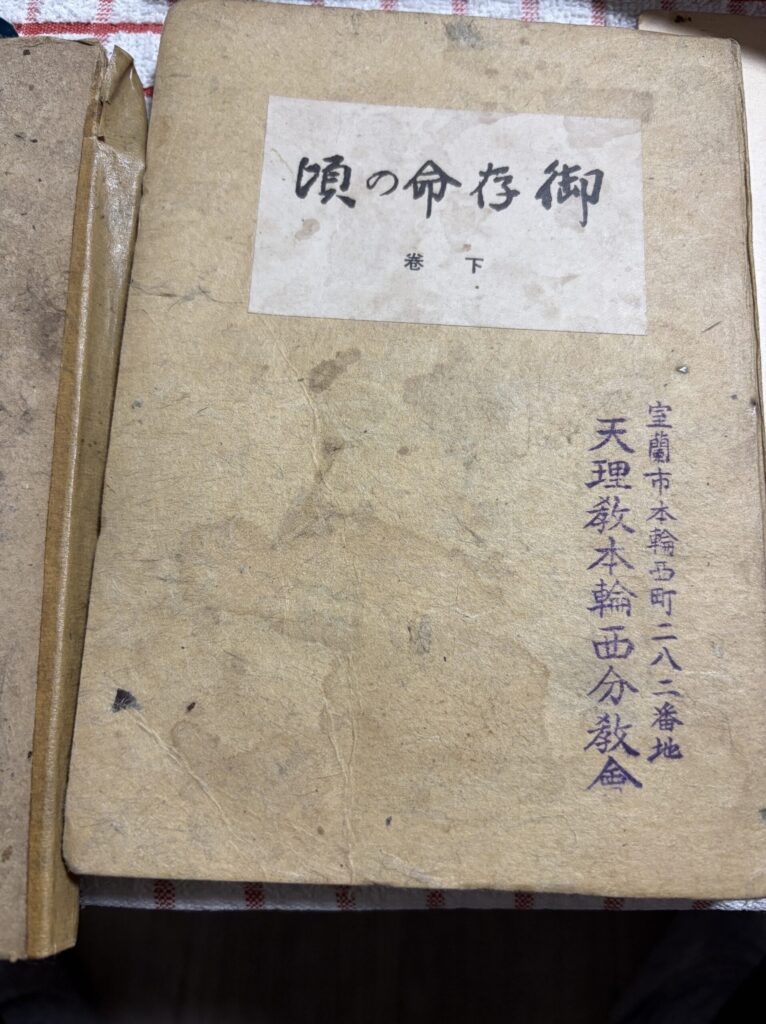
室蘭市本輪西町での生前整理の現場から、昭和23年(1948年)に刊行された高野友治氏の著書『御存命の頃』をはじめ、天理教に関する資料を確認しました。
『御存命の頃』には本輪西分教会の印が残されており、かつて本輪西に存在した教会とのつながりを示す資料でした。
本輪西分教会へ連絡を試みましたが連絡が取れなかったため、関係する教会を通じて資料をつなぐ方法を検討しました。その後、資料は南夷分教会を経由して当事者のもとへ届けられました。
後日、当事者の方からSNSを通じて、次のようなお言葉をいただきました。
「本日、南夷分教会から書籍が届きました。ありがとうございます。
天理教本輪西分教会は本輪西に教会を構えましたが、火災があり残った書物も少ない中で貴重なものでは無いかと思います。
とても感謝しております。ありがとうございます。」
今度、日程が合う日にお話をさせて頂く事になりました。発見したビルマ資料の故人・川合貢様が生前御存命だった頃を知ってらした様で、色々とお話を聞かせていただく予定です。
一冊の書籍が、かつて本輪西に存在した教会の記憶と、現在を生きる当事者を再びつなぐこととなりました。
遺品整理の現場で資料を発見するだけでなく、その背景を調べ、関係する方々へつなぐところまでを、LRAの活動として記録しています。
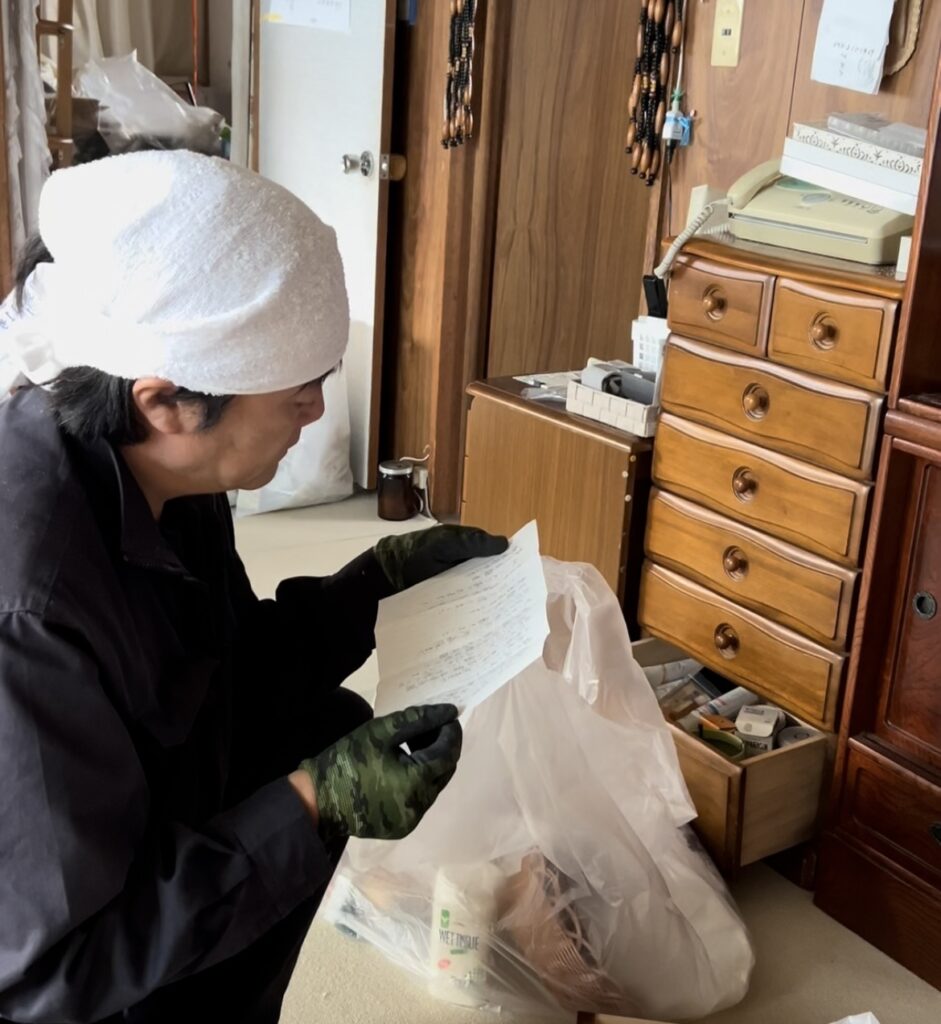
こうした資料は、研究機関に保管されている資料とは異なり、実際の家庭の中で長い年月を過ごしてきた「生活の記録」でもあります。
その背景までは、資料だけでは分からないこともあります。
しかし、処分されてしまえば、その家庭にこうした資料が残されていたという事実そのものが失われます。
今回発見した資料についても、出土地や資料の状態、内容を記録し、必要に応じて専門機関への相談を検討しています。
まだ整理の最中で、他の資料が出てきた場合、ご依頼者と相談しながらアップしたいと思います。
これまでに確認・救出してきた資料
これまでの実績には、
古文書、過去帳、家系図、書状、書画、掛け軸、写真、出版物、戦争関係資料、戦友会資料、個人の回想録など、数百点に及ぶ記録・記憶資料・戦国史・開拓史・宗教史・アイヌ民族史
が含まれます。
その一つひとつが、誰かの人生の一部であり、家族の歴史であり、地域の歴史です。
中には、数百年前の記録もあれば、戦争を経験した人の直筆の記憶、戦後の戦友会の記録、家族が代々守ってきた家系図などもあります。
これらは、金銭的な価値だけでは測ることのできないものです。
故人が生きた証を、未来へ
遺品整理の現場には、家族でさえ存在を知らなかった記録が残されていることがあります。
それが失われれば、同じものをもう一度取り戻すことはできません。
だからこそ、私たちはこれまで出会ってきた資料を、単なる「古い物」としてではなく、人が生きた証を伝える記録として残してきました。
渋谷家文書から江戸・明治期の地域史が見えたように。
過去帳から北海道開拓へつながる家族の歴史が見えたように。
木戸孝允の書をはじめとする書画から、北海道へ渡った家に伝えられた文化の記憶が見えたように。
そして、ビルマ第121兵站病院関係資料から、一人の兵士と、その戦友たちが歩んだ人生が見えてきたように。
資料が残れば、そこから歴史はもう一度語り始めます。
LRA associationは、これまでの救出・保全実績を記録として残し、今後も新たな資料に出会った際には、その記録をこのページへ追記していきます。
これらは、遺品整理の現場が、家族の記憶だけでなく、地域社会や時代の記録が残される最後の接点となり得ることを示す事例でもあります。
救出した歴史を、未来へ。
故人が生きた証を、次の世代へ。
Keiji Tazawa
歴史の空白を埋める遺品整理士。
Historical Materials & Records Rescue Achievements
Hundreds of items rescued from disposal have been preserved—carrying memories that would have been lost during estate cleanouts forward into the future.
At LRA, when historical or documentary materials that may otherwise be discarded are identified during estate and pre-death整理 projects, we take appropriate steps to temporarily preserve them, conduct research, consult with specialists, and contact relevant institutions or individuals.
We have encountered a wide range of records that convey history and personal lives, including documents, Buddhist mortuary tablets and death registers, family genealogies, calligraphy and paintings, photographs, and materials related to wartime experiences.
To date, the materials and records that have been identified, rescued, or connected to preservation efforts amount to several hundred items, including various materials documenting memories and personal histories.
Here, we document selected cases in chronological order.
Below are some of the major cases, presented chronologically.
I am posting all the photos taken at the time of discovery.
In order not to waste the sincerity of Mr. Shibuya, who selflessly decided to make this donation for the sake of Date City, and under the principles of the “Tandanya-Adelaide Declaration”—the first international declaration on Indigenous rights in archival and historical record management, adopted in October 2019 by the Expert Group on Indigenous Matters of the International Council on Archives (ICA)—I sincerely hope that Date City will exhibit and make these materials public as soon as possible, especially for the Ainu people residing in Date City who are highly likely to be direct descendants.
The donor, Mr. Shibuya, maintains a website featuring a complete catalog and chronicling the history of the Shibuya family, who were retainers of the Watari Date clan. I kindly invite you to visit and browse the site.
The Shibuya Family Documents website can be found here:
https://shibuyake.jimdofree.com
Late November 2023. Matsugaecho, Date City.
The old traditional house where the Shibuya family documents were discovered. A house over 130 years old, filled with personal memories for me as well. It is now a vacant lot.
Around November 15, 2023. At the time of discovering the ranma (transom) documents. They were found mixed with unnecessary items in the far corner of the room by the window. A collection of historical documents pasted onto fusuma (sliding doors). It is said that the donor’s father had displayed them in his study. Had his father not pasted them there, it is highly likely that these dignified historical documents—including rare materials from the Usu Kaisho and the personal names of dozens of Ainu people—would not exist today.
We requested an appraisal from a relative who serves as a visiting researcher at Otaru University of Commerce, who identified the collection as extremely rare historical documents. The donor, Mr. Shibuya, subsequently offered to donate them to the doctor for research purposes; however, the doctor kindly suggested contacting Date City instead for the sake of the city’s development.
When the curator arrived around the 28th, their eyes lit up and their face flushed with excitement. They enthusiastically exclaimed, “This is exceptionally rare! It contains personal names of Ainu individuals and descriptions of the Usu Kaisho!” Mr. Shibuya was delighted to hear this. The doctor was away on business and was unable to visit in person even once.
November 2023 11
The Shibuya Family Documents and Records Related to the Usu Trading Post
Date City, Hokkaido, Japan
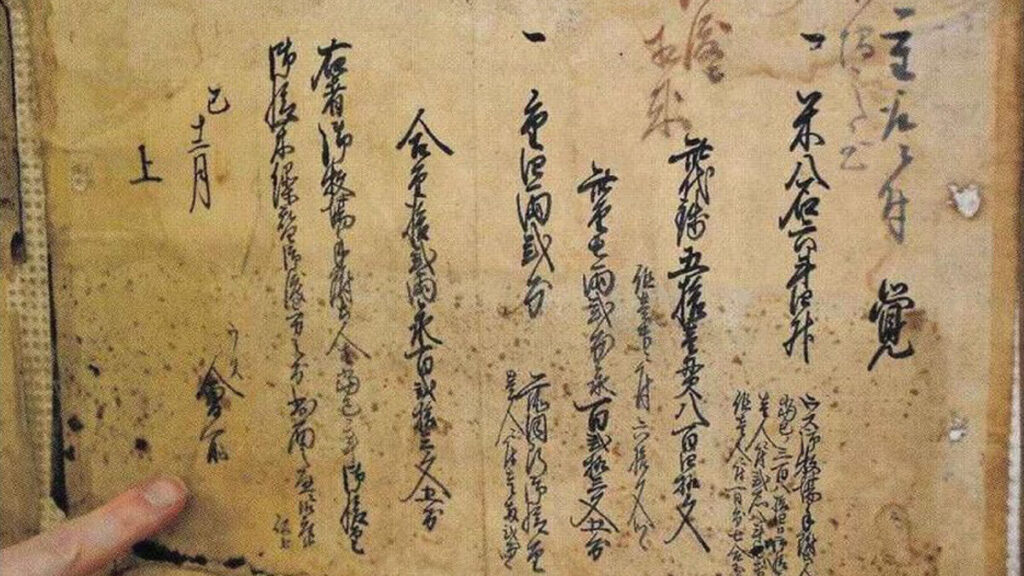
In November 2023, I discovered a collection of historical documents belonging to the Shibuya family during an estate clearance in Date City, Hokkaido.
A total of 122 documents dating from the late Edo period to the early Meiji period were identified and rescued from the risk of disposal.
The materials included records connected with local history, references to Ainu people, and historical references associated with Matsuura Takeshiro, among other materials.
The collection subsequently became the subject of consultation and investigation involving relevant public and academic institutions and was connected to formal preservation.
These documents had remained within a private family for generations. Their discovery prevented the loss of a historical record that might otherwise have disappeared permanently.
November 2023: Sealed Document (Kokuin-jo) from the 1600s, Issued by Date Munezane, 2nd Head of the Watari Date Clan, Found Pasted on a Transom (Ranma)
The most prominent historical figure associated with these documents, Date Munezane was the ninth son of Date Masamune.
Achievements: He developed the territory by conducting land surveys, developing new rice fields, and reorganizing land fiefs in the Watari domain (around present-day Watari Town, Miyagi Prefecture). His lineage directly leads to the Watari Date clan (including Date Kuninari and others), who later pioneered and settled Date City in Hokkaido during the Meiji period.
Background: Born as the son of Date Masamune, the founder and first lord of the Sendai Domain, Munezane was later adopted by Date Shigezane, Masamune’s cousin and a renowned warrior celebrated as one of the “Three Great Men of Date” (Date Sanketsu). Munezane succeeded Shigezane as the second head of the clan. This precious record is a piece of history passed down through generations from Mr. Shibuya’s ancestors.
As we proceeded with the cleanup, historical documents began emerging from every corner of the house. Sorting through them carefully in the dim light, documents from various era after era gradually came to light.
Then, in September 2024, a press conference led by the Date City Board of Education was held, resulting in coverage across major news outlets, including the Muroran Mimpo, the Hokkaido Shimbun, NHK, and the Yomiuri Shimbun.
*Muroran Mimpo: Currently available for viewing in their online archive.
*Hokkaido Shimbun: Currently available for viewing in their online archive.
*NHK: Video coverage of the press conference
*Yomiuri Shimbun / Yomiuri Shimbun Online: Currently available in their archive
In order to submit a report to the Certified Academy of Relic-Clearing Officers (Japan Academy of Estate Cleaners), we requested reference and archival consultation on the detailed contents of these documents from domestic research institutions, including Hokkaido University and Upopoy (National Ainu Museum and Park).
Hokkaido University offered the assessment that “without a doubt, this is inferred to be an extremely rare and valuable collection of historical materials.”
At Upopoy, the staff expressed great joy that information regarding the Ainu people would be included in the report for the Certified Academy of Relic-Clearing Officers. They graciously accommodated our reference request, taking the time to analyze and decipher parts of the documents for us.
Upon examining materials concerning the period around when Date Kunishige migrated to Hokkaido, as well as documents related to the iriko (dried sea cucumber) trade and the Usu Ranch, they provided the insight that these represent “rare regional history as well as rare Northern history.”
Furthermore, considering that this 122-item collection contains documents such as the sealed letter (kokuin-jo) of Date Munezane, Heigaku Ikumon, Heiho Seiden (Volume 5), records of Mr. Hideo Shibuya from the Meiji period, and materials with extremely few surviving copies in repositories nationwide, we regard this as an unbroken, composite archive spanning from the Edo period through the Meiji, Taisho, and Showa eras.
To ensure that the record of this discovery is preserved for future generations, we intend to update and add newly uncovered details continuously.
October 2024 10
A Calligraphic Work by Kido Takayoshi and Other Edo-to-Modern Period Artworks
Date City, Hokkaido, Japan
During an estate clearance and memorial disposal project in Date City, a collection of hanging scrolls and artworks passed down through a family that had migrated to Hokkaido during the Meiji period was identified.
Among them was a calligraphic work by Kido Takayoshi (Katsura Kogoro), one of the three major figures of the Meiji Restoration.
The family had already recognized the work as being by Kido Takayoshi and had carefully preserved it.
When an opportunity arose for expert examination, the client brought the hanging scroll from Sapporo specifically for the examination.
The same collection also contained more than 20 hanging scrolls and artworks, including:
- A calligraphic work identified as being associated with Kansazan
- A hanging scroll associated with Shinagawa Koho
- A work associated with the artist Hara Gekka
- Other Edo-period and modern-era artworks whose authors or contents could not be fully identified at the time
The materials had been passed down through a family whose ancestors had migrated from the Marugame domain to Hokkaido.
The discovery led to further examination and consultation concerning the historical and cultural significance of the materials.
Where formal authentication had not yet been established, the materials are recorded here as historical and cultural materials identified and preserved through the estate clearance process, rather than as authenticated works.
2025 12
A Buddhist Death Register Revealing Family Connections to the Hirosaki Domain
Kamicho-Nagawacho, Date City, Hokkaido
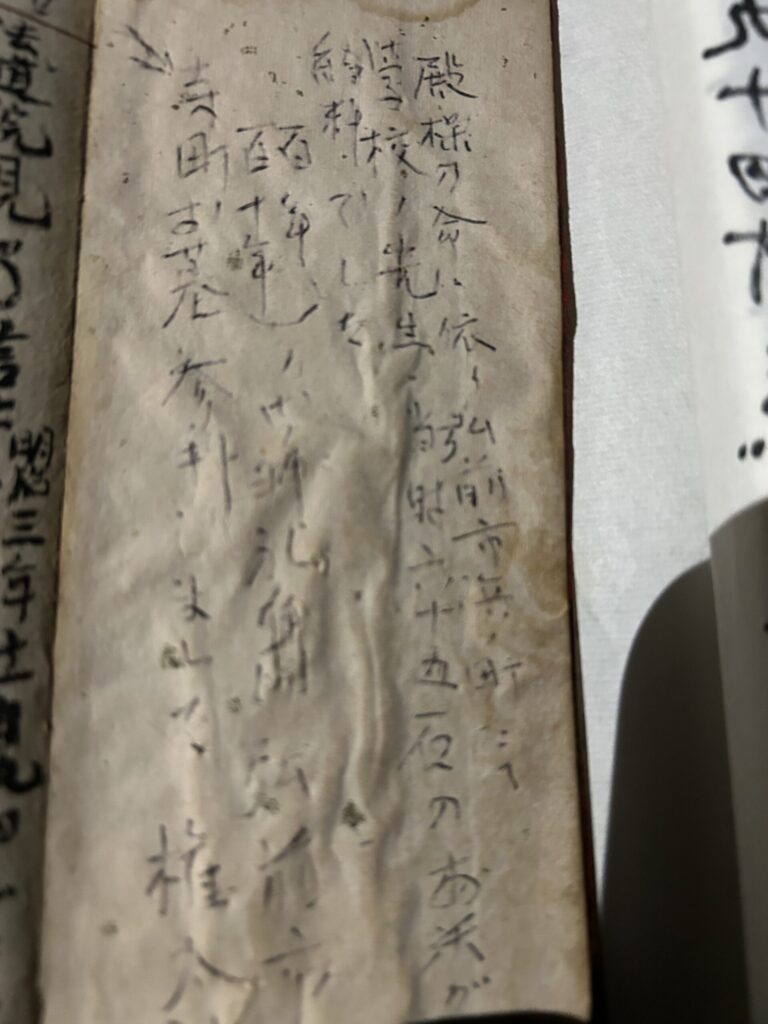
During a pre-death estate organization project, an old Buddhist death register (kakocho) was discovered.
The record revealed that the family ancestors had migrated from Hirosaki in present-day Aomori Prefecture to Hokkaido during the period of Hokkaido’s early development.
Among the entries was a historical note concerning education in Hirosaki, referring to a teacher’s remuneration of 65 koku of rice by order of the lord.
Further consultation with a curator in Hirosaki revealed that a village bearing the same family name existed in the area, and that individuals with the same surname also appeared in records of samurai associated with the Tsugaru domain.
The discovery provided the family with a tangible connection to their ancestral history and to the history of migration and settlement in Hokkaido.
The document was returned to the family so that its history could be passed on to future generations.
October–November 2025 11
A Record of Life in Muroran During the Early Development of Hokkaido
Suenaga-cho, Date City, Hokkaido
During a large-scale estate clearance involving a four-bedroom house, exterior areas, a garage, and storage buildings, a publication based on an ancestor’s diary and family records was discovered.
The material contained records concerning:
- Life in Muroran during the early development of Hokkaido
- A family genealogy
- Photographs of household objects and everyday life
- Records documenting local history
The family had been searching for this material for many years.
Its discovery restored an important part of the family’s history and also provided a record of how people lived in Muroran during the period of Hokkaido’s early development.
2026 2
Family Records Preserved for Future Generations
Date City, Hokkaido, Japan
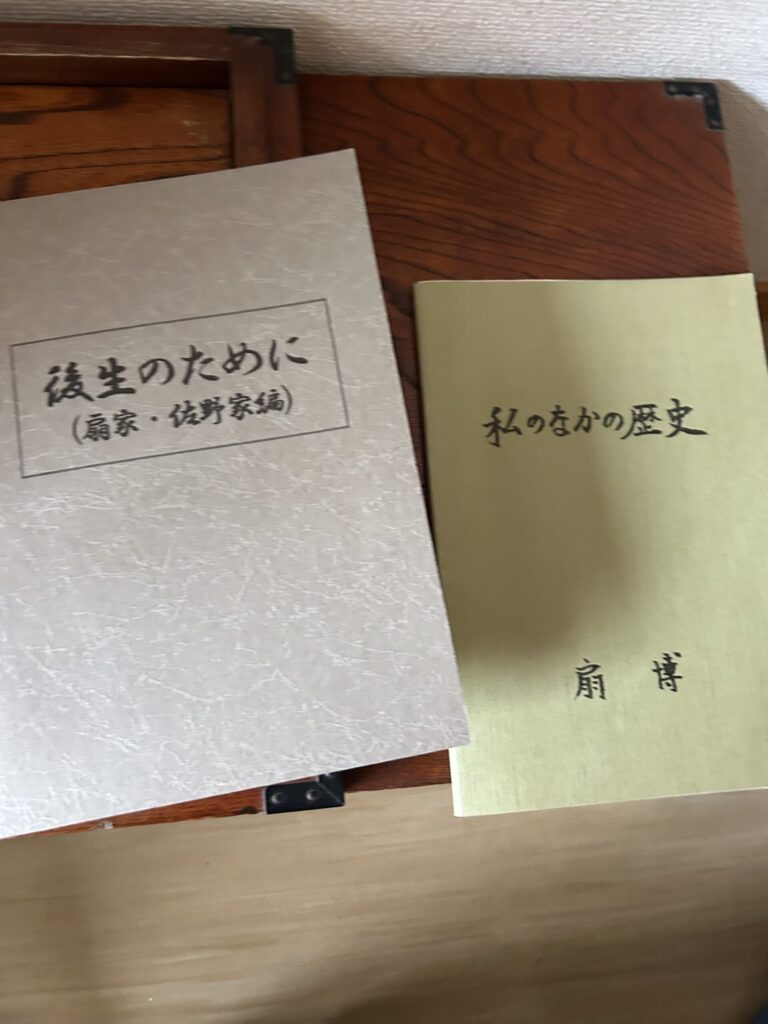
A family historical record titled “For Future Generations” was identified during an estate-related project.
The materials documented the genealogy of the Nagake family, connections extending to the Nagake family of the Kaga domain, and the family’s history from Ishikawa Prefecture to Hokkaido.
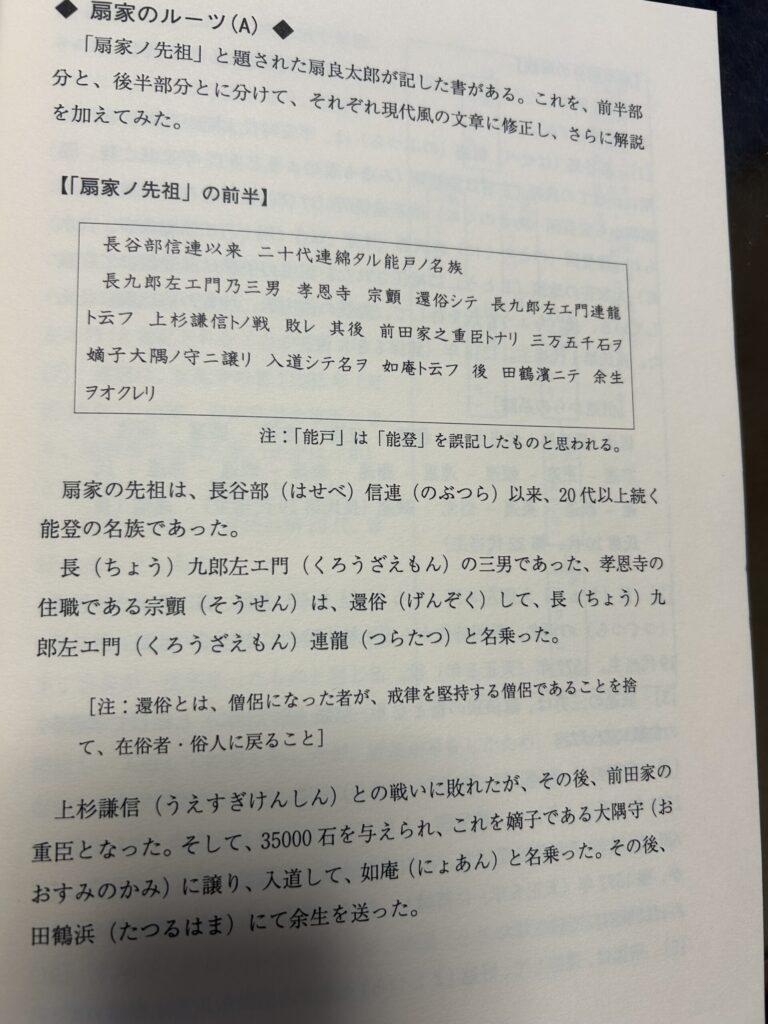
The materials included genealogical records and other family historical documentation.
With the family’s consent, the materials were connected to donation and preservation through an appropriate historical institution.
2026 5
Traces of Kotan: A Cross-Section of Ainu Human Rights History
Muroran City, Hokkaido, Japan
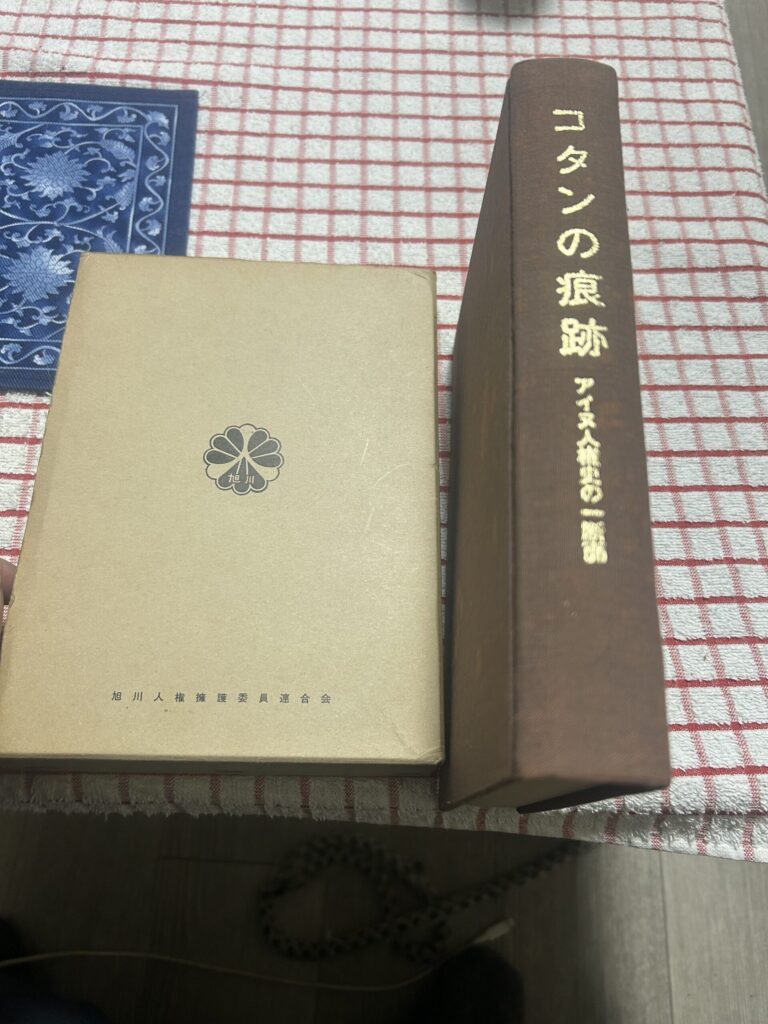
A rare, privately published documentary collection titled Traces of Kotan: A Cross-Section of Ainu Human Rights History, published in 1971, was discovered during an estate clearance project.
The publication contains testimonies and records concerning the experiences and thoughts of Ainu people during that period.
The material was subsequently donated directly to the Kawamura Kaneto Ainu Memorial Museum in Asahikawa.
The preservation of this material provided an opportunity for a historical record to return to a community and institution closely connected with the people and history represented within it.
2026 5
Wartime Records Related to the Burma Campaign and the 121st Field Supply Hospital
Muroran City, Hokkaido, Japan
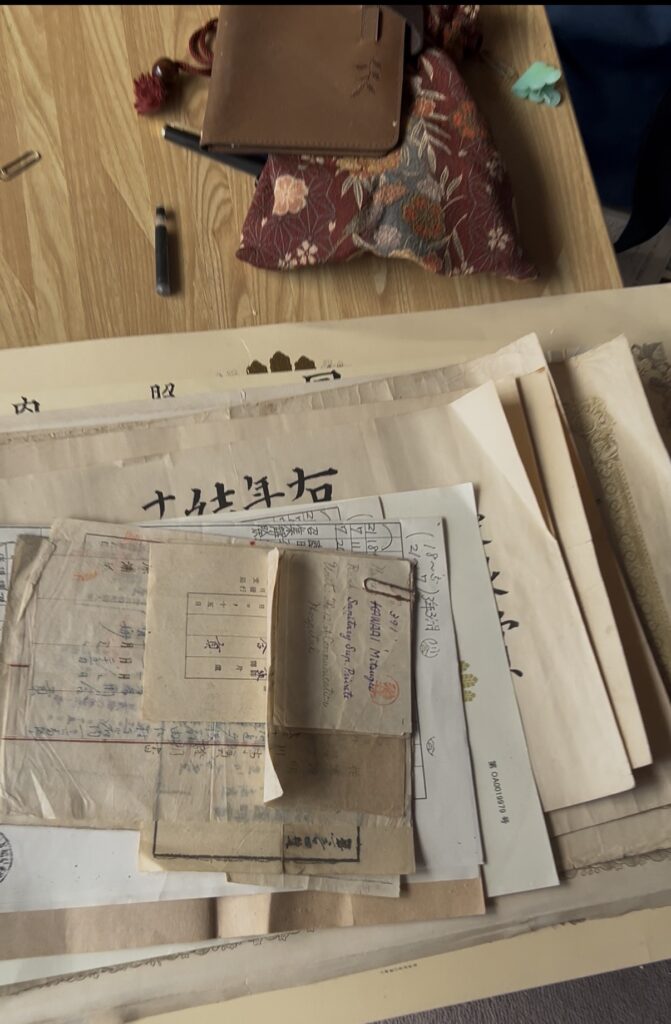
A substantial collection of wartime materials belonging to a former military medical personnel member who served in the Burma Campaign was discovered during an estate clearance project.
The collection includes materials relating to:
- The 121st Field Supply Hospital
- The 15th Army
- Military medical service
- Wartime and repatriation records
- Internment and prisoner-of-war-related materials
- A personal memoir titled Memories of Burma
- A Record of the Burma Campaign
- Veterans’ association records
- Photographs of former comrades
- Commemorative publications and privately printed books
Taken together, these materials make it possible to trace an individual’s life from before military service, through wartime service and the Burma Campaign, to the end of the war, repatriation, postwar life, and continued relationships with former comrades.
The collection therefore preserves not only military history, but also the personal history and memories of the individual who lived through those events.
Consultation concerning the future preservation and donation of these materials is being considered together with the bereaved family.
2026 8
A Family Genealogy Connecting the Ishikawa Family to the Date Clan
Horomoe-cho, Muroran City, Hokkaido, Japan
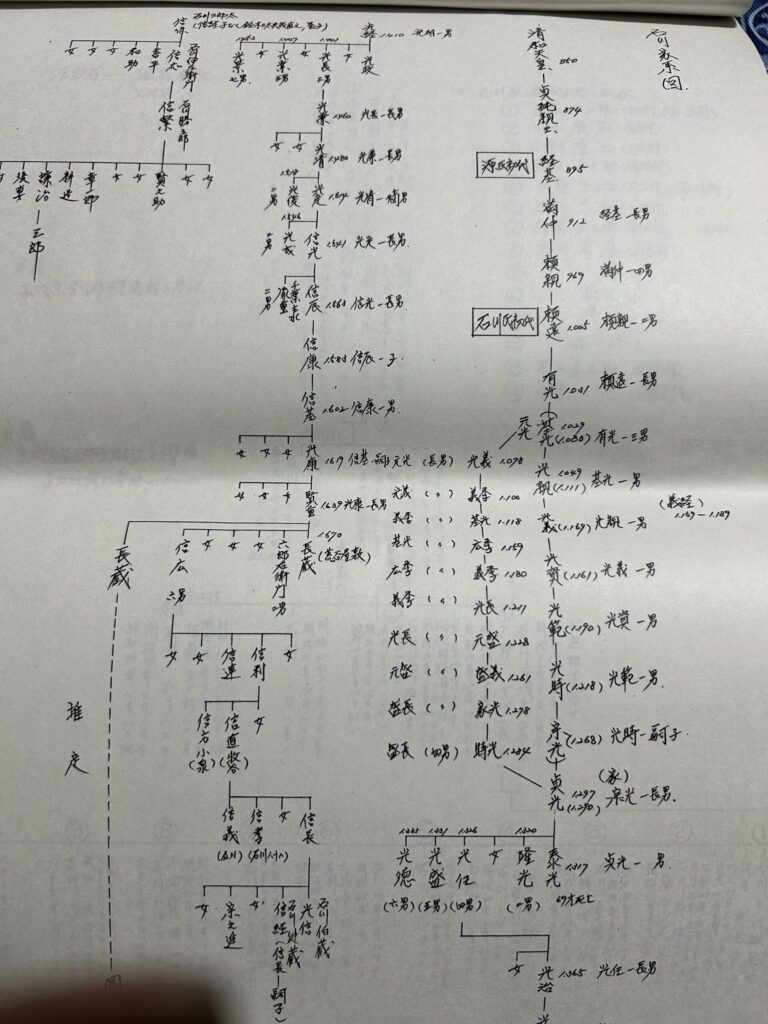
During a pre-death estate organization project, a family genealogy and historical records that had not been fully known to the family were identified.
The genealogy documents the lineage of the Ishikawa family and its connections to the Date clan, as well as the family’s subsequent movement and settlement in Hokkaido.
The materials provide a record connecting family history across the Sengoku period, the Edo period, the final years of the shogunate, and the subsequent development of Hokkaido.
A branch family of the Ishikawa family is believed to have acquired a “Kokonoe-mamori” sometime between the late Edo period and the Meiji era. It was discovered behind a concealed door of the family Buddhist altar.
Known as one of Japan’s most powerful protective amulets, the Kokonoe-mamori is a remarkable talisman densely inscribed with Buddhist mantras, with the names and representations of various deities arranged in rows. The sheer density and scale of the inscriptions are truly striking.
The amulet is approximately five meters long, resembling a roll of bandage. I have also been informed that some examples are considerably longer.
This particular item has been preserved by the client, rather than being discarded.
The client also chose to preserve a personal history and privately published book written by one of their most recent ancestors, leaving behind a record of the ancestor’s own life and experiences.
Rather than being discarded as an ordinary old book, this privately published work was preserved for the client and future generations.
We preserved the continuity of their roots, carrying the roots, memories, and thoughts of those who came before forward to their descendants.
September 2026
Suzukake Housing Complex, Muroran City|Pre-Death Estate Organization
During this pre-death estate organization, we discovered a number of historical paper materials that had been carefully preserved by the family for many years, offering insight into society and everyday life from the wartime period through the postwar years.
The materials identified include “Marriage Etiquette Under the Decisive War Effort,” published in a women’s magazine during wartime, as well as printed material containing the “Ten Marriage Principles” advocated by the Ministry of Health at the time.
The materials reveal contemporary attitudes toward marriage, family life, health, heredity, and childbirth, providing insight into how state ideology and policies extended into the everyday lives of ordinary people during wartime.
Additionally, at the same site, we discovered an old newspaper believed to date from around 1950 (Showa 25). It contains reports on the course of the Korean War, providing a glimpse into the social conditions and historical circumstances of the period shortly after the end of World War II.
Kōshitsu Go-Shashin-shū — A Photographic Record Published in 1951
From an estate and pre-death整理 site, LRA identified Kōshitsu Go-Shashin-shū (『皇室御寫眞集』), a photographic booklet published in 1951 (Shōwa 26).
The 16-page booklet was published by the Japan Orphans Assistance Association (日本孤児援護協会), with Harumichi Mihira (美平晴道) credited as editor and publisher. It contains photographs of the Nijubashi Bridge at the Imperial Palace, the Emperor and Empress, the Crown Prince, members of the Imperial Family, scenes of Hinamatsuri, and photographs related to child welfare.
The colophon provides information on the publisher, printer, and branch offices located throughout Japan.
Although this material could have been discarded simply as an old photographic booklet, it is also a record that conveys aspects of postwar Japanese society, child welfare, and contemporary attitudes toward the Imperial Family.
Remarkably, after being published in 1951, this copy remained wrapped in a newspaper dated January 7, 1989—the final day of the Shōwa era.
A photographic booklet published in the postwar period and a newspaper marking the end of the Shōwa era had thus remained together across nearly four decades. This unusual physical connection also provides a glimpse into the history the material itself has passed through.
Estate-related work can uncover not only personal memories belonging to a family, but also records that document the people, society, and historical circumstances of their time.
LRA continues to identify, research, and preserve historical and social records found among items at risk of disposal, with the aim of connecting them to future generations.
Based on publicly available data, at least two surviving copies of this same publication have been identified:
- National Diet Library, “Shimauchi Yukitaka Papers” — 1 copy
- Kyushu Historical Museum-related “Ataka Papers” — 1 copy
In the current antiquarian book market, the following listings have also been identified:
- Nihon no Furuhon’ya / Boobura-ya Antiquarian Bookstore — 1 copy
- Nihon no Furuhon’ya / Nagamori Shoten — 1 copy
- Nihon no Furuhon’ya / Senki Shobo — 1 copy
- Mercari — at least 1 listing (one copy included in a two-book set)
Market listings do not necessarily represent distinct physical copies, as the same copy may be relisted or appear across multiple platforms.
Mikagura Uta — Second Edition, 1901
From an estate preparation site, LRA identified a copy of Mikagura Uta (『御かぐら歌』), issued as a second edition on June 1, 1901 (Meiji 34).
The work is attributed to the founder of Tenrikyo, Miki Nakayama (中山みき), whose name appears in the colophon as “Nakayama Mishi” (中山美支). The first edition was published in 1888 (Meiji 21). This second edition was printed on May 26, 1901, and published on June 1, 1901, with a listed price of 10 sen. The colophon identifies “Nakayama Mishi, deceased, commoner of Nara Prefecture” as the author and “Nakayama Shinjiro” as the heir and publisher. The rear endpaper bears the statement “Published from the headquarters collection of the Tenrikyo Church, under direct Shinto jurisdiction” (神道直轄 天理教會所本部藏版).
According to publicly available bibliographic records, the 1901 edition is currently recorded in the CiNii Books database at one institution: the Tenri Central Library of Tenri University.
The antiquarian book market was also searched, but no current listing that could be conclusively identified as another copy of the same 1901 edition was found. Later editions of Mikagura Uta are currently found in the antiquarian book market. There also appears to be evidence of a copy of the same edition having been offered for sale outside Japan.
This volume is a bibliographically significant record of the publication and transmission of Tenrikyo texts during the early period of the religion’s history.
Records of the Takikami and Sakuru Wilderness Preserved by the Sakai Family
During an estate and pre-death整理 project, LRA identified records and photographic materials preserved by the Sakai family that document the development and daily life of the Takikami area and the Sakuru Wilderness in Hokkaido.
The materials include Autobiography: Memories of My Life (“自伝 我が生涯の思い出”) by Keima Sakai, whose work is held by the Hokkaido Prefectural Library’s Kita no Shiryō collection and has also been confirmed in the Takikami Library; Sakai Saburo’s Life Story (『酒井三郎一代記』), written by Keima Sakai’s younger brother Saburo Sakai, whose institutional holdings have not yet been confirmed; supplementary records by Tsuyoshi Sakai; records concerning Kiichi Sakai, who was involved in the settlement of the Sakuru Wilderness; as well as descriptions and photographs that help identify the location of the settlement and numerous photographs documenting life at the time.
In these materials, Keima Sakai’s eldest son looks back on that period from his own perspective, providing detailed explanations of rare photographs, the names of the people depicted, and the events that took place. These records complement the history of settlement and development left by Keima Sakai and provide valuable additional material for understanding the local history of the region.
In my personal view, because these materials comprehensively document life from the period of settlement and development through photographs and detailed explanations, they have the potential to become valuable resources for understanding the local history of the region.
In addition, materials related to sewing and dressmaking in Takikami Town were identified, including a sewing and dressmaking completion certificate preserved by the 94-year-old client, photographs showing her receiving instruction, a mizuhiki ledger, and photographs related to mizuhiki.
Furthermore, among the photographs is one bearing the inscription “Food Distribution Corporation, Hokkaido, Takikami Branch” (食糧配給公団 北海道 滝上支所), which may provide a glimpse into daily life and the distribution of essential goods in the Takikami area during the postwar period.
These materials are not merely family photographs or old documents; they are local historical records that provide concrete insight into the settlement and development of the Takikami and Sakuru Wilderness areas, the history of the Sakai family, everyday life in the region, and aspects of postwar society.
Through a family history book, together with the photographs and records preserved with it, previously undocumented aspects of the region’s history have begun to emerge. The materials are currently under detailed examination, and we also plan to prepare an inventory. In total, more than 100 items have been preserved.
LRA is currently in contact with the Takikami Town Board of Education and, in accordance with the client’s wishes, is consulting with them regarding a potential donation of the materials.
LRA continues to identify regional historical records that may otherwise be lost through estate-related work, conducting research and inquiries where necessary, with the aim of connecting these records to future generations.
Connecting a Book by Yuji Takano
During a pre-death整理 project in Honwa-nishi, Muroran City, LRA identified materials related to Tenrikyo, including Gozonmei no Koro (『御存命の頃』), a book by Yuji Takano published in 1948 (Shōwa 23).
The book bears the stamp of the Honwa-nishi Tenrikyo Church, providing a tangible connection to the church that once existed in Honwa-nishi.
As we were unable to establish contact with the Honwa-nishi Church, we considered other ways to connect the material with relevant parties through another Tenrikyo church. The book was subsequently delivered to the person concerned through the Nan’i Tenrikyo Church.
Later, the person concerned contacted us through social media and shared the following message:
“The book arrived today from the Nan’i Church. Thank you very much.
The Honwa-nishi Tenrikyo Church established its church in Honwa-nishi, but there was a fire, and very few books survived. I believe this may therefore be a valuable item.
I am very grateful. Thank you very much.”
We have also arranged to speak with this person when our schedules allow. They knew the late Mitsugu Kawai, whose belongings included the Burma-related materials that LRA recently discovered, and we hope to hear their memories and stories about him while he was still alive.
A single book has thus helped reconnect the memory of a church that once existed in Honwa-nishi with someone who carries knowledge of that history today.
LRA documents not only the discovery of materials during estate-related work, but also the process of researching their background and reconnecting them with the people and communities to whom they may be connected.
Unlike materials preserved in research institutions, these materials are also records of everyday life, having remained within an actual household for many years.
The circumstances surrounding their preservation may not always be fully understood from the materials themselves.
However, once they are discarded, the very fact that such materials were preserved within this particular household may be lost forever.
For the materials discovered during this project, we are documenting their place of discovery, physical condition, and contents, and will consider consulting relevant specialist institutions when appropriate.
The estate organization is still ongoing. Should additional historical materials be discovered, we will discuss them with the client and, with their permission, introduce them here as appropriate.
Several Hundred Historical and Personal Records
The materials documented through these cases include:
- Historical documents
- Buddhist death registers
- Genealogies and family trees
- Letters and handwritten records
- Calligraphic works and hanging scrolls
- Photographs
- Privately published books
- Wartime records
- Veterans’ association materials
- Personal memoirs
- Family and community records
Taken together, these documented materials number several hundred items, including records whose historical significance was recognized only after they were encountered during estate-related work.
Some date back hundreds of years.
Others preserve the handwriting, memories, photographs, and personal experiences of people who lived through war, migration, settlement, and social change.
Their value cannot always be measured in monetary terms.
They are records of people who lived, families who came before us, and communities whose memories might otherwise disappear.
Preserving the Evidence of Lives Lived
An estate clearance site can contain records that even the surviving family members did not know existed.
Once destroyed, such records cannot simply be recreated.
For this reason, LRA association has sought to treat these materials not merely as old objects, but as records preserving the evidence of human lives and historical memory.
The Shibuya Family Documents revealed a previously obscured part of regional history.
The Buddhist death registers and genealogies reconnected families with the history of migration and settlement in Hokkaido.
The calligraphic and artistic materials preserved cultural objects passed down through families who came to Hokkaido.
The wartime collection connected one individual’s life with the wider history of the Burma Campaign and the veterans who survived it.
The Traces of Kotan publication preserved testimony and memory connected with Ainu history and human rights.
Each case is different.
But they share one common point:
The materials were encountered at the point where they could have disappeared forever.
LRA association considers the preservation and appropriate transfer of such records to be part of a broader practice of history-preserving estate clearance.
The purpose is not to determine the final academic value of every object.
It is to prevent potentially irreplaceable records from being lost and, where appropriate, to connect them with families, researchers, museums, archives, or other institutions capable of preserving and interpreting them.
This record of past cases will continue to be updated as new materials are encountered.
Rescuing history. Preserving the evidence of lives lived. Passing memory to the next generation.
These cases also demonstrate that estate-organizing sites can serve as a final point of contact where not only family memories, but also records of local communities and the history of an era, may still be preserved.
LRA association
Keiji Tazawa, CEO
Estate Organizer Filling the Gaps in History