
目次
- ――川合貢さんのビルマ資料群を立命館大学国際平和ミュージアムへ
- 川合貢さんの資料目録
- 資料を「珍しい」で終わらせない
- 歴史には、まだ多くの空白がある
- なぜ、立命館大学国際平和ミュージアムなのか
- 来歴を残すということ
- 故人の記憶が、もう一度社会へ出る
- 遺品整理という仕事の、その先に
- Records That Were Meant to Be Discarded, Preserved for the Next Generation
- — The Kawai Kō Burma Collection Donated to the Kyoto Museum for World Peace, Ritsumeikan University
- Inventory of Materials Belonging to Kō Kawai
- Not Ending with the Word “Rare”
- There Are Still Many Gaps in History
- Why the Kyoto Museum for World Peace, Ritsumeikan University?
- Preserving Provenance
- When the Memory of the Deceased Re-enters Society
- Beyond the Work of Estate Organizing
――川合貢さんのビルマ資料群を立命館大学国際平和ミュージアムへ
遺品整理の現場から、一つの資料群が見つかった。
昭和の戦争を生きた、川合貢さんの遺品の中に残されていた、ビルマでの従軍から終戦、復員、帰国までを伝える記録である。
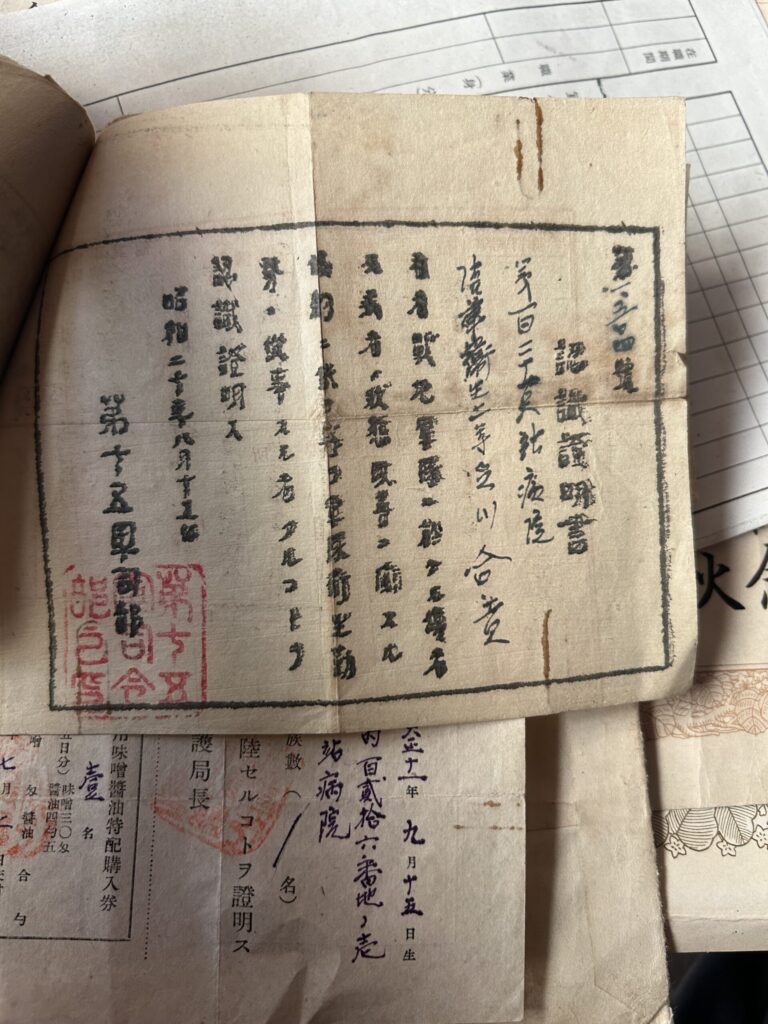
資料を確認していくと、単なる「戦争遺品」ではなく、日本軍資料を核としながら、戦争・終戦・収容・復員・乗船・検疫という国際的な人の移動の中で生まれた、多国籍資料群であることが見えてきた。
そこには、旧日本軍の記録だけではなく、復員、乗船、検疫、収容、連合国側との接点など、複数の国や組織をまたいだ人の移動の痕跡が残されている。
一つひとつの資料だけを見れば、小さな紙片や証明書にすぎないものもある。
しかし、それらをつなぎ合わせることで、戦争が終わった後、人々がどのような経路をたどり、どのような制度や組織を通過して故郷へ戻っていったのかが見えてくる。
川合貢さんの資料目録
今回確認している主な資料と、公開Web上で確認できる他館の資料を照合した結果をまとめた。
| No. | LRA保全資料 | 公開Web上で確認した他館・資料 | 確認状況 |
|---|---|---|---|
| 1 | 英文身分識別スリップ(ID No.391) | 現時点で他館の現物所蔵を確認できず | 個人識別番号・所属・身分が一体となった個人資料 |
| 2 | 認識證明書(1945年8月15日・第十五軍司令部発行) | 日本赤十字看護大学史料室などに同名・同種資料 | 第十五軍司令部発行の現物は確認できず |
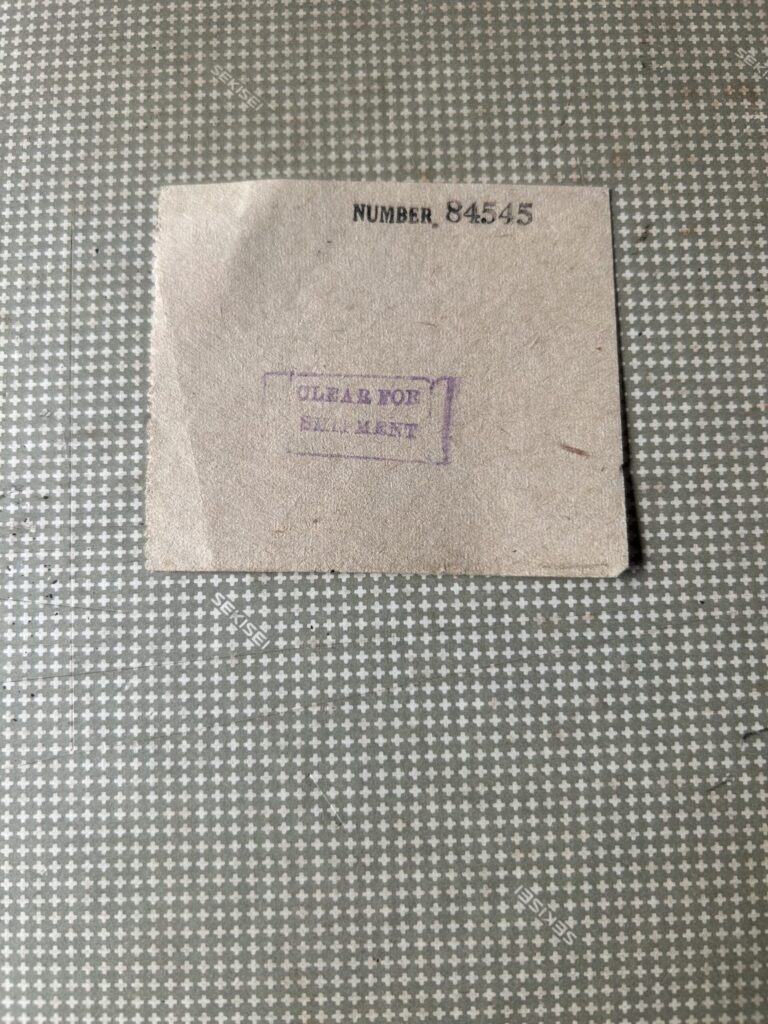
| 3 | CLEAR FOR SHIPMENT No.84545 | 同一番号の他館所蔵は確認できず | 別番号72623の同形式資料が江連哲夫氏の回想に「小さな乗船券」として登場 |
| 4 | 外地軍復員員輸送證明書 | しょうけい館 | 同種の現物を確認 |
| 5 | 事実證明書(マラリア) | 立命館大学国際平和ミュージアム、しょうけい館、滋賀県平和祈念館 | 同種の現物を複数確認 |
| 6 | 引揚證明書 | 平和祈念展示資料館、江戸東京博物館、札幌市平和バーチャル資料館等 | 同種の現物を複数確認 |
| 7 | 検疫済の證(治清丸・1946年7月3日) | 現時点で同一資料・同船の現物所蔵を確認できず | 個別性の高い復員・検疫資料 |
| 8 | 従軍證明書 | 同種の軍歴・従軍関係証明資料 | 川合さんの個別資料との同一性は未確認 |
| 9 | 『ビルマ戦陣回顧録』 | 第121兵站病院関係資料 | 167人による記録を含む資料群 |
| 10 | 『悲劇の戦場ビルマ――ある衛生兵の従軍記』玉野源四郎 | 奈良県立図書情報館・戦争文庫 | CiNii上で確認できる所蔵館は1館 |
| 11 | 『一軍医のみたビルマ敗退戦』興野義一 | 沖縄県立図書館、宮崎県立図書館、福岡市総合図書館等 | 同一書誌の所蔵を複数確認 |
| 12 | 復員時の各種証明書類を列挙した英文資料 | 関連する復員・引揚・証明書資料は各機関に所蔵 | 本資料と同一のものは確認できず |
| 13 | 写真資料 | 各種戦争資料館・大学等に関連写真あり | 川合さんの個別写真との同一性は未確認 |
| 14 | 第121兵站病院関係資料 | 国立公文書館等に同部隊関係公文書あり | 川合さんの個人資料とは別資料 |
| 15 | 第121兵站病院復員関係資料 | 復員関係公文書・証明資料等を各機関で確認 | 個人資料との関連を調査中 |
| 16 | 北カ会関係資料 | 第121兵站病院・戦友会関係資料 | 川合さん所蔵資料としてのまとまりに意味 |
| 17 | 戦友から贈られた私家本 | 個別書誌情報を確認中 | 私家本としての個別性が高い |
| 18 | 飯釜・水筒などの所用品 | 同種の戦地所用品は各資料館に収蔵 | 川合さん本人使用品としての来歴が重要 |
| 19 | 第七師団・歩兵第二十五連隊記念杯 | 同種の部隊記念品あり | 川合さん所蔵品としての来歴が重要 |
| 20 | 日本赤十字社関係章・記章 | 日本赤十字関係資料館等に関連資料あり | 個別資料との同一性は未確認 |
※「確認できず」は、全国に存在しないことを意味するものではなく、今回調査した公開Web情報から他館の現物所蔵を確認できなかったことを示す。
※「同種資料」と「川合貢さんが所蔵していた同一個体」は区別している。
※図書については、同一書誌の所蔵館を示しており、川合さん所蔵本と同一個体であることを意味しない。
なお、現在ご遺族のもとに残されている資料もあり、今回掲載したものがすべてではない。今後、正式に受け取った資料についても内容を確認し、順次この目録へ追加していく予定である。
資料を「珍しい」で終わらせない
今回、あえて他館の所蔵状況まで調べたのには理由がある。
資料の希少性は、感覚だけで語るべきものではないからだ。
例えば、事実證明書は、立命館大学国際平和ミュージアム、しょうけい館、滋賀県平和祈念館などで同種の現物を確認できる。
外地軍復員員輸送證明書についても、しょうけい館で同種資料の現物を確認した。
一方、川合さんの第十五軍司令部発行の認識證明書については、今回確認した公開Web情報の範囲では、LRA以外の現物所蔵を確認できなかった。
また、CLEAR FOR SHIPMENT No.84545についても、同一番号の他館所蔵は確認できなかった。
さらに、昭和21年7月の復員兵・江連哲夫氏の回想には、別番号の「NUMBER 72623 / CLEAR FOR SHIPMENT」が登場し、「小さな乗船券」と記録されている。
川合さんの84545と江連氏の72623は同一資料ではない。
しかし、別個体の記録によって、川合さんの資料に残る「CLEAR FOR SHIPMENT」が復員時の乗船に関係する資料である可能性を考える手掛かりとなった。
また、『悲劇の戦場ビルマ――ある衛生兵の従軍記』については、公開書誌上、奈良県立図書情報館・戦争文庫の所蔵を確認している。
このように、資料によって他館で同種資料が確認できるものもあれば、現時点で他館の現物を確認できないものもある。
重要なのは、一枚一枚の希少性を確認することだけではない。それらが一人の兵士の人生の中でどのようにつながり、戦争から復員、帰国へ至る一連の歴史をどこまで伝えられるのかを見ることである。
歴史には、まだ多くの空白がある
歴史は、残された資料だけで完成しているわけではない。
失われた記録、廃棄された記録、まだ誰にも見つけられていない記録によって、歴史には今も多くの空白が残されている。
遺品整理の現場で資料を拾い上げるということは、その空白の一部を埋めることでもある。
地域の記憶から、国を越えた戦争の記憶まで。
僕は、遺品整理の現場から、世界に残された歴史の空白を、一つずつ埋めていく。
今回の資料群もまた、その一つである。
なぜ、立命館大学国際平和ミュージアムなのか
今回の資料については、国内の複数の博物館・研究機関等にも相談し、寄贈先について検討した。
「川合さんの資料なのだから、地域の博物館や資料館に寄贈するべきではないか」と考える方もいるかもしれない。
私たちも、その可能性を含めて考えた。
しかし、ご遺族と資料を一つひとつ確認し、その希少性や川合さんが残した記録、そしてそこに込められた想いを考えたとき、最も大切にしたのは、
この資料に残されている記憶を、どこなら次の世代へ紡いでくれるのか。
ということだった。
川合さんは衛生兵として戦争に参加し、兵站病院の一員として戦地で数えきれない死と向き合った。
そして、戦争を生き延びて復員した後も、戦争に反対する思いを持ち続け、次の世代へ何かを伝えようとしていた。
『ビルマ戦陣回顧録』をはじめとする資料からは、同じ第121兵站病院で戦争を経験した人々が、それぞれの記憶を残そうとしていたこともうかがえる。
だから、この資料群を単に「希少な戦争資料」として保存するだけでは十分ではないと考えた。
川合さんと、兵站病院でともに戦争を経験した人々が残した記憶と想いまで含めて、次の世代へ渡せる場所であること。
それが、今回の寄贈先を選ぶうえで最も大切な基準だった。
これは、地域の所蔵館に価値がないという意味ではない。
私は今回、国内の研究機関、大学、資料館など、規模の大小を問わず複数の機関に資料を確認していただき、打診し、調べてきた。
その中で、資料の希少性について評価してくださる方がいる一方、明確な評価を示されない場合もあった。だからこそ、私は自分自身でも調査を続けた。
なぜなら、これは単なる「珍しい物」を見つけたという話ではないからだ。
私が遺品整理の現場で発見したのは、川合さんという一人の人間が生き、戦争を経験し、衛生兵として多くの人の死と向き合い、そして戦後を生き抜いた、その人生の記録である。
その資料を託された以上、御遺族のためにも、何より川合さん自身の記憶と想いを次の世代へ紡ぐためにも、私は手を抜くわけにはいかない。
川合さんが生きた地域とのつながりも、この資料群の大切な一部である。
そのうえで、今回の資料は、一人の兵士の人生だけではなく、戦争を経験した兵站病院の人々の記憶を含んでいる。
その記憶を、地域の歴史としてだけではなく、戦争と平和を考えるための記憶として、より広い次世代へつないでいきたい。
今回、立命館大学国際平和ミュージアムの学芸員の方からは、資料の収蔵について誠実かつ丁寧に説明をいただいた。こちらの意向にも耳を傾けてくださり、資料そのものだけではなく、川合さんという故人の人生を尊重する姿勢を感じた。
さらに、現在の世界情勢を踏まえ、このような戦争資料が今あらためて社会の表舞台に出ることには意義があるのではないか、というお話もいただいた。
その言葉を聞き、私は、この資料を単に保存するだけではなく、川合さんの人生と記憶を次の世代へ伝えていく場所として、立命館大学国際平和ミュージアムの理念が最も近いのではないかと、御遺族とともに感じた。
最終的に、資料の希少性だけではなく、来歴を残せること、故人の想いを尊重できること、そして戦争の記憶を未来へ伝えられることを考え、寄贈先を決めた。
来歴を残すということ
もう一つ、今回の寄贈先を選ぶうえで絶対条件としたことがある。
それは、プロヴェナンス(来歴)を残すことである。
この資料が誰のもので、どのような経緯で残され、どこから発見され、どのような過程を経て保存機関へ渡ったのか。
それを将来の研究者がたどれることは、資料そのものと同じくらい重要だと考えている。
今回の資料は、ご遺族のもとに残されていたものを、遺品整理の現場で廃棄の水際にあった記録として発見した。
だからこそ、寄贈後も「どこから来た資料なのか」という来歴まで含めて残してほしいと考えた。
故人の記憶が、もう一度社会へ出る
資料を保存するということは、紙や写真を残すことだけではない。
そこに記された名前、筆跡、経験、当時の言葉が、再び人の目に触れ、研究され、語られることで、かつて生きた一人の人間の存在が、もう一度社会の中に現れてくる。
故人の記憶が表舞台に出るということは、ある意味では、故人がもう一度この社会に現れることでもある。
もちろん、失われた命そのものが戻るわけではない。
しかし、その人が何を見て、何を経験し、何を残そうとしたのかが、何十年という時間を越えて次の世代に届く。
それは、記録が故人の代わりに語り始めるということなのだと思う。
川合さんは、戦地で多くの死と向き合い、戦争を生き延びた。
そして、その後に残された資料が、いま再び人の目に触れようとしている。
今回、資料が立命館大学国際平和ミュージアムへ託されることで、川合さんの記憶は、ご遺族のもとだけに留まらず、これから戦争を知らない人々の前にも現れることになる。
遺品整理という仕事の、その先に
処分されるはずだった記録が残るということは、故人の記憶が消えずに生き続けるということでもある。
故人の記憶が表舞台に出るということは、ある意味では、故人がもう一度この社会に現れることでもある。
私は、そこに遺品整理という仕事の、まだ十分に語られていない社会的な意味があると考えている。
だからこそ私は、目の前にある遺品を単に「処分するもの」として扱うのではなく、その中に残された記憶が次の世代へ渡る可能性を見つめている。
遺品整理そのものが、故人の記憶を社会へ戻し、失われかけた歴史を未来へつなぐことができる。
そのことに、私は確信を持って行動している。
今回の資料群も、もともとは処分されるはずだった。
しかし、そこに残されていたものを誰かが見つけ、立ち止まり、記録し、考え、次へ渡すことで、その意味は変わる。
一人の故人の記憶が、家族の記憶となり、地域の記憶となり、やがて社会の記憶となっていく。
そして、その積み重ねが、いつか世界に残された歴史の空白を埋めていくのだと思う。
今回、川合貢さんの資料群を立命館大学国際平和ミュージアムへ託すことが決まった。
この資料が、川合さん自身と、同じ場所で戦争を経験した多くの人々に代わって、これからも語り続けてくれることを願っている。
私は、過酷な戦場から無事故郷に帰還し、翌年に結婚したこの写真がたまらなく好きだ。
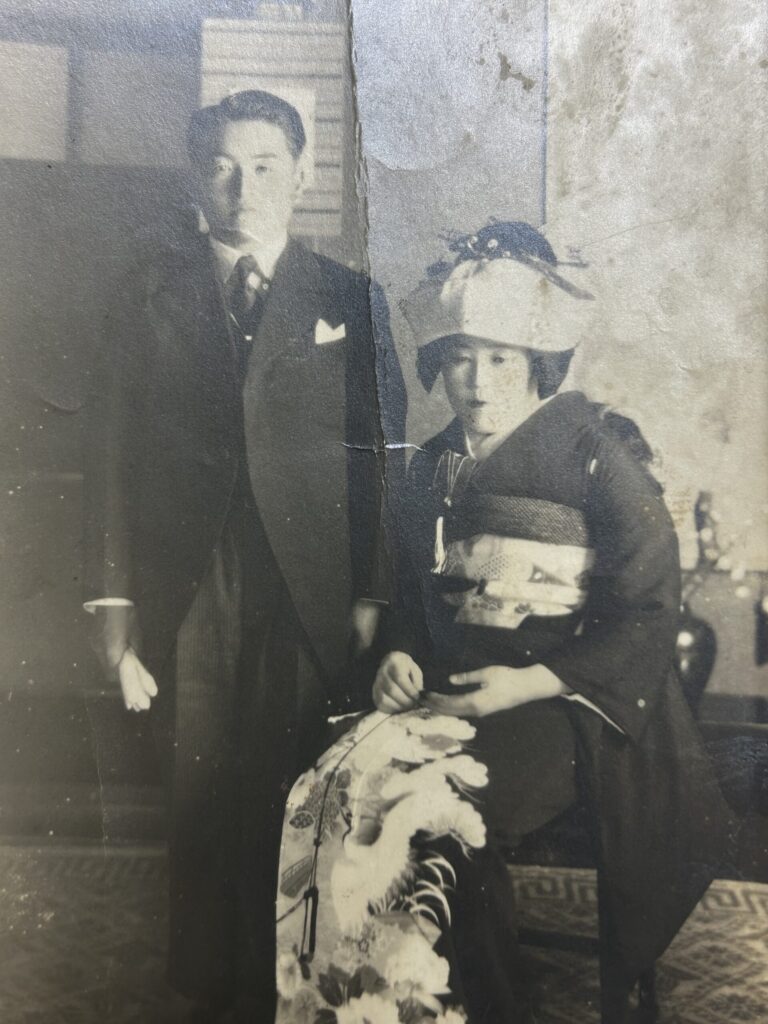
戦争の資料を調べていると、どうしても戦場、死、病気、復員という言葉が中心になる。
けれど、その先には、一人の人間の「帰る」という人生があった。
この写真を見るたびに、川合さんが確かに生きて帰ってきたこと、その後の人生がここから始まったことを感じる。
だからこそ、この記録を次の世代へ残したいと思ったんだ。
歴史の空白を埋める遺品整理士。
Records That Were Meant to Be Discarded, Preserved for the Next Generation
— The Kawai Kō Burma Collection Donated to the Kyoto Museum for World Peace, Ritsumeikan University
A collection of historical records was discovered during an estate-organizing project.
Among the belongings of Kō Kawai, who lived through the wars of the Shōwa era, were records documenting his service in Burma, the end of the war, his repatriation, and his return to Japan.
As I examined the materials more closely, it became clear that this was not simply a collection of “wartime personal effects.”
Rather, it is a multinational collection of records that emerged from the international movement of people through war, the end of the war, internment, repatriation, embarkation, and quarantine, while centered on records originating from the former Japanese military.
The collection contains not only records of the former Japanese military, but also traces of the movement of people across multiple countries and organizations, including repatriation, embarkation, quarantine, internment, and points of contact with the Allied side.
Viewed individually, some of these materials may appear to be nothing more than small slips of paper or certificates.
Yet when they are examined together, they begin to reveal the routes people followed after the war ended, and the institutions and systems through which they passed on their way back to their homes.
Inventory of Materials Belonging to Kō Kawai
The table below summarizes the principal materials currently being examined by LRA, together with a comparison against materials and holdings that could be confirmed through publicly available information on the web.
| No. | Materials Preserved by LRA | Other Institutions / Materials Confirmed through Publicly Available Web Information | Status of Verification |
|---|---|---|---|
| 1 | English personal identification slip (ID No. 391) | No physical holding at another institution could be confirmed at this time | An individual record combining a personal identification number, affiliation, and status |
| 2 | Recognition Certificate (issued by the 15th Army Headquarters on August 15, 1945) | Materials of the same or similar type, including records held by the Japanese Red Cross College of Nursing Archives | No physical example issued by the 15th Army Headquarters could be confirmed |
| 3 | CLEAR FOR SHIPMENT No. 84545 | No holding of the same numbered item could be confirmed | A different item, No. 72623, of the same format appears in the recollections of Tetsuo Ezure, where it is described as a “small embarkation ticket” |
| 4 | Overseas Army Repatriation Transport Certificate | Shokeikan (The National Museum of Japanese War-Bereaved Families) | A physical item of the same type was confirmed |
| 5 | Certificate of Fact (Malaria) | Kyoto Museum for World Peace, Ritsumeikan University; Shokeikan; Shiga Peace Memorial Museum | Multiple physical examples of the same type were confirmed |
| 6 | Repatriation Certificate | Peace Memorial Exhibition Hall; Edo-Tokyo Museum; Sapporo Peace Virtual Museum, among others | Multiple physical examples of the same type were confirmed |
| 7 | Quarantine Certificate (Tenseimaru, July 3, 1946) | No physical example relating to the same document or vessel could be confirmed at this time | A highly individual repatriation and quarantine record |
| 8 | Certificate of Military Service | Various certificates and records concerning military service and service histories | Identity as the same individual document belonging to Kawai could not be confirmed |
| 9 | Burma Battlefield Memoirs | Materials relating to the 121st Logistical Hospital | A collection containing accounts by 167 individuals |
| 10 | The Tragic Battlefield of Burma: The Wartime Memoir of a Military Medic, by Genshiro Tamano | Nara Prefectural Library and Information Center, War Literature Collection | One holding institution could be confirmed through CiNii |
| 11 | A Military Doctor’s View of the Burma Retreat, by Giichi Kōno | Okinawa Prefectural Library; Miyazaki Prefectural Library; Fukuoka City Public Library, among others | Multiple holdings of the same bibliographic edition were confirmed |
| 12 | English-language document listing various certificates issued in connection with repatriation | Related repatriation, return, and certificate records held by various institutions | No identical copy of this particular document could be confirmed |
| 13 | Photographic materials | Related photographs held by various war museums and universities | Identity as the same individual photographs belonging to Kawai could not be confirmed |
| 14 | Materials relating to the 121st Logistical Hospital | Official records concerning the same unit held by institutions including the National Archives of Japan | Separate from Kawai’s personal materials |
| 15 | Repatriation-related materials of the 121st Logistical Hospital | Repatriation-related official records and certificates held by various institutions | Relationship to the individual materials is still under investigation |
| 16 | Materials relating to the Hokkakai veterans’ association | Materials relating to the 121st Logistical Hospital and veterans’ associations | Significant as a body of materials preserved by Kawai |
| 17 | Privately published books presented by fellow servicemen | Individual bibliographic information is still being investigated | Highly individual in nature as privately published books |
| 18 | Personal equipment, including a mess tin and canteen | Similar wartime personal equipment is held by various museums and archives | The provenance identifying these as items used by Kawai is significant |
| 19 | Commemorative cup of the 7th Division and 25th Infantry Regiment | Similar military unit commemorative objects exist in collections | The provenance identifying it as an item belonging to Kawai is significant |
| 20 | Japanese Red Cross-related medals and insignia | Related materials held by Japanese Red Cross museums and archives | Identity as the same individual materials could not be confirmed |
- “Could not be confirmed” does not mean that such materials do not exist elsewhere. It means that no physical holding at another institution could be confirmed through the publicly available web information examined in this research.*
- “Materials of the same type” and the specific individual item once owned by Kō Kawai are treated as separate categories.*
- For books, the institutions listed are holdings of the same bibliographic work or edition; this does not mean that they are the same physical copies once owned by Kawai.*
Some materials also remain with the bereaved family at present, and therefore the materials listed here do not yet constitute the complete collection. As additional materials are formally received, their contents will be examined and they will be added to this inventory in due course.
Not Ending with the Word “Rare”
There is a reason why I deliberately investigated the holdings of other institutions as well.
The rarity of historical materials should not be discussed merely as a matter of impression or intuition.
For example, Certificates of Fact (事実證明書) of the same type as Kawai’s have been confirmed as physical holdings at the Kyoto Museum for World Peace, Ritsumeikan University, Shokeikan, and the Shiga Peace Memorial Museum.
Similarly, a physical example of the same type of Overseas Army Repatriation Transport Certificate (外地軍復員員輸送證明書) was confirmed at Shokeikan.
By contrast, with regard to Kawai’s Recognition Certificate issued by the 15th Army Headquarters, no physical holding outside LRA could be confirmed within the scope of the publicly available web information examined in this research.
Likewise, no other institutional holding of CLEAR FOR SHIPMENT No. 84545 could be confirmed.
Furthermore, the recollections of Tetsuo Ezure, a repatriated serviceman, from July 1946 contain a different numbered item: “NUMBER 72623 / CLEAR FOR SHIPMENT,” which he recorded as a “small embarkation ticket.”
Kawai’s No. 84545 and Ezure’s No. 72623 are not the same document.
However, the existence of this separately documented item provides a useful clue for considering that the “CLEAR FOR SHIPMENT” document preserved in Kawai’s collection may have been related to his embarkation during repatriation.
As for The Tragic Battlefield of Burma: The Wartime Memoir of a Military Medic by Genshiro Tamano, its holding at the Nara Prefectural Library and Information Center’s War Literature Collection has been confirmed through publicly available bibliographic records.
In this way, some of the materials can be compared with physical examples of the same type held by other institutions, while for others, no physical holding at another institution could be confirmed at this stage.
What matters is not simply determining the rarity of each individual document. It is also necessary to examine how these materials connect within the life of one soldier, and how far they can convey the continuous history that unfolded from war, through repatriation, to his return home.
There Are Still Many Gaps in History
History is not complete simply because some records have survived.
There are still many gaps in our understanding of history, created by records that were lost, records that were discarded, and records that have yet to be discovered.
To recover materials from the scene of an estate-organizing project is, in part, to fill one of those gaps.
From local memories to memories of war that cross national borders.
I want to fill, one by one, the gaps in history that remain in the world, beginning from the front lines of estate organizing.
This collection is another one of those gaps.
Why the Kyoto Museum for World Peace, Ritsumeikan University?
For this collection, we consulted with and approached several museums, research institutions, and other organizations in Japan while considering where the materials should ultimately be entrusted.
Some people may think, “Since these are materials belonging to Kawai, shouldn’t they be donated to a local museum or archive?”
We considered that possibility as well.
However, as the bereaved family and I examined the materials one by one and considered their rarity, the records Kawai left behind, and the thoughts embedded within them, the most important question became:
Where can these memories be carried forward to the next generation?
Kawai served as a military medic during the war and, as a member of a logistical hospital, faced countless deaths on the battlefield.
After surviving the war and returning to Japan, he continued to hold anti-war sentiments and sought to pass something on to the next generation.
The materials, including Burma Battlefield Memoirs, also suggest that those who experienced the war together at the 121st Logistical Hospital sought to preserve their own memories in various forms.
For this reason, I did not believe that it would be sufficient simply to preserve this collection as a group of “rare wartime materials.”
What mattered was finding a place where the memories and thoughts left behind by Kawai and by those who experienced the war alongside him at the logistical hospital could be carried forward to the next generation.
This does not mean that local museums or archives lack value.
In this process, I consulted with and approached research institutions, universities, museums, archives, and other organizations throughout Japan, regardless of their size, and continued to investigate where these materials might best be entrusted.
Some people recognized and discussed the rarity of the materials, while in other cases no clear assessment was offered. That was precisely why I continued to conduct my own research.
Because this was not simply a matter of having discovered something “rare.”
What I discovered at the scene of an estate-organizing project was the record of the life of one human being: Kawai, who lived through war, experienced the battlefield as a military medic, confronted the deaths of many people, survived the war, and went on to live his life after returning home.
Once these materials had been entrusted to me, I could not afford to take shortcuts—not for the sake of the bereaved family, and above all, because I felt a responsibility to carry forward Kawai’s memories and thoughts.
Kawai’s connection to the community in which he lived is also an important part of the history of this collection.
At the same time, these materials are not only about the life of one soldier. They also contain the memories of people who experienced the war as members of a logistical hospital.
I wanted those memories to be passed on not only as local history, but also as memories through which future generations can think about war and peace.
The curator at the Kyoto Museum for World Peace, Ritsumeikan University, explained the museum’s approach to accepting the materials with sincerity and care. The curator also listened closely to our wishes and concerns, and I felt that the museum’s approach respected not only the materials themselves, but also the life of Kawai as an individual who had lived through the war.
The curator also spoke about the significance of bringing such wartime materials into the public sphere again, particularly in light of the current state of the world.
Hearing this, the bereaved family and I came to feel that the philosophy of the Kyoto Museum for World Peace was closest to what we were seeking: a place where Kawai’s life and memories could be preserved and carried forward to future generations, rather than simply stored away.
Ultimately, we decided where to entrust the collection by considering not only the rarity of the materials, but also whether their provenance could be preserved, whether the wishes and dignity of the deceased could be respected, and whether the memories of war could be carried into the future.
Preserving Provenance
There was another absolute condition in choosing where to entrust these materials.
That was the preservation of their provenance.
Who owned these materials? How did they survive? Where were they discovered? And through what process did they eventually come to be preserved by an institution?
I believe that ensuring future researchers can trace this history is just as important as preserving the materials themselves.
These materials had remained with Kawai’s family and were discovered during an estate-organizing project, at a point when the records were on the brink of being discarded.
For that very reason, I wanted the provenance of the materials—including where they came from and how they were rescued—to remain part of their history even after they were donated.
When the Memory of the Deceased Re-enters Society
Preserving historical materials does not simply mean preserving paper and photographs.
When the names, handwriting, experiences, and words recorded in those materials are once again seen, studied, and discussed by people, the existence of someone who once lived can, in a sense, re-emerge within society.
For the memory of a deceased person to return to the public sphere is, in a sense, for that person to appear once again within society.
Of course, the life that was lost cannot be brought back.
But what that person saw, experienced, and sought to leave behind can cross decades of time and reach people of the next generation.
I believe that this is what it means for a record to begin speaking on behalf of the person who left it behind.
Kawai confronted countless deaths on the battlefield and survived the war.
Now, the materials he left behind are once again about to come into the view of the public.
By entrusting these materials to the Kyoto Museum for World Peace, Kawai’s memories will no longer remain only within the family. They will have the opportunity to appear before people who were born long after the war and who have never experienced it themselves.
Beyond the Work of Estate Organizing
When records that were once destined to be discarded are preserved, the memories of the deceased can continue to live on.
For the memory of a deceased person to return to the public sphere is, in a sense, for that person to appear once again within society.
I believe that this is one of the social meanings of estate organizing that has not yet been fully recognized or discussed.
That is why I do not want to treat the belongings before me simply as things to be disposed of. Instead, I look for the possibility that the memories contained within them can be passed on to the next generation.
Estate organizing itself can return the memories of the deceased to society and connect history that was on the verge of being lost with the future.
I act with conviction that this is possible.
This collection, too, was originally destined to be discarded.
But when someone discovers what remains, stops, records it, thinks about its meaning, and passes it on, its significance can change.
The memory of one deceased person becomes a family’s memory, then a community’s memory, and eventually part of society’s collective memory.
And I believe that, through the accumulation of such efforts, we can one day fill the gaps in history that remain in the world.
It has now been decided that Kō Kawai’s collection of materials will be entrusted to the Kyoto Museum for World Peace, Ritsumeikan University.
I hope that these materials will continue to speak on behalf of Kawai himself and the many people who experienced the war alongside him, carrying their memories forward into the future.
I love this photograph of Kawai. He survived the harshness of the battlefield, returned safely to his hometown, and married the following year. There is something about this photograph that moves me deeply.
When studying wartime records, the words that inevitably come to the forefront are the battlefield, death, illness, and repatriation.
But beyond all of that was the life of one person—the life of someone whose journey was ultimately about making it home.
Every time I look at this photograph, I feel that Kawai truly survived and made it home, and that his life after the war began from this very moment.
That is precisely why I wanted these records to be preserved for the next generation.
An estate organizer who fills the gaps in history.