
目次
- 発見して終わりではない
- 一度きりの発見ではなかった
- 世界にも、同じ実践はあるのだろうか
- 国内から世界へ
- アドボカシーという考え方
- Tandanyaの理念と、遺品整理から生まれた僕の理念
- Tandanyaの理念と遺品整理の倫理
- 「保存する」だけではなく、「つなぐ」
- 川合さんの資料が教えてくれたこと
- 歴史の空白を埋める遺品整理士
- 遺品整理の現場は、歴史の終着点ではない
- The Memento Sorter Who Fills the Gaps in History
- Discovery Is Not the End
- It Was Not a One-Time Discovery
- Does the Same Kind of Practice Exist Elsewhere in the World?
- From Japan to the World
- Discovering the Concept of Advocacy
- The Tandanya Principles and the Ethics I Developed Through Estate Clearance
- Why the Tandanya Principles and the Ethics of Estate Clearance Resonate So Strongly
- Not Simply “Preserve,” but “Connect”
- What Mr. Kawai’s Materials Have Taught Me
- The Memento Sorter Who Fills the Gaps in History
- Estate Clearance Is Not the End of History
遺品整理の現場には、まだ知られていない歴史が眠っている
僕は遺品整理・生前整理の仕事をしています。
これまで、たくさんの家財を整理してきました。
家具、衣類、写真、手紙、アルバム、古い書類。
一見すると、持ち主が亡くなった後に残された「物」にすぎません。
しかし、その中には、その人が生きてきた時代を記録するものがあります。
家族の歴史。
地域の歴史。
戦争の記憶。
そして、これまで研究されることなく、誰にも知られないまま失われようとしている歴史資料です。
僕がそのことを強く意識するようになったきっかけは、2023年11月の出来事でした。
廃棄寸前だった122点の歴史資料
伊達市で遺品整理をしていた際、依頼者からの指示は「すべて処分してください」というものでした。
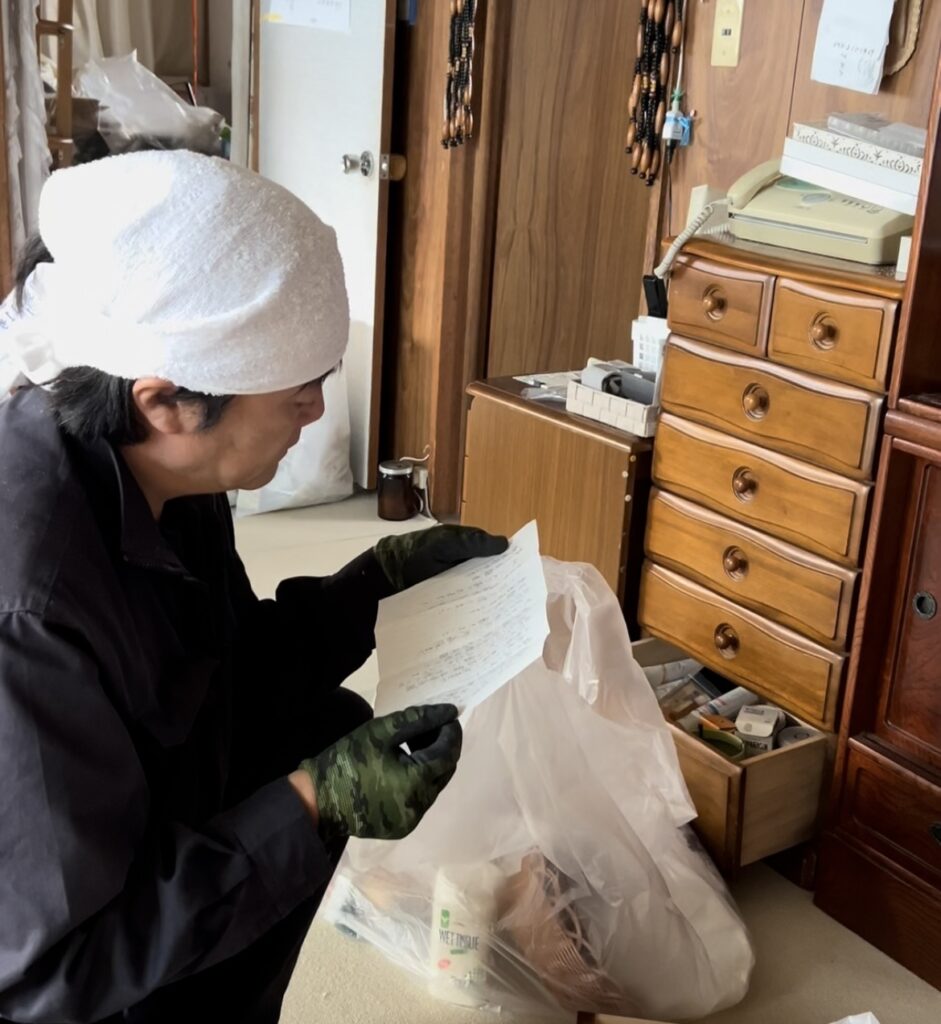
その中で、僕は古い文書のまとまりに違和感を覚えました。
そして、廃棄を止めました。
調査を進めた結果、それは幕末から明治期にかけての「有珠会所」に関係する資料であり、122点の文書が含まれていることが分かりました。
そこには、当時のアイヌの人々の名前や生活に関する記録が残されていました。
さらに、松浦武四郎の記録に登場する人物「サメモン」の実名も確認されました。
もし僕がその場で「古い紙」と判断していたら、この記録は廃棄されていた可能性があります。
この経験が、僕の遺品整理に対する考え方を大きく変えました。
発見して終わりではない
資料を救出するだけでは、歴史保全は完結しません。
何の資料なのか。
誰が残したものなのか。
どの時代につながるのか。
誰にとって重要なのか。
そして、どこへつなぐべきなのか。
それを考え、必要な専門家や研究機関へつないでいく。
さらに、その資料に記録された人々や、その子孫、当事者につながる可能性があるのであれば、そこへも情報を届けていく。
僕は、その一連の流れそのものを大切にしています。
救出する。
記録する。
調べる。
専門家につなぐ。
当事者につなぐ。
そして、未来へ残す。
一度きりの発見ではなかった
そして、その後も僕は遺品整理・生前整理の現場に立ち続けました。
すると、歴史的価値を持つ可能性のある資料との出会いが続きました。
アイヌの人々の名前が残された幕末・明治期の記録。
第二次世界大戦、ビルマ戦線につながる一人の衛生兵の記録。
捕虜や帰還者の記憶につながる資料。
そして、歴史上の人物につながる未公開の系譜資料。
一度だけの偶然ではありません。
遺品整理という、歴史資料が廃棄される可能性のある現場に立ち続けることで、複数の極めて希少な資料群を継続して発見してきました。
そこで、僕は一つの疑問を持つようになりました。
世界にも、同じ実践はあるのだろうか
遺品整理の現場を起点として、廃棄寸前の未発見資料を救出する。
そして、その資料を記録し、専門機関につなぎ、研究や保存につなげる。
さらに必要に応じて、当事者や子孫、海外の専門家へまでつないでいく。
こうした活動を、個人の遺品整理実務者が継続して行っている例は、世界にどれほどあるのだろうか。
僕は自分なりに調べました。
しかし、少なくとも僕が確認した範囲では、遺品整理の現場を起点として、歴史資料の救出から専門機関・当事者への接続までを継続的に行っている同様の実践を確認することはできませんでした。
僕は研究者ではありません。
アーカイブズの専門家でもありません。
歴史学者でもありません。
僕は、遺品整理の現場にいる人間です。
だからこそ、現場でしか見つからない資料があります。
そして、専門家が知る前に、廃棄されてしまう資料があります。
その「水際」にいること。
それが、僕の活動の出発点です。
国内から世界へ
僕はこの活動について、国内の研究機関や文化機関に相談し、「遺品整理による歴史保全」という考え方を伝えてきました。
しかし、活動を続ける中で、
この問題を、日本国内だけで考えていていいのだろうか。
そう考えるようになりました。
そして、勇気を出して世界とつながりました。
その中で出会ったのが、International Council on Archives(ICA)の専門家との交流でした。
ICAのExpert Group on Indigenous Matters(EGIM)とのやり取りを通じて、僕は自分が遺品整理の現場で感じてきた問題と、国際的なアーカイブズの世界で議論されている考え方との間に、深い接点があることを知りました。
アドボカシーという考え方
その交流の中で、僕はアドボカシー・フレームワークという考え方にも触れました。
現場で起きている問題を可視化する。
必要な人や組織へ伝える。
声を届ける。
そして、より良い保存やアクセス、継承につなげていく。
振り返ってみれば、僕が遺品整理の現場から始めてきたことにも、重なる部分がありました。
僕は、誰かから与えられた権限を持っているわけではありません。
それでも、目の前で歴史資料が廃棄されようとしているなら、
「これは残すべきではないか」
と声を上げることはできます。
そして、専門家へ相談する。
研究機関へ知らせる。
博物館へつなぐ。
当事者へ知らせる。
必要であれば行政にも提言する。
それによって、一つの資料が失われずに済む可能性があります。
僕はこれを、遺品整理という実務の現場からできる歴史保全のアドボカシーだと考えるようになりました。
Tandanyaの理念と、遺品整理から生まれた僕の理念
そして、そこで出会った考え方の一つが、Tandanya-Adelaide Declarationでした。
僕は最初から、この理念を知っていたわけではありません。
国内の機関へ遺品整理による歴史保全を提言し、現場で感じていた問題を伝え続ける中で、世界へつながることを決意しました。
その先でICAのEGIMとつながり、アドバイスをいただき、Tandanya-Adelaide Declarationについて知ることになりました。
それは、僕にとって大きな転機でした。
なぜなら、
「資料は誰のために残されるのか」
「そこに記録された人々は、その存在を知ることができるのか」
「保存するだけで、本当に十分なのか」
という、僕が遺品整理の現場で考えるようになった問いと、深く重なる部分があったからです。
ここで誤解のないように書いておきたいと思います。
僕の活動がICAやEGIMから公認・承認・公式支持されたということではありません。
僕がいただいたのは、国際的な専門家との対話の中でのアドバイスであり、そして僕の活動について、
「廃棄の水際から未発見資料を保全する行為」
が、文化財保護活動における有意義な貢献であるという、僕にとって大変嬉しい評価でした。
僕にとって、その言葉は大きな励みになりました。
Tandanyaの理念と遺品整理の倫理
僕は、Tandanyaの理念と、僕が遺品整理を通して考える倫理は、とても相性がいいと感じています。
もちろん、僕はその理念を自分に都合よく解釈しているわけではありません。
ただ、
資料を単なる「物」としてではなく、そこに記録された人々の存在、文化、記憶、そして現在につながる人々との関係まで考える。
この視点には、僕自身の経験と重なる部分があります。
遺品整理の現場で僕が考えるようになったのは、
「捨てないこと」だけではありません。
誰の記憶なのか。
誰につながるのか。
誰がその存在を知るべきなのか。
誰がアクセスできるのか。
どこへつなげれば、その記憶が未来に残るのか。
そう考えるようになりました。
だから僕にとって、Tandanyaの理念は遠い世界の話ではありませんでした。
遺品整理の現場で、僕が少しずつ考えてきたことと、世界で議論されている理念がつながったのです。
「保存する」だけではなく、「つなぐ」
僕が目指しているのは、発見した資料を自分のところに囲い込むことではありません。
むしろ反対です。
発見したら、つなぐ。
専門家へ。
研究機関へ。
博物館へ。
当事者へ。
子孫へ。
必要であれば、国境を越えて海外の専門家へ。
僕自身が最終的な評価者になる必要はありません。
僕の役割は、
失われるかもしれなかった資料を、次の人へ渡せるところまで持っていくこと。
そこにあるのだと思っています。
川合さんの資料が教えてくれたこと
最近、僕が遺品整理の現場で発見した川合さんの資料についても、国内の複数の専門機関へ確認を進めました。
この資料は、第二次世界大戦、ビルマ戦線、衛生兵、捕虜、帰還者など、複数の歴史的テーマにつながっています。
一つの資料を、一つの視点だけで終わらせる必要はありません。
平和史。
戦史。
捕虜史。
個人史。
地域史。
さまざまな角度からつなぐことができます。
だから僕は、「多角的に考える」ことを大切にしています。
資料を一つの箱に閉じ込めるのではなく、そこから複数の歴史へつなげていく。
それによって、戦争を経験した一人の人間の記憶が、より大きな歴史の中で意味を持つ可能性があります。
そして、その記憶が世界へ届けば、
戦争とは何だったのか。
人間は何を繰り返してきたのか。
なぜ同じ悲劇を繰り返してはいけないのか。
そうした問いを、次の世代へ渡すこともできるのではないかと思っています。
歴史の空白を埋める遺品整理士
僕が埋めようとしているのは、歴史そのものではありません。
僕は歴史学者ではありません。
歴史を自分の都合のいいように解釈するつもりもありません。
僕が向き合っているのは、その前にある空白です。
誰にも発見されていない資料。
廃棄されることで、存在そのものが消えてしまう記録。
家族の中だけに残され、研究されることのなかった資料。
当事者が、その存在を知らないままになっている記録。
そうしたものを、
発見する。
救出する。
記録する。
専門家につなぐ。
当事者につなぐ。
そして、未来へ残す。
その結果として、これまで知られていなかった人々の存在や記憶が、もう一度歴史の中に位置づけられていく。
それが僕の考える、
「歴史の空白を埋める」
という意味です。
遺品整理の現場は、歴史の終着点ではない
遺品整理という仕事は、一般には「不要になった物を整理する仕事」と思われるかもしれません。
僕も、最初から歴史保全を目的に仕事を始めたわけではありません。
しかし、現場に立ち続け、資料を発見し続けたことで分かったことがあります。
遺品整理の現場は、歴史の終着点ではない。
そこは、
歴史がもう一度発見される場所にもなり得る。
だから僕は、これからも現場に立ちます。
古い紙を見つけたら、立ち止まる。
これは何なのか。
誰の人生が残されているのか。
誰につながるのか。
どうすれば残せるのか。
誰に知らせるべきなのか。
どこへつなぐべきなのか。
その問いを、一つひとつ繰り返していきます。
そして、僕はこれからも、
歴史の空白を埋める遺品整理士
と名乗ります。
これは誰かから与えられた称号ではありません。
僕自身が、遺品整理の現場で積み重ねてきた仕事を表すために選んだ言葉です。
廃棄の水際で歴史を救い、必要な人へつなぎ、未来へ残す。
それが、僕の考える遺品整理です。
そして、その仕事をこれからも続けていきます。
The Memento Sorter Who Fills the Gaps in History
Historical Records Are Still Sleeping in the Field of Memento Sorting
I work in estate clearance and pre-death organizing in Japan.
Over the years, I have sorted countless household belongings.
Furniture, clothing, photographs, albums, letters, old documents.
At first glance, these may appear to be nothing more than belongings left behind after someone passes away.
But among them are materials that document the era in which a person lived.
Family histories.
Local histories.
Memories of war.
And historical records that have never been studied and may disappear without anyone ever knowing they existed.
The experience that made me deeply aware of this began in November 2023.
122 Historical Records Rescued from the Brink of Disposal
While carrying out an estate clearance in Date City, Hokkaido, I was instructed to dispose of everything.
Among the belongings, however, I noticed a collection of old documents that seemed unusual.
I stopped them from being discarded.
As I investigated further, I learned that the collection consisted of 122 documents related to the Usu Trading Post, dating from the late Edo period to the early Meiji period.
The records contained the names of dozens of Ainu people, as well as details concerning aspects of their lives and economic activities.
I also identified the real name of “Samemon,” a person who appears in the records of the famous explorer Takeshiro Matsuura.
If I had simply regarded those documents as “old papers” and allowed them to be discarded, these records might have disappeared forever.
That experience fundamentally changed the way I think about estate clearance.
Discovery Is Not the End
Rescuing a document is not the end of historical preservation.
What is it?
Who created it?
What period does it belong to?
Whose history does it illuminate?
And where should it ultimately be connected?
These are the questions I ask.
I then try to connect the materials with the appropriate specialists and research institutions.
When the records may be connected to particular communities, descendants, or other people with a meaningful relationship to them, I also believe it is important to consider how the existence of those records can be communicated to them.
For me, this entire process matters.
Rescue.
Document.
Investigate.
Connect with specialists.
Connect with communities and people concerned.
And ultimately, preserve the memory for the future.
It Was Not a One-Time Discovery
The discovery of the Usu Trading Post records was not an isolated event.
I continued working in estate clearance and pre-death organizing, and I continued encountering materials with the potential to hold significant historical value.
Records containing the names of Ainu people from the late Edo and early Meiji periods.
The records of a military medic connected to the Burma Campaign during the Second World War.
Documents connected to prisoners of war and the memories of returning veterans.
And previously unpublished genealogical records connected to historical figures.
These were not simply the result of a single fortunate discovery.
By continuing to work in estate clearance—the very places where historical materials may be on the verge of being discarded—I have continued to discover multiple collections of exceptionally rare historical materials.
This led me to ask an important question.
Does the Same Kind of Practice Exist Elsewhere in the World?
How many people in the world are doing something similar?
Starting from the front line of estate clearance, rescuing previously undiscovered historical materials just before disposal.
Then documenting those materials, connecting them with specialists and research institutions, and helping them reach appropriate repositories.
And, when necessary, connecting them further with communities, descendants, or international specialists.
I began researching this question myself.
However, within the scope of what I have been able to investigate, I have not been able to identify another comparable practice that is being carried out continuously by an individual estate-clearance practitioner, beginning with the rescue of historical materials at the point of disposal and extending through connections with specialists, institutions, and communities.
I am not a historian.
I am not an archivist.
I am not an academic researcher.
I am an estate-clearance practitioner.
And that is precisely why I encounter materials that may never reach a specialist’s attention.
There are materials that can disappear before anyone with specialized knowledge even knows they exist.
I stand at that point of risk—the moment just before disposal.
That is where my work begins.
From Japan to the World
I have shared my work with research institutions and cultural organizations in Japan, advocating for the idea of historical preservation through estate clearance.
But as I continued this work, I began to ask myself:
Should this issue really be considered only within Japan?
That question led me to take the courage to reach beyond Japan.
Through that process, I connected with experts associated with the International Council on Archives (ICA).
My exchanges with the ICA’s Expert Group on Indigenous Matters (EGIM) helped me recognize a profound connection between the questions I had encountered in estate clearance and the international discussions surrounding archives, Indigenous peoples, cultural heritage, access, and participation.
Discovering the Concept of Advocacy
Through these exchanges, I was also introduced to the idea of an advocacy framework.
Making problems visible.
Bringing them to the attention of the people and organizations who need to know.
Giving voice to issues that might otherwise remain invisible.
And connecting those efforts to better preservation, access, and transmission of memory.
Looking back, I realized that there were important parallels with what I had already been doing from the front line of estate clearance.
I do not hold any special authority.
But when I see historical materials about to be discarded, I can still ask:
“Shouldn’t this be preserved?”
I can contact specialists.
I can inform research institutions.
I can connect materials with museums.
I can inform communities.
And, when necessary, I can make recommendations to public authorities.
Through these actions, there is at least a possibility that a historical record may survive.
I have come to understand this as a form of historical-preservation advocacy from the field of estate clearance.
The Tandanya Principles and the Ethics I Developed Through Estate Clearance
One of the ideas I encountered through this journey was the Tandanya-Adelaide Declaration.
I did not know about this framework when I first began my work.
I encountered it only after I had spent time advocating within Japan for historical preservation through estate clearance and had decided to reach beyond Japan.
My subsequent connection with the ICA’s EGIM and the advice I received from international experts led me to learn more about the Tandanya-Adelaide Declaration.
For me, this became an important turning point.
I was struck by how deeply some of its underlying questions resonated with the questions I had developed through my own work:
Who are historical records preserved for?
Can the people whose lives are documented in those records know that they exist?
Is preservation alone really enough?
I also want to be clear about something.
I do not claim that my work has been officially endorsed, approved, or formally supported by the ICA or EGIM.
What I received was advice through dialogue with international experts, together with words of appreciation that meant a great deal to me.
In particular, my practice of “preserving previously undiscovered materials at the brink of disposal” was described as a meaningful contribution to cultural heritage preservation activities.
Those words were deeply encouraging to me.
Why the Tandanya Principles and the Ethics of Estate Clearance Resonate So Strongly
I have come to feel that the principles represented by Tandanya and the ethical framework I have developed through estate clearance are remarkably compatible.
I do not claim to speak for those principles, nor do I interpret them for my own convenience.
But I have learned to look at historical records not simply as objects, but in relation to the people whose lives they document, their cultures and memories, and the communities and descendants connected to them today.
Through estate clearance, I began asking questions such as:
Whose memory is this?
Who is connected to it?
Who should have the opportunity to know that it exists?
Who should be able to access it?
Where should it be connected so that its memory can survive into the future?
That is why the Tandanya principles did not feel like something distant or abstract to me.
The ideas I had gradually developed in the field of estate clearance suddenly connected with an international conversation.
Not Simply “Preserve,” but “Connect”
My goal is not to keep historical materials that I discover for myself.
Quite the opposite.
When I discover something, I connect it.
To specialists.
To research institutions.
To museums.
To communities.
To descendants.
And, when necessary, to specialists across national borders.
I do not need to be the person who makes the final scholarly judgment.
I believe my role is to bring materials that might otherwise be lost to a point where they can be passed on to the people and institutions best placed to preserve, study, interpret, and connect them.
What Mr. Kawai’s Materials Have Taught Me
The materials I recently discovered through estate clearance relating to Mr. Kawai have also reinforced this way of thinking.
I have consulted multiple specialized institutions in Japan regarding these materials.
The collection connects with several historical fields, including the Second World War, the Burma Campaign, military medicine, prisoners of war, and the experiences of returning veterans.
A historical record does not have to be understood from only one perspective.
It can be connected through multiple lenses:
Peace history.
Military history.
Prisoner-of-war history.
Personal history.
Local history.
This is why I value thinking from multiple perspectives.
Rather than placing a document into a single category, I want to connect it to the different histories that may emerge from it.
In doing so, the memory of one person who experienced war may acquire meaning within a much larger historical context.
And if that memory reaches people around the world, perhaps it can help future generations ask:
What was war?
What have human beings repeated throughout history?
Why must we prevent the same tragedies from happening again?
That is one of the possibilities I see in preserving personal historical records.
The Memento Sorter Who Fills the Gaps in History
I am not trying to fill the gaps in history by writing history myself.
I am not a historian.
I do not intend to interpret history according to my own preferences.
The gaps I am trying to address exist before historical interpretation begins.
Materials that have never been discovered.
Records whose existence may disappear entirely through disposal.
Documents preserved only within private families and never studied.
Records whose existence remains unknown to the people and communities connected to them.
I want to:
Discover them.
Rescue them.
Document them.
Connect them with specialists.
Connect them with communities and people concerned.
And ultimately, preserve them for the future.
When this process brings previously unknown people, lives, and memories back into the historical record, I believe that is what it means to fill a gap in history.
Estate Clearance Is Not the End of History
Estate clearance may generally be understood as the process of sorting and disposing of belongings after someone dies.
I did not begin this work intending to become involved in historical preservation.
But by remaining in the field and continuing to encounter historical materials, I have learned something important.
Estate clearance is not necessarily the end of history.
It can also be a place where history is discovered again.
That is why I will continue to stand at the front line.
When I encounter an old document, I will stop and ask:
What is this?
Whose life remains within it?
Who is connected to it?
How can it be preserved?
Who should be informed?
Where should it be connected?
I will continue asking these questions, one case at a time.
And I will continue to call myself:
The Memento Sorter Who Fills the Gaps in History
This is not a title given to me by anyone else.
It is the name I have chosen to describe the work I have built through years of standing in the field of estate clearance.
Rescuing history at the brink of disposal, connecting it with those who need it, and carrying it into the future.
That is what estate clearance means to me.
And that is the work I intend to continue.