
遺族の許可を経て、水際で救出した資料、当時使われていた物を、画像や文集を載せ、御遺族に何が発見されたのか記憶を共有する為に御遺族の願いとして作成致します。故人の手によって一つの束として戦後80年以上守り抜かれ、現代に現れた意義を国際的倫理観に照らし合わせ、アーカイブズの倫理に基づく共有
、また、故人や先人の想いを未来に紡ぎ、故人に対し尊敬と敬意を込めるという遺品整理の倫理的意味で、公開致します。
目次
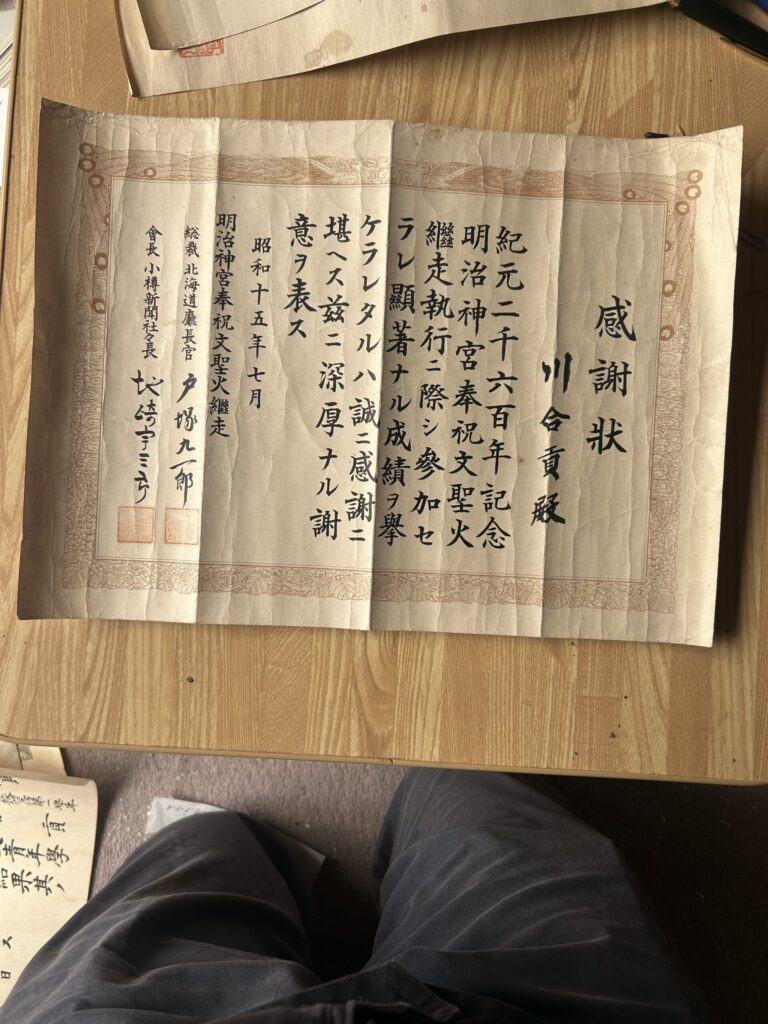
- 紀元二千六百年記念 明治神宮奉祝 聖火継走感謝状
- 北海道庁「優良賞」:青年学校学内査閲
- 表彰状:札幌連隊区 青年教練査閲官による表彰
- 感謝状:由仁村青少年団 岩内分団長退任に伴う謝辞
- 賞詞:北衛第三部隊長による技能表彰
- 川合貢氏 英文身分識別スリップ(IDタグ)
- 川合貢氏 自筆署名入り「ネームカード」封筒
- 大日本帝国陸軍 公式封筒(記録収蔵用)
- 従軍證明書:陸軍衛生兵 川合貢 氏の戦跡
- 外地軍復員員輸送證明書:北海道・由仁駅への帰還記録
- 事実證明書:川合貢 氏「マラリア」罹患記録
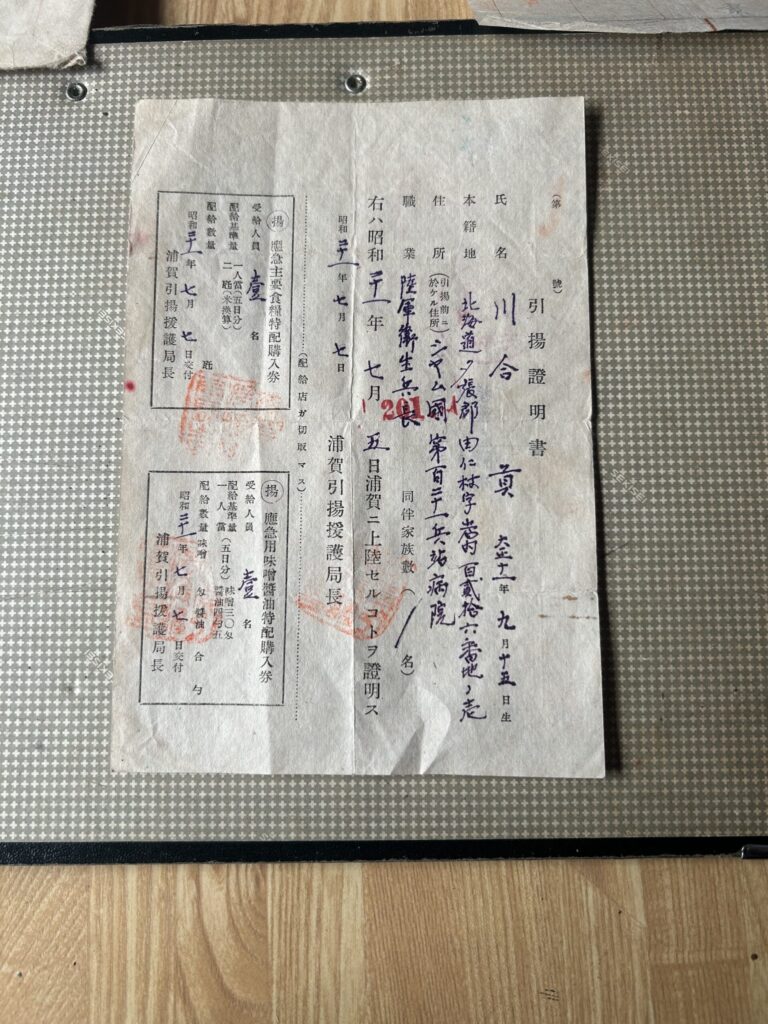
- 引揚證明書:浦賀引揚援護局発行(川合貢 氏)
- 「手荷物検閲通過証(CLEAR FOR SHIPMENT)」
- 認識證明書(国際条約に基づく衛生要員証明)
- 『ビルマ戦陣回顧録』:元ビルマ派遣第百二十一兵站病院「北カ会」編
- Memories of a Sanitary Soldier: An Archival Inventory
紀元二千六百年記念 明治神宮奉祝 聖火継走感謝状
- 受領者: 川合 貢 殿
- 日付: 昭和十五年(1940年)七月
- 署名者:
- 北海道庁長官 戸塚 九一郎(当時の北海道の最高責任者)
- 小樽新聞社社長 地崎宇三郎
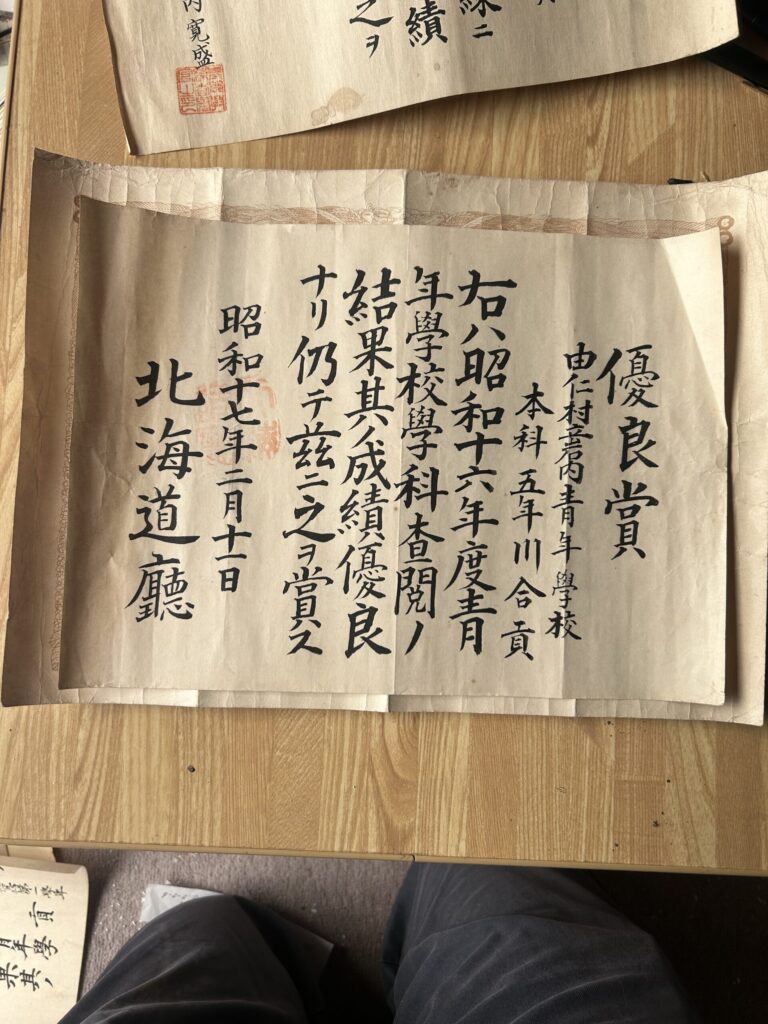
北海道庁「優良賞」:青年学校学内査閲
- 受領者: 由仁村川内青年学校 本科五年 川合 貢
- 日付: 昭和十七年(1942年)二月十一日(紀元節)
- 授与者: 北海道庁
- 事由: 昭和十六年度学内学事査閲の結果、その成績が優良なりと認められた。
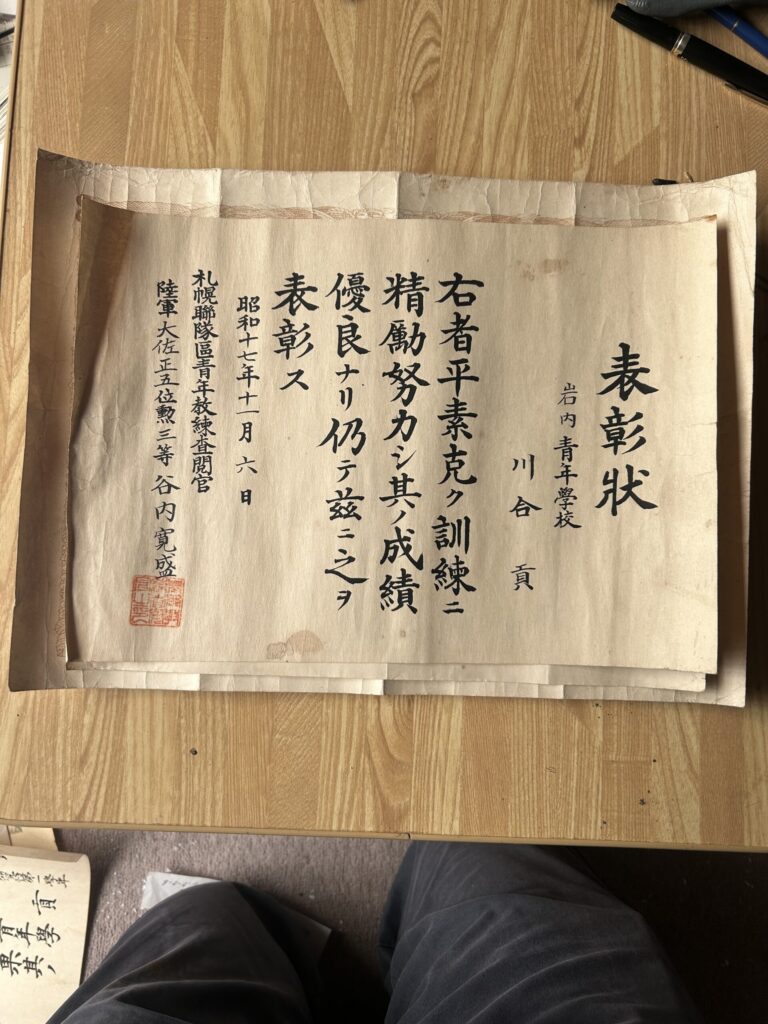
表彰状:札幌連隊区 青年教練査閲官による表彰
- 受領者: 岩内青年学校 川合 貢
- 日付: 昭和十七年(1942年)十一月六日
- 授与者: 札幌連隊区青年教練査閲官 陸軍大佐 谷内 寛盛
- 内容: 平素克く訓練に精励努力し、その成績が優良であることへの表彰。
- 歴史的座標:学校が「軍隊」の予備門となった瞬間
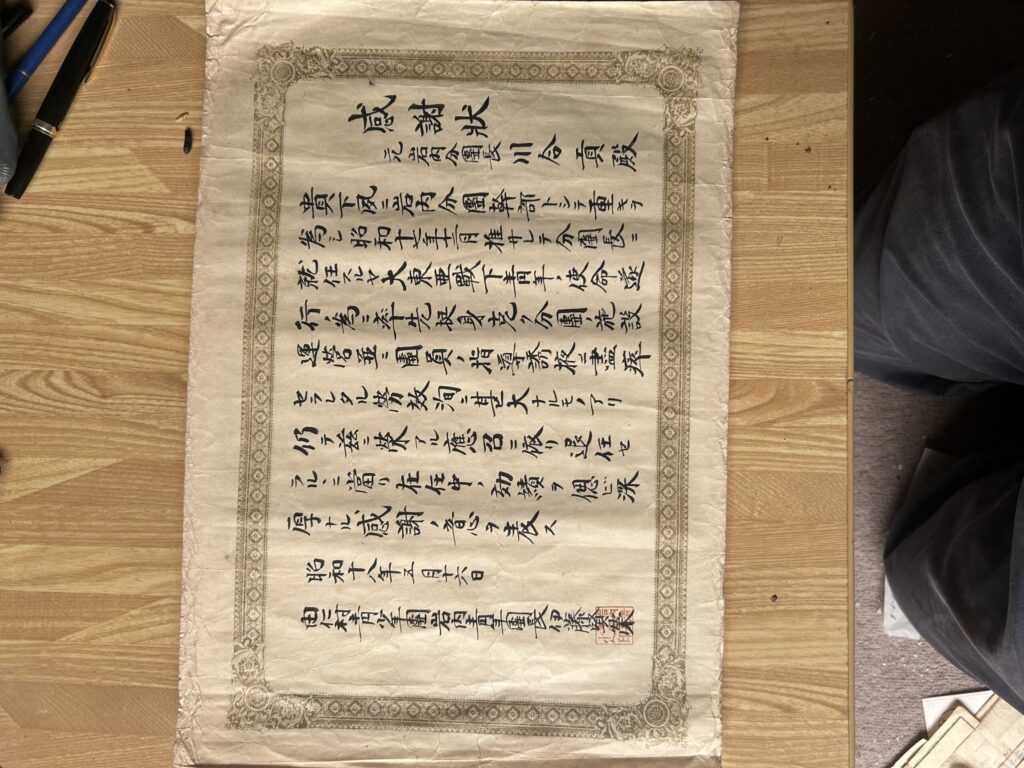
感謝状:由仁村青少年団 岩内分団長退任に伴う謝辞
- 受領者: 元岩内分団長 川合 貢 殿
- 日付: 昭和十八年(1943年)五月十六日
- 授与者: 由仁村青少年団 岩内分団主事団長 伊藤賢榮
- 決定的文言: 「乃テ茲ニ兼テルト應召(おうしょう)ニ依リ退任セルニ當リ……」
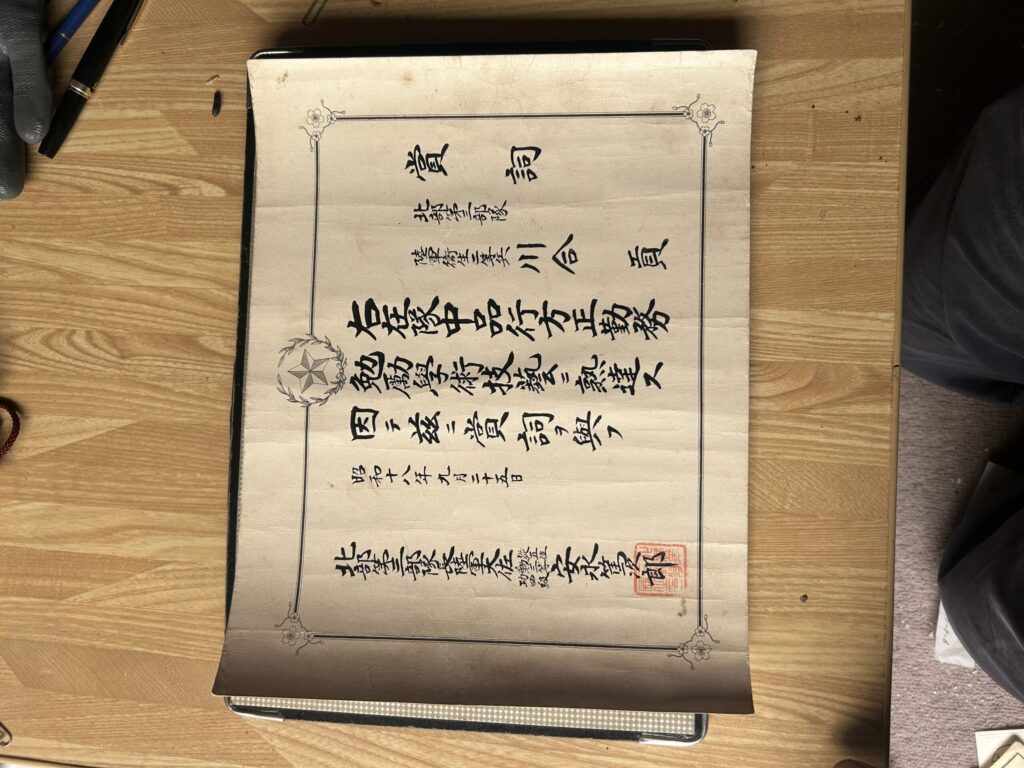
賞詞:北衛第三部隊長による技能表彰
- 受領者: 陸軍衛生二等兵 川合 貢
- 日付: 昭和十八年(1943年)九月二十五日
- 授与者: 北衛第三部隊長 陸軍大佐安永 篤次郎
- 内容: 品行方正、勤務精励。特に「学術技藝(がくじゅつぎげい)」において熟達したことへの賞詞。
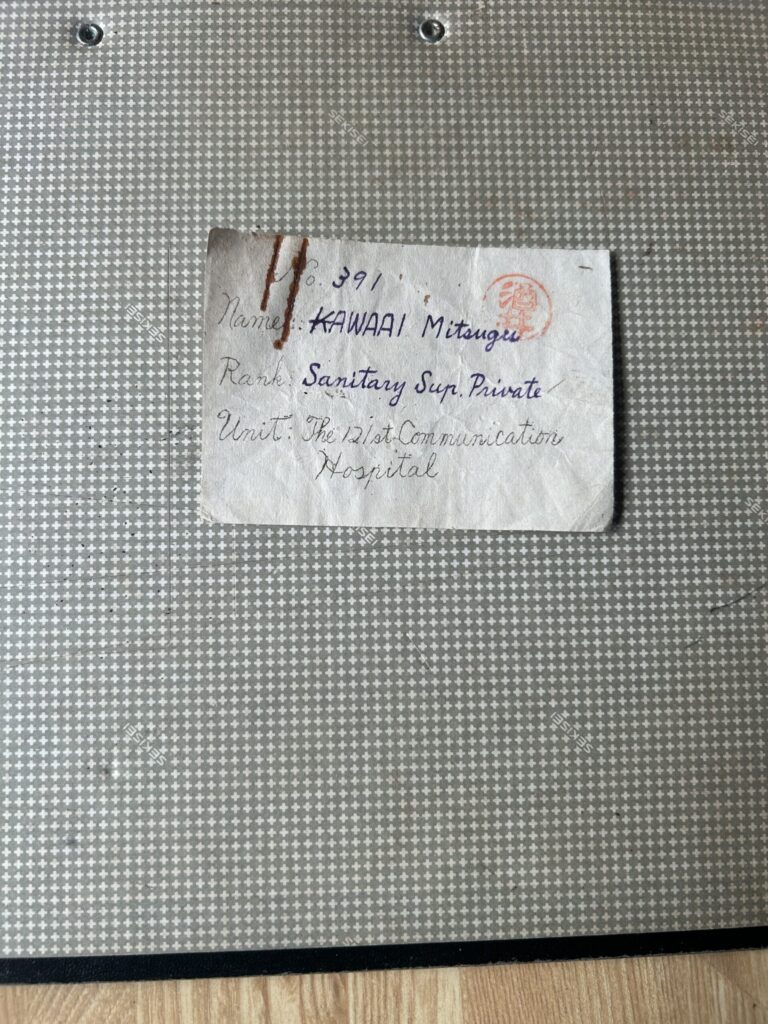
川合貢氏 英文身分識別スリップ(IDタグ)
Unit: The 121st Communication Hospital(第百二十一兵站病院)
No.: 391
Name: KAWAII Mitsugu
Rank: Sanitary Sup. Private(衛生上等兵)
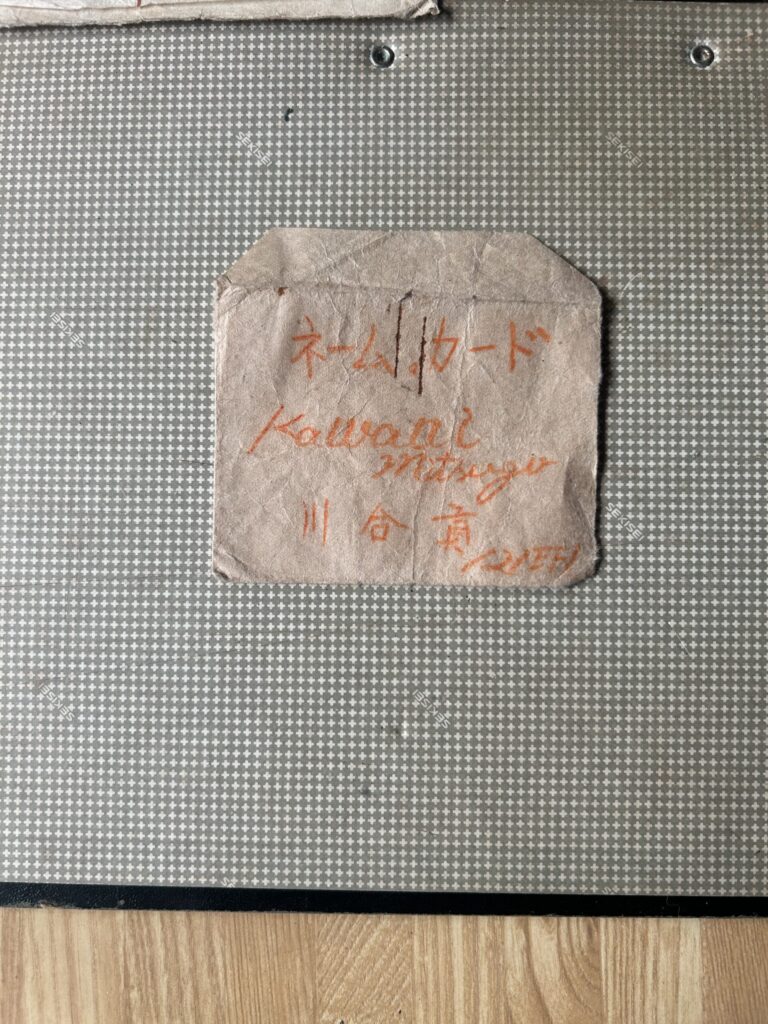
川合貢氏 自筆署名入り「ネームカード」封筒
- 表面記載:
- 「ネームカード」(カタカナ)
- 「Kawaii Mitsugi」(英文筆記体)
- 「川合 貢」(漢字)
- 「/(121FH)」(部隊略号:第121兵站病院/Field Hospital)
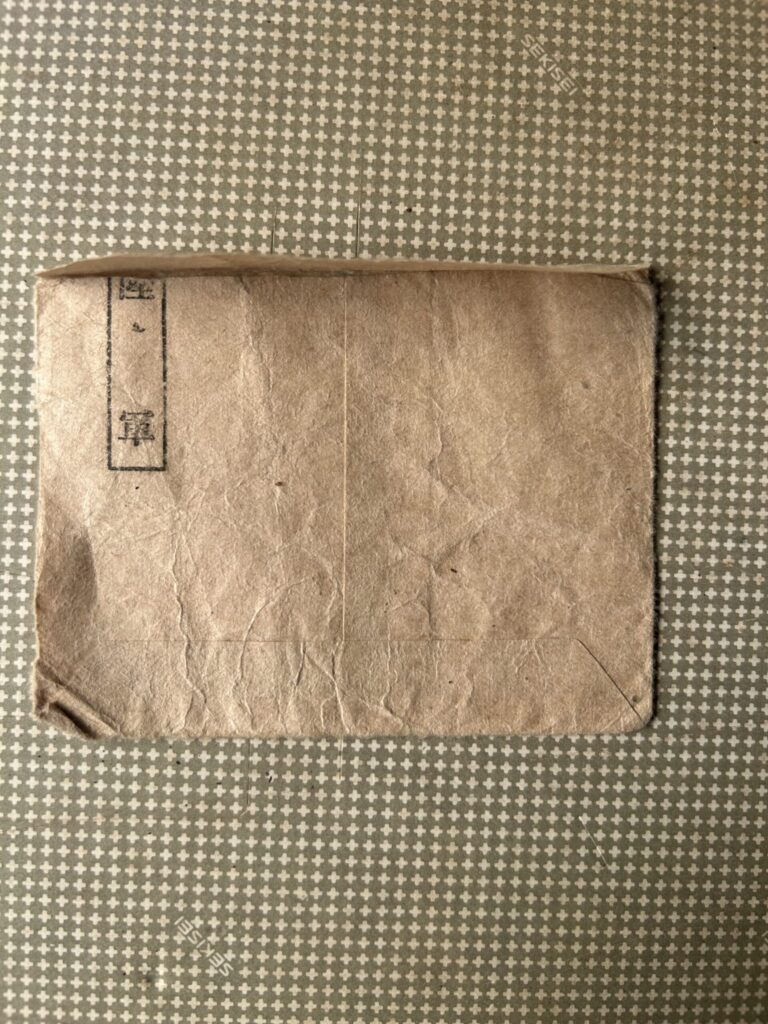
大日本帝国陸軍 公式封筒(記録収蔵用)
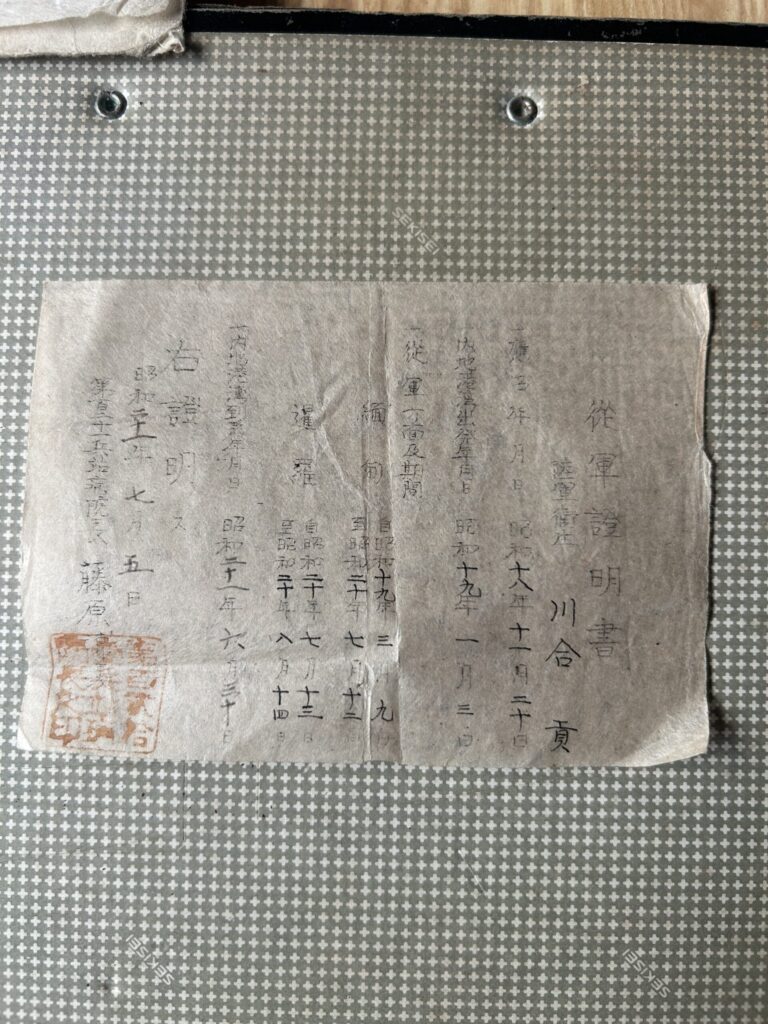
従軍證明書:陸軍衛生兵 川合貢 氏の戦跡
- 氏名: 川合 貢(KAWAII Mitsugu)
- 身分: 陸軍衛生兵(Sanitary Soldier)
- 所属部隊: 第百二十一兵站病院(121st Communication Hospital)
- 発行日: 昭和二十一年(1946年)七月五日
- 発行者: 第百二十一兵站病院長 藤原浦美
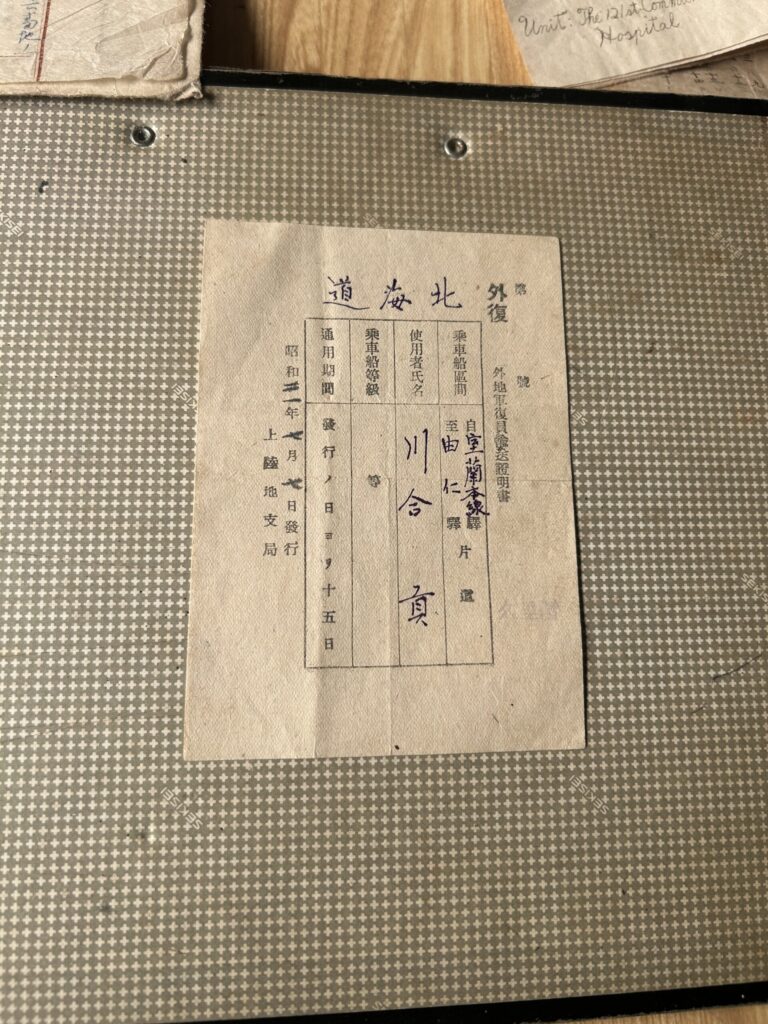
外地軍復員員輸送證明書:北海道・由仁駅への帰還記録
- 氏名: 川合 貢
- 日付: 昭和二十一年(1946年)七月七日
- 乗車船区間: 自:室蘭本線(某駅) / 至:由仁(ゆに)駅
- 発行: 上陸地支局(浦賀引揚援護局の出先機関)
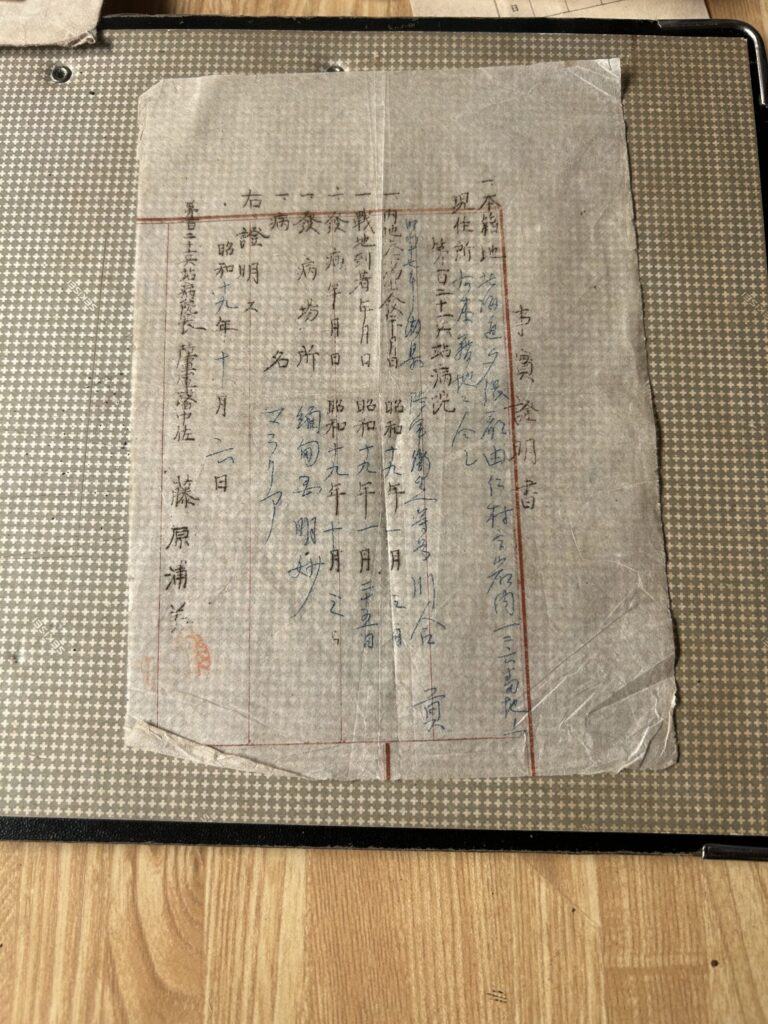
事実證明書:川合貢 氏「マラリア」罹患記録
- 氏名: 陸軍衛生一等兵 川合 貢
- 内地出発: 昭和19年1月2日
- 戦地到着: 昭和19年1月25日
- 発病年月日: 昭和19年10月23日
- 発病場所: 緬甸(ビルマ)明妙
- 病名: 「マラリア」
- 発行日: 昭和19年11月6日
- 発行者: 第百二十一兵站病院長 陸軍軍医中佐 藤原 浦美
引揚證明書:浦賀引揚援護局発行(川合貢 氏)
- 氏名: 川合 貢(大正十一年九月十五日生)
- 本籍: 北海道夕張郡由仁村(現・由仁町)
- 引揚前住所: シャム國(タイ)第百二十一兵站病院
- 職業: 陸軍衛生兵
- 上陸日: 昭和二十一年(1946年)七月五日
- 発行日: 昭和二十一年七月七日
- 発行者: 浦賀引揚援護局長
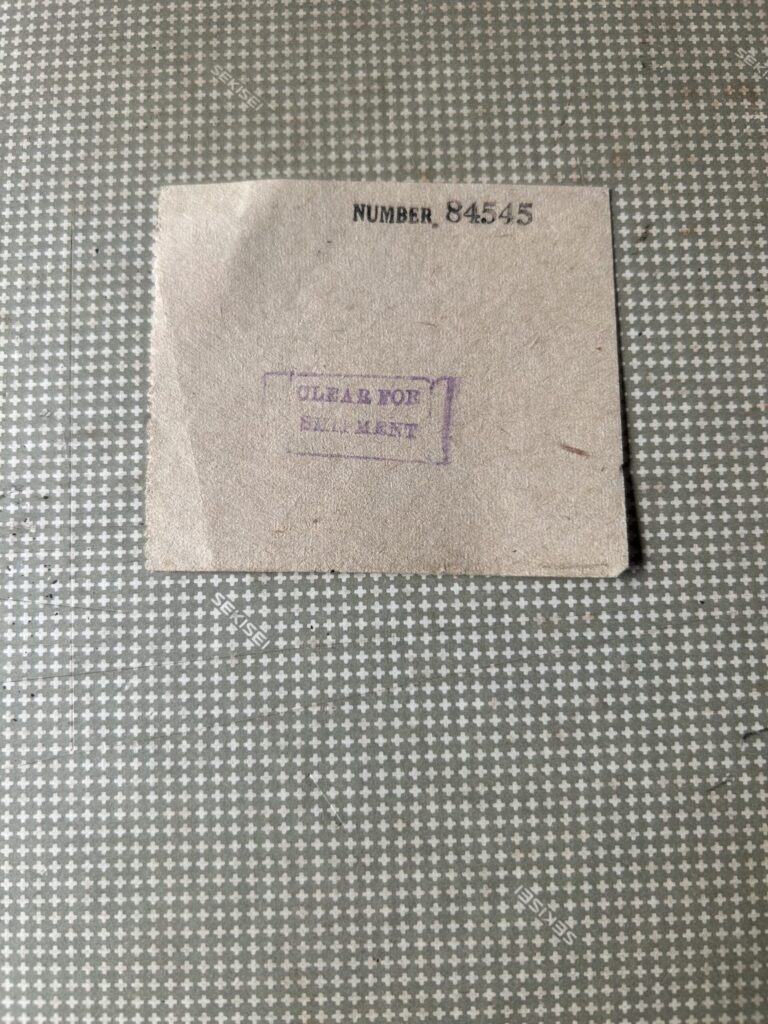
「手荷物検閲通過証(CLEAR FOR SHIPMENT)」
- 番号: NUMBER 84545
- スタンプ: 「CLEAR FOR SHIPMENT」(船積み許可済)
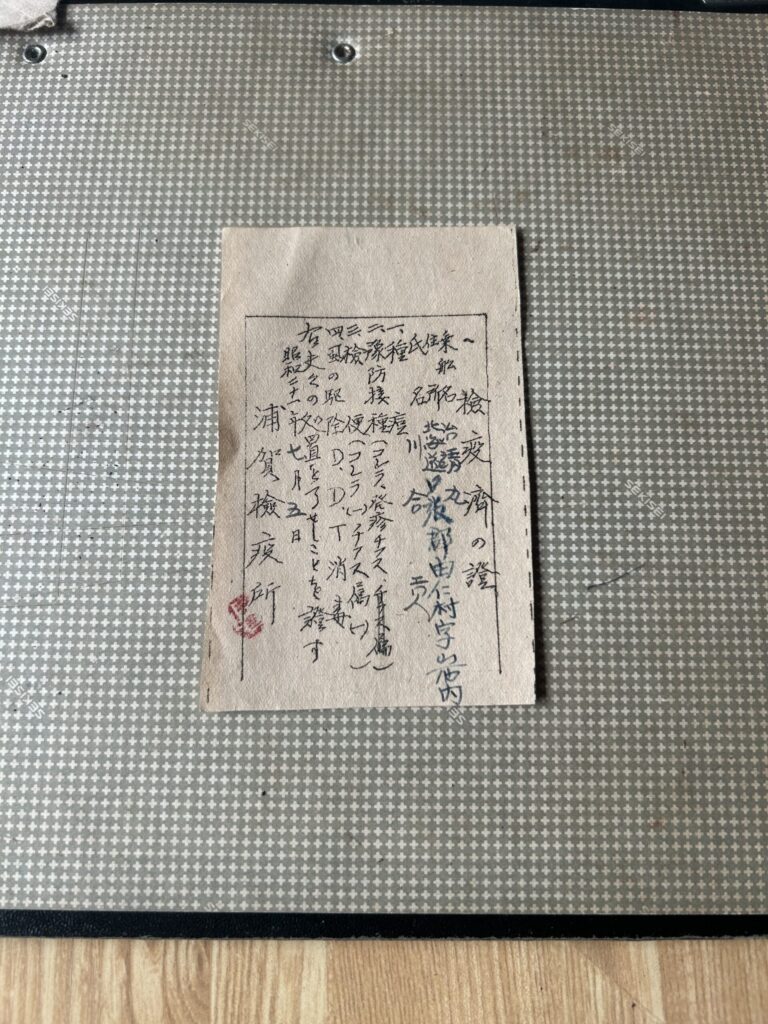
検疫済の證(けんえきずみのしょう)
一、乗船名:治清丸
一、氏名:川合 貢
一、住所:北海道夕張郡由仁村字岩内
一、予防接種(コレラ、発疹チフス、鼠疫)
二、検便(コレラ、チフス属(ー))
三、風の駆除D.D.T. 消毒
右の処置を了せしことを證す
昭和二十一年七月三日
浦賀検疫所(印)
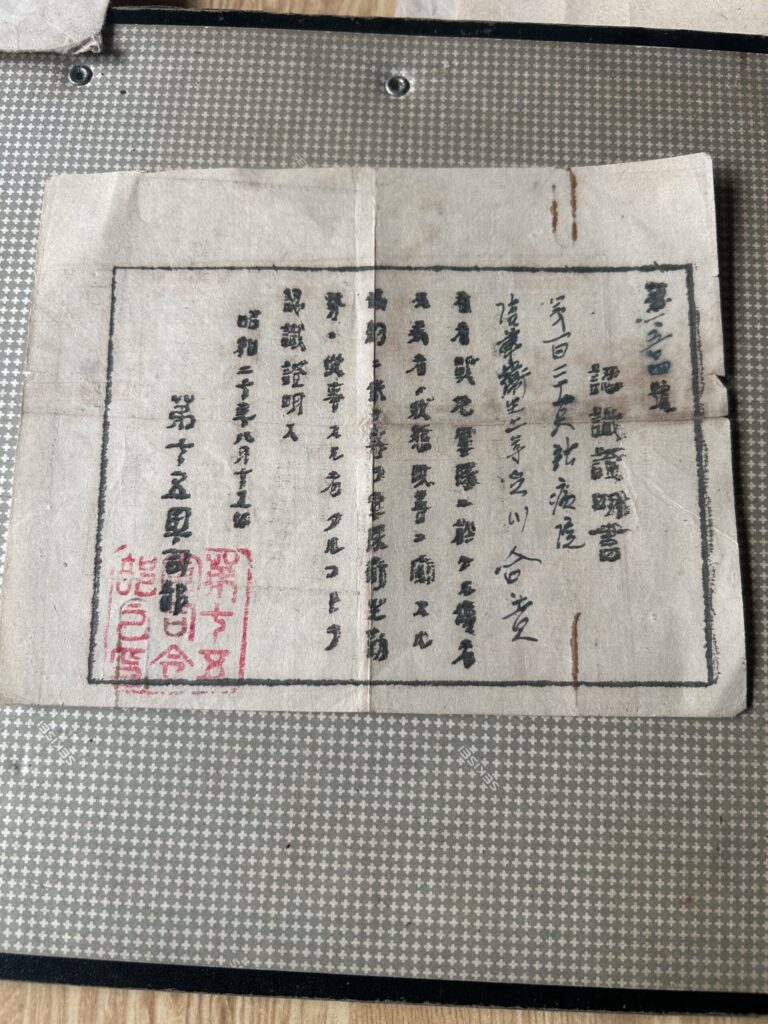
認識證明書(国際条約に基づく衛生要員証明)
- 氏名: 第百二十一兵站病院 陸軍衛生二等兵 川合 貢
- 発行日: 昭和二十年八月十五日(終戦当日)
- 発行者: 第十五軍司令官(ビルマ戦線を指揮した軍の最高権威)
- 内容: ジュネーブ条約(赤十字条約)に基づき、この者が「衛生勤務に従事する者」であることを国際的に証明するもの。
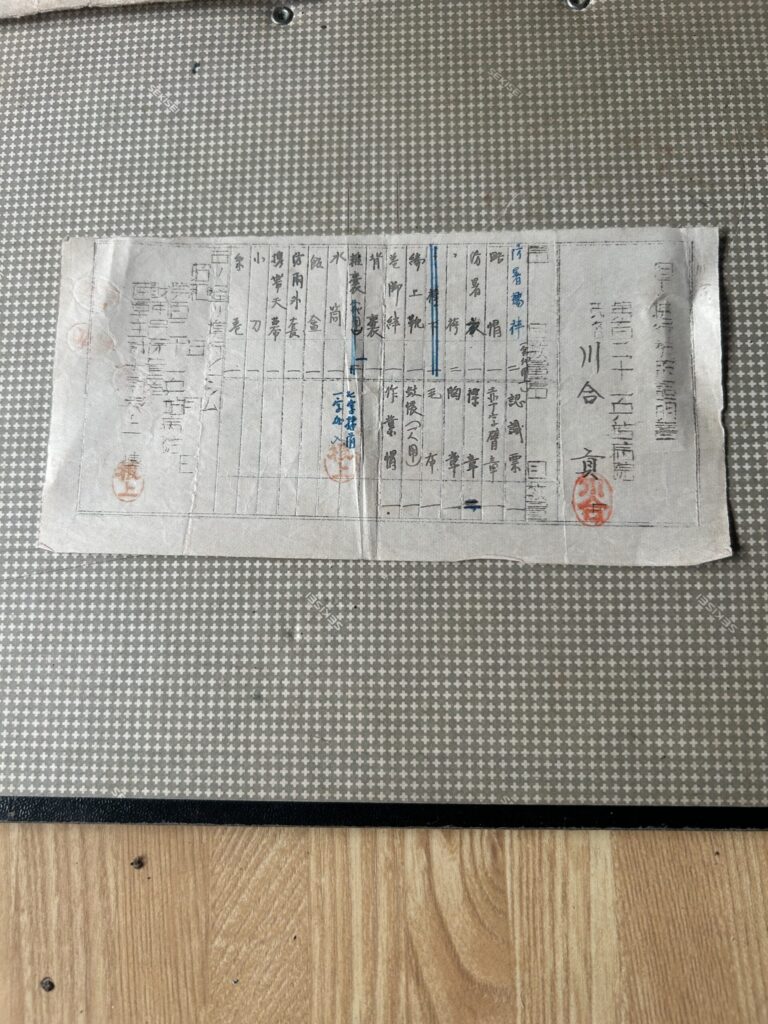
所属:第百二十一兵站病院
氏名:川合 貢
| 項目 | 数量 | 状態・備考 |
| 防暑襦袢(ぼうしょじゅばん) | 二 | 下着 |
| 防暑帽(ぼうしょぼう) | 一 | トピ帽 |
| 略帽(りゃくぼう) | 一 | 赤十字腕章も記載 |
| 防暑衣(ぼうしょい) | 一 | 夏用軍服 |
| 認識票(にんしきひょう) | 一 | ドッグタグ |
| 袴(はかま) | 二 | ズボン |
| 綿工靴(めんこうぐつ) | 一 | 作業靴 |
| 雑嚢(ざつのう) | 一 | 肩掛け鞄 |
| 水筒(すいとう) | 一 | |
| 飯盒(はんごう) | 一 | |
| 防雨外衣(ぼううがいい) | 一 | レインコート |
| 携帯天幕(けいたいてんまく) | 一 | テント |
| 蚊帳(かや) | 一 | 二人用 |
| 小刀(こがたな) | 一 | |
| 糸毛(いとけ) | 裁縫道具 |
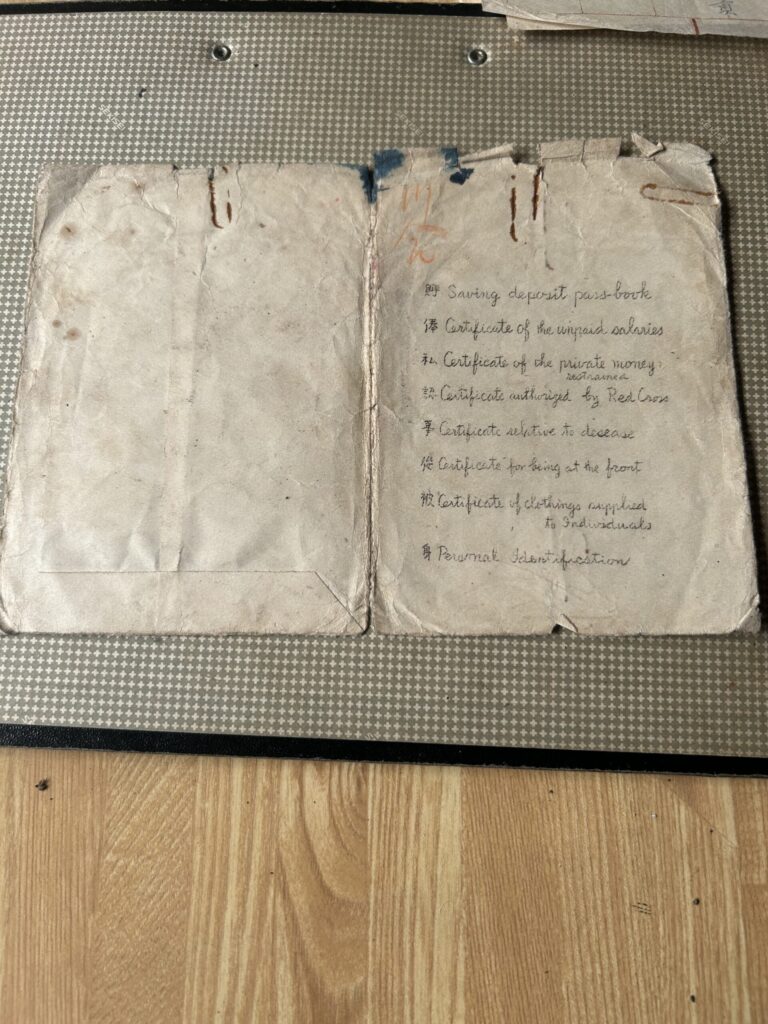
| 日本語 | 英語(原文のまま) | 意味(現代語訳) |
| 貯 | Saving deposit pass-book | 貯金通帳 |
| 俸 | Certificate of the unpaid salaries | 未払給与証明書 |
| 私 | Certificate of the private money / restrained | 私有金所持証明書(制限下にあるもの) |
| 認 | Certificate authorized by Red Cross | 赤十字承認証明書 |
| 事 | Certificate relative to disease | 疾患(病気)に関する証明書 |
| 従 | Certificate for being at the front | 従軍(前線勤務)証明書 |
| 被 | Certificate of clothings supplied to Individuals | 個人支給被服(衣類)証明書 |
| 身 | Personal Identification | 個人身分証明 |
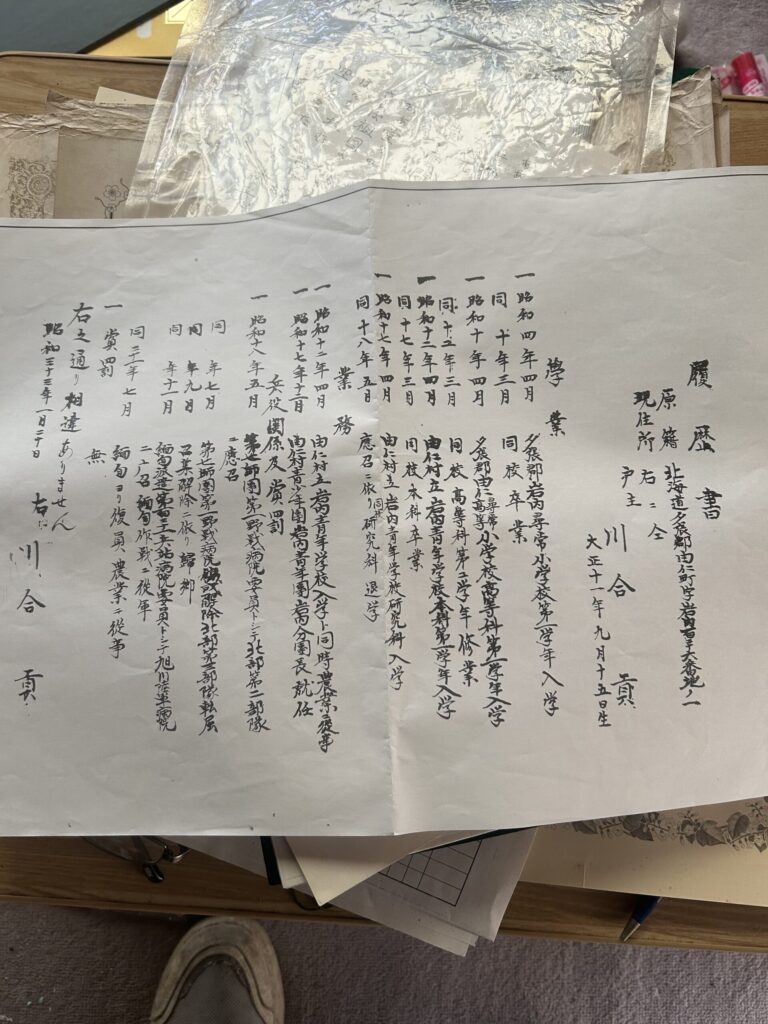
軍歴書
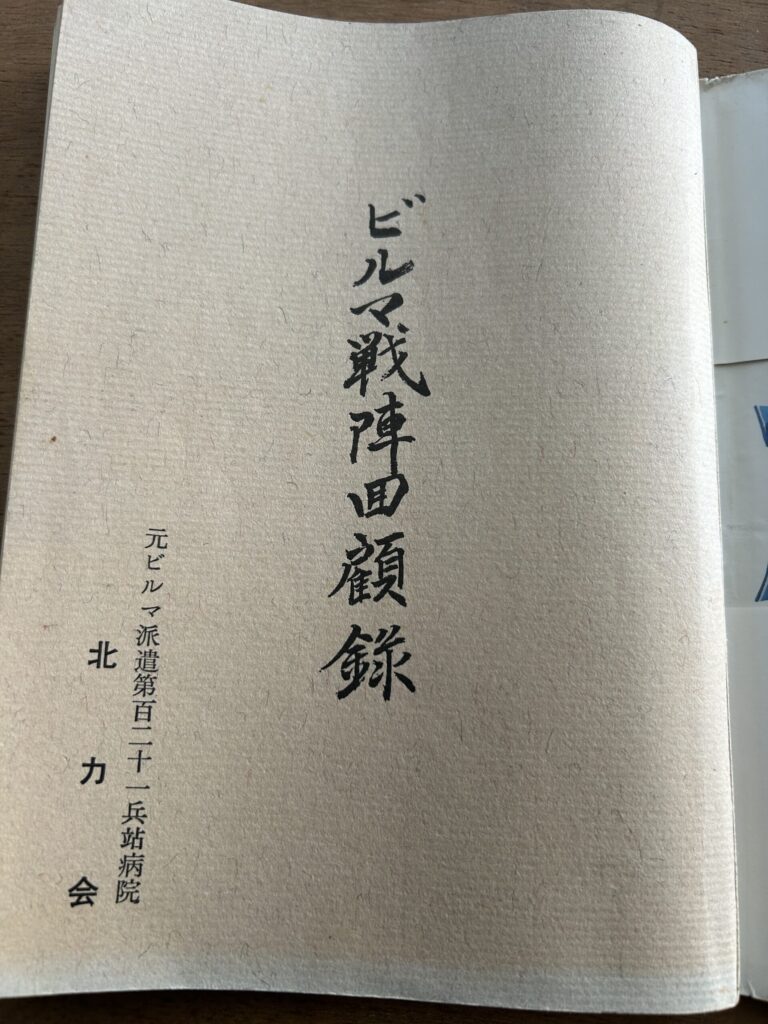
『ビルマ戦陣回顧録』:元ビルマ派遣第百二十一兵站病院「北カ会」編
- 編纂者: 北カ会(北ビルマ・第121兵站病院 生還者戦友会)
- 内容: 同部隊に所属した生存者たちによる、戦時下および引揚時の167名による共同記録。
- 全国図書館所蔵館3件、所蔵本4件(自社調べ)
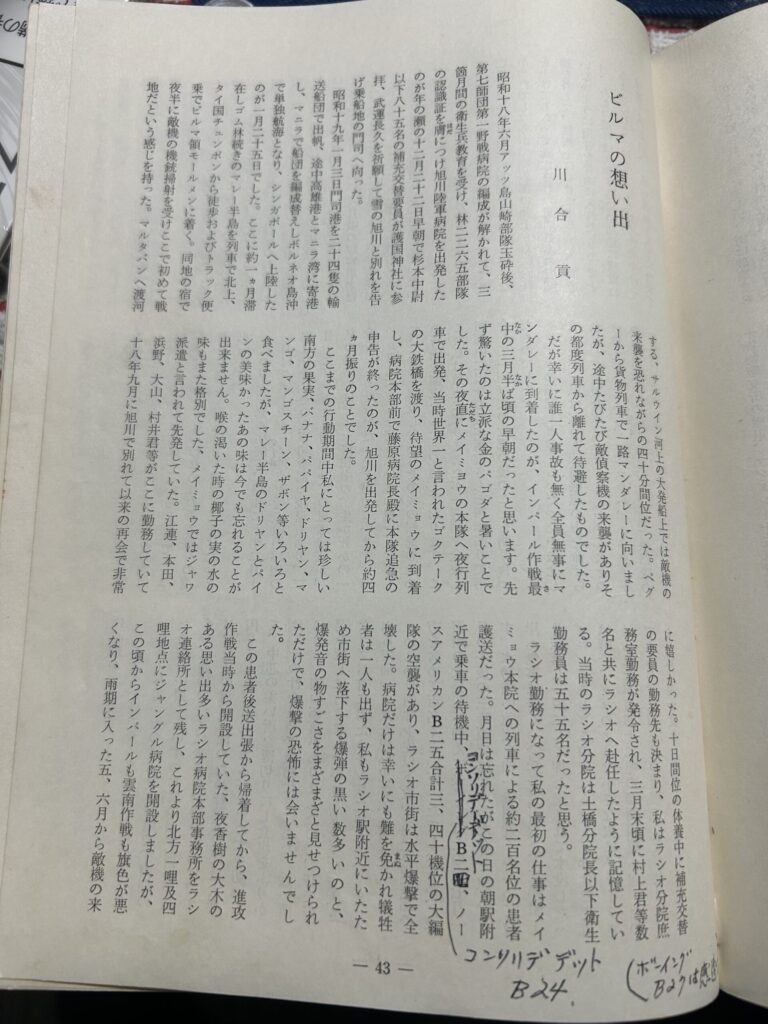
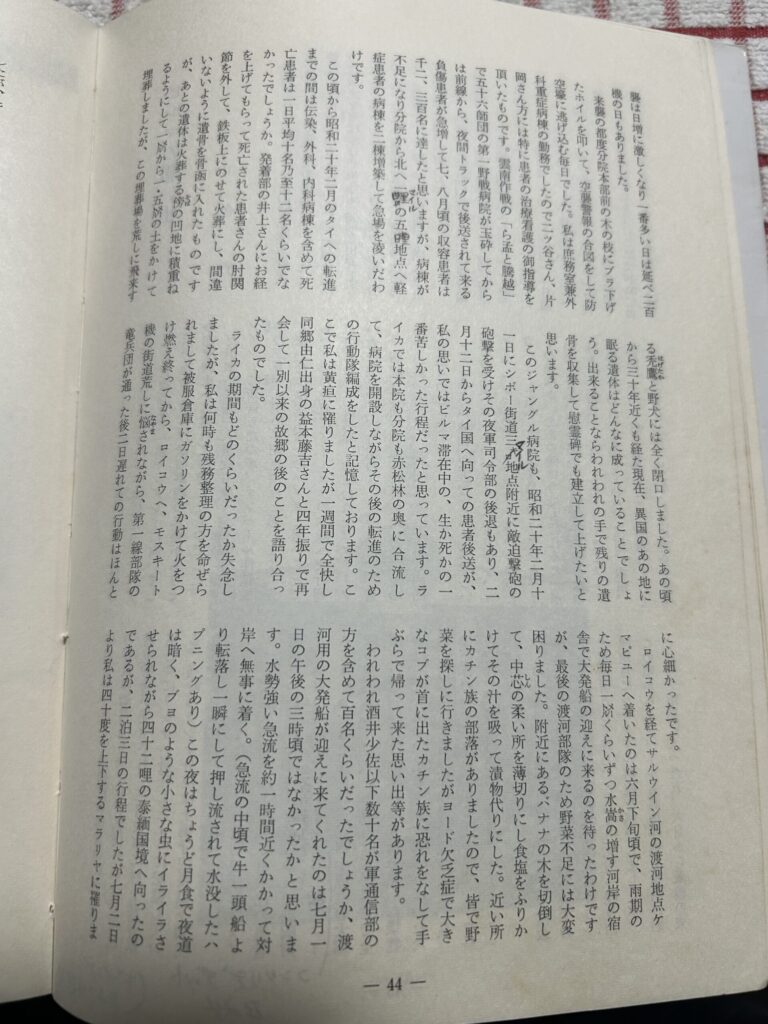
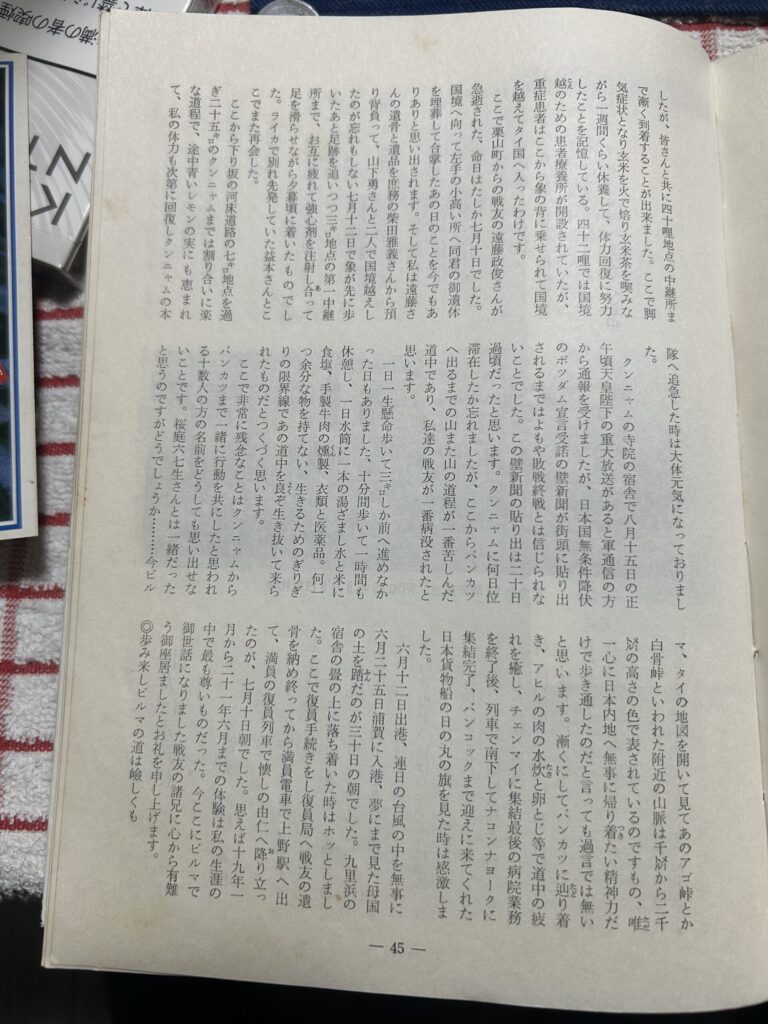
ビルマ戦陣回顧録内、故人の文章。他166名に関して著作権及び遺族の確認が取れない為抜粋はしない。
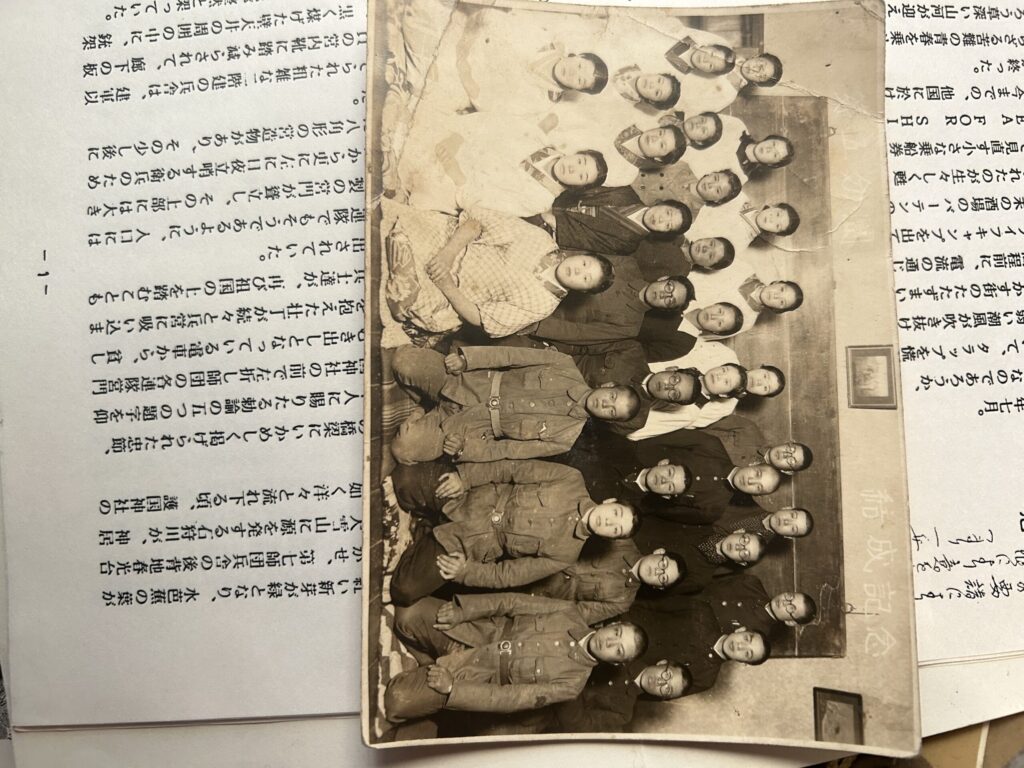
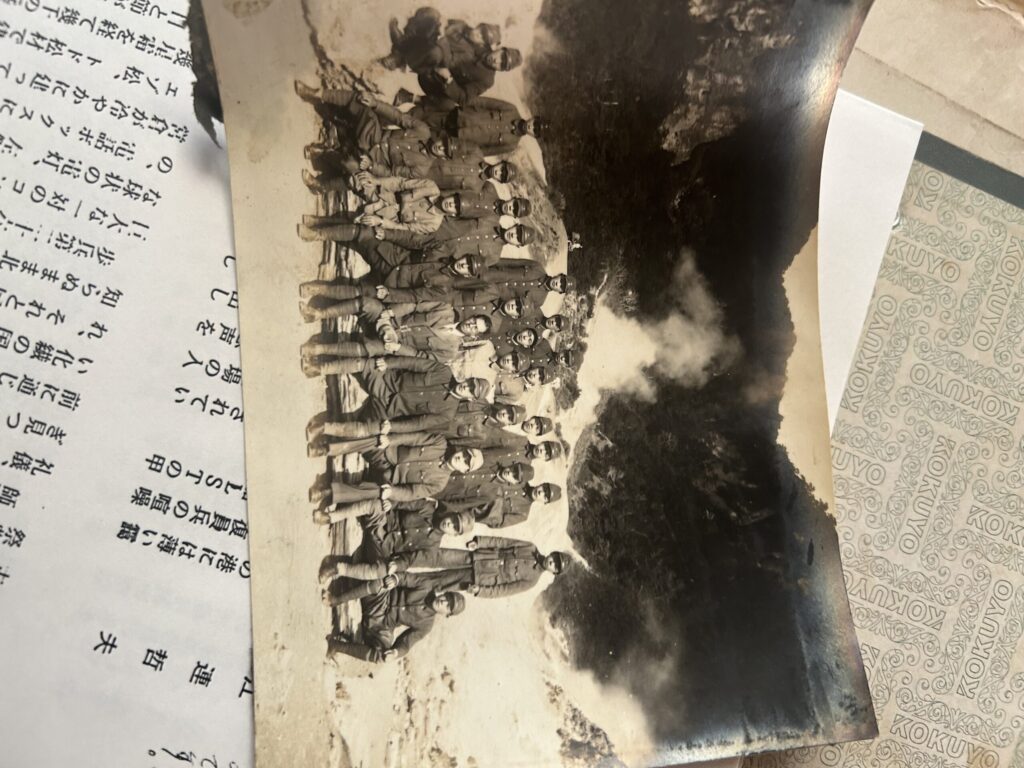
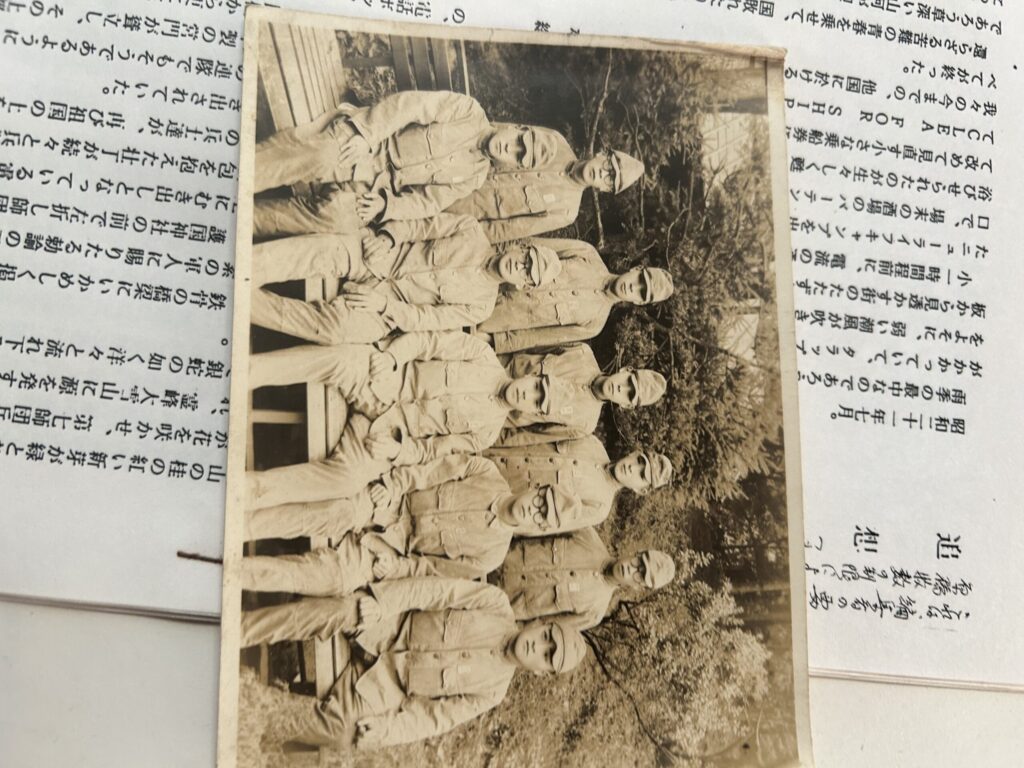
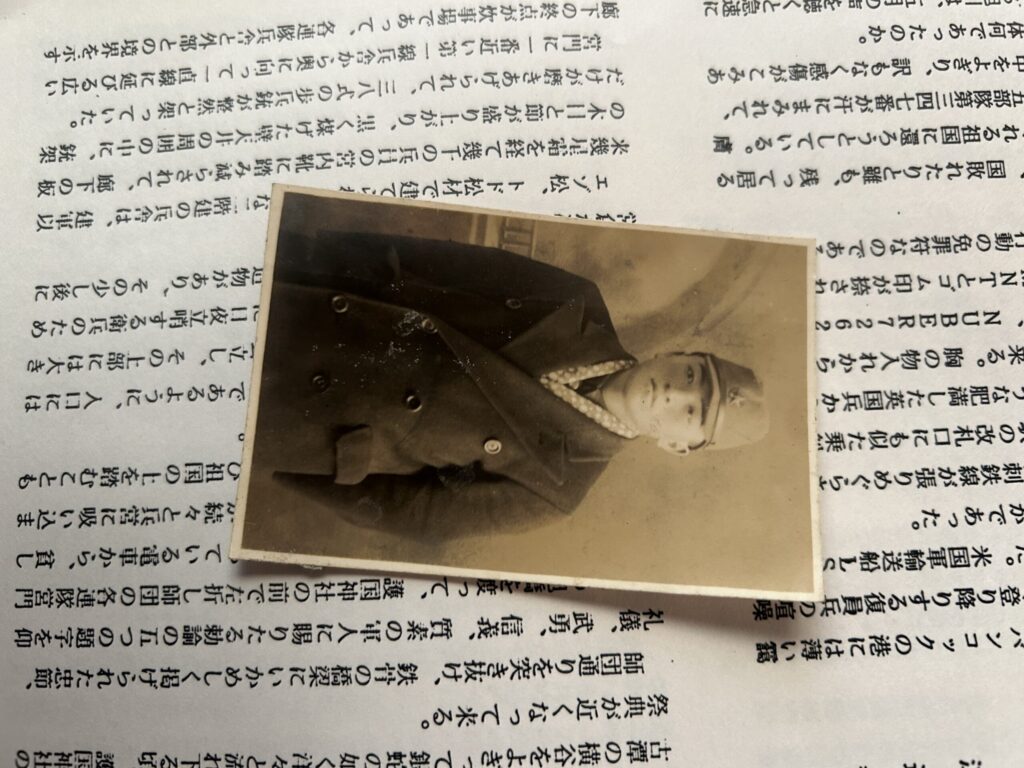
写真類(他数枚現存)
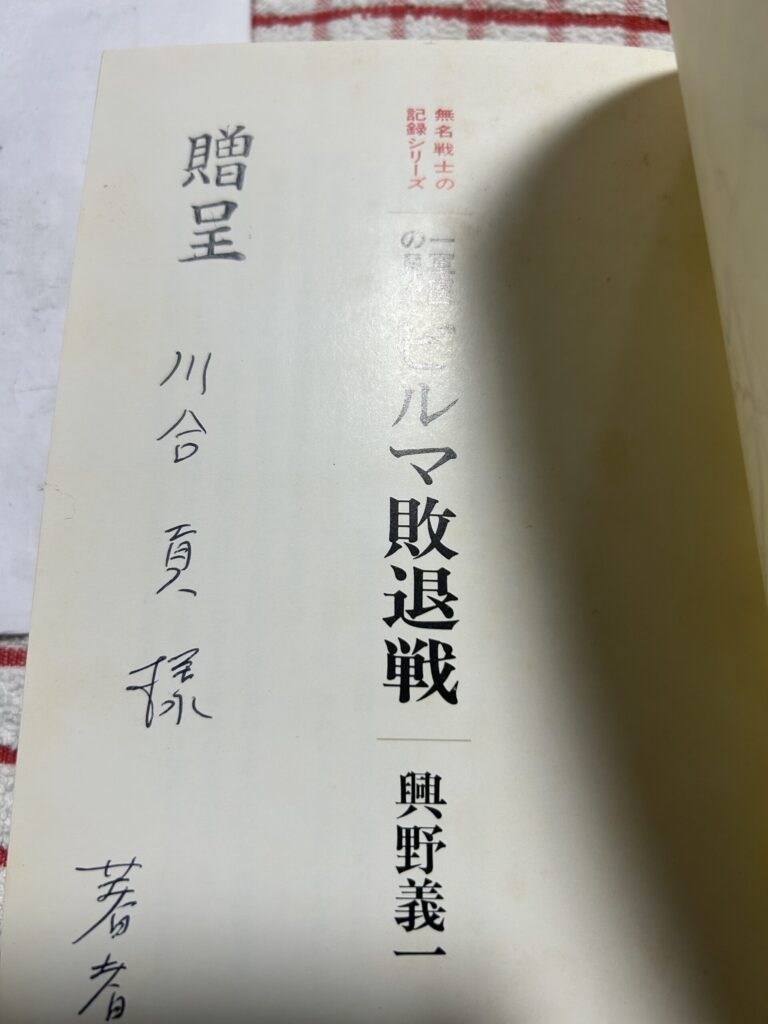
第121兵站病院軍医 興野義一氏による著書及び故人に贈呈した本
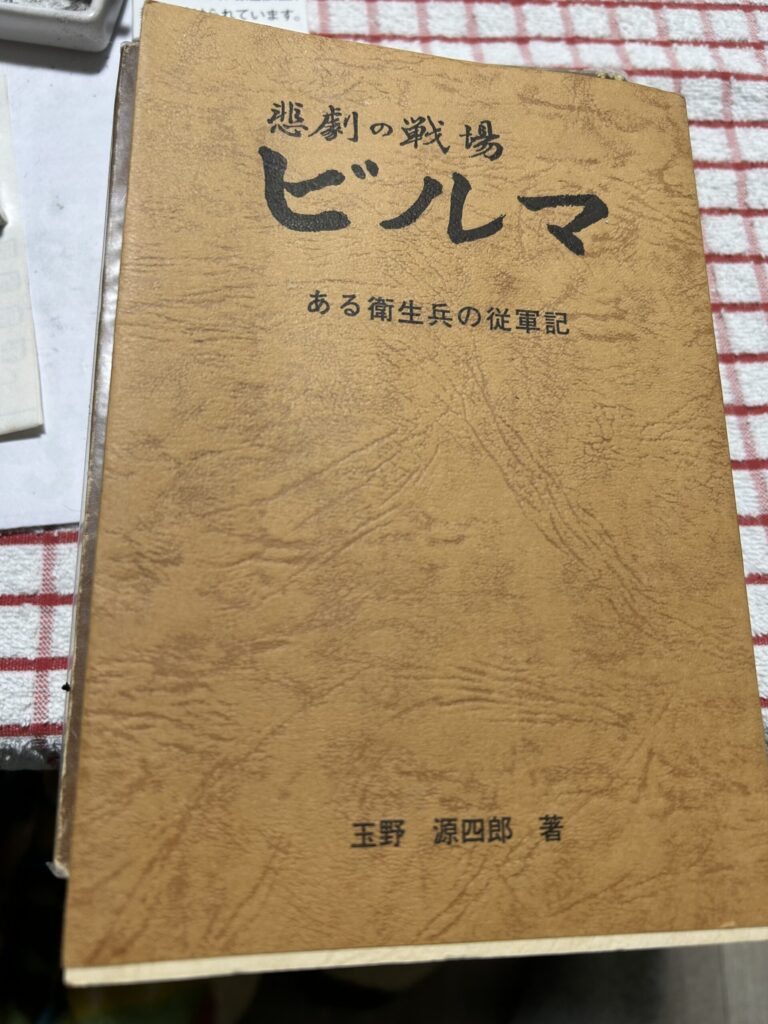
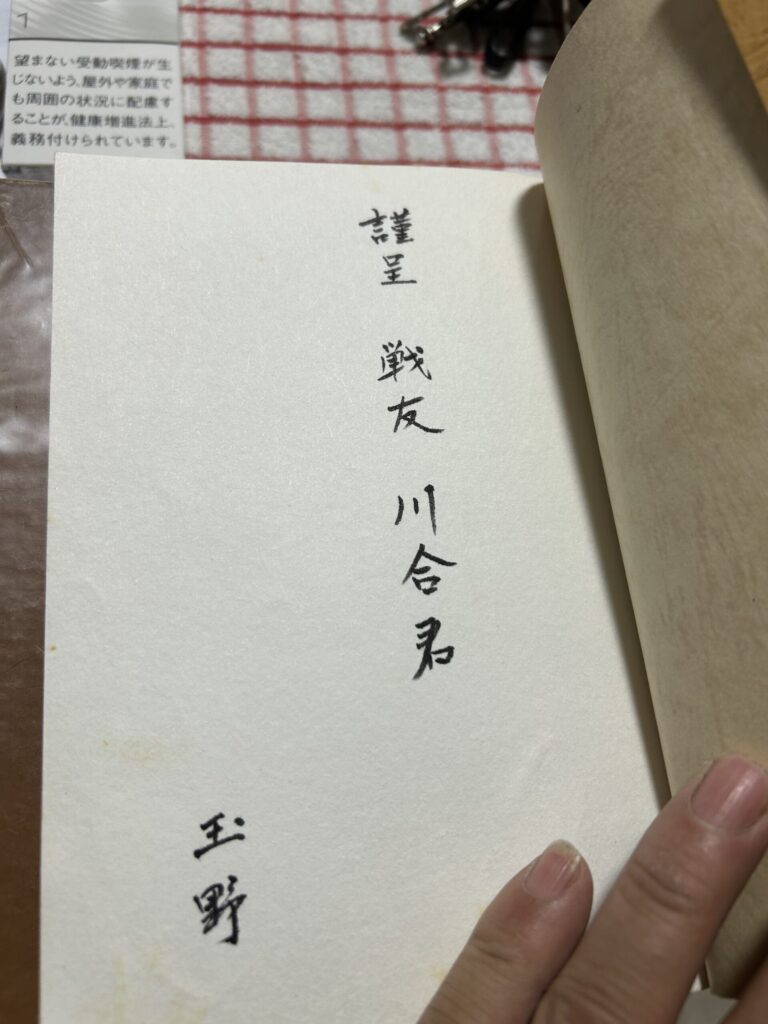
戦友から贈られた私家本
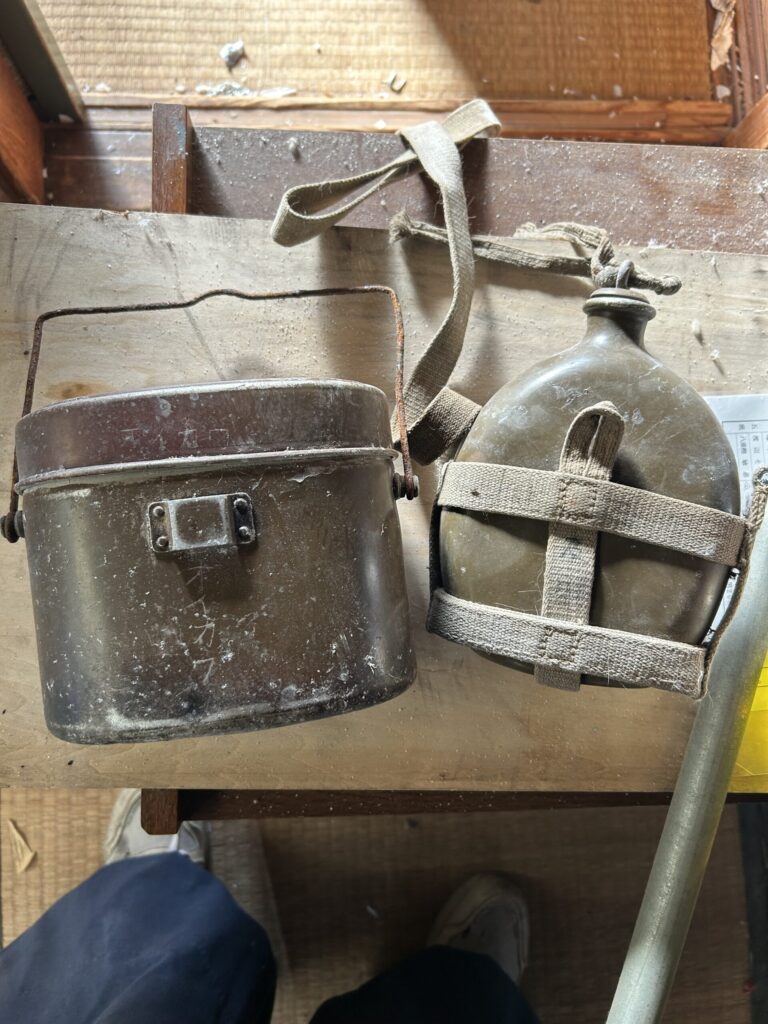
物置整理で発見した、戦時中に使用したと思われる飯釜と水筒。名前が違うことから、戦友の物を譲り受けたか、形見と思われる。詳細は不明。
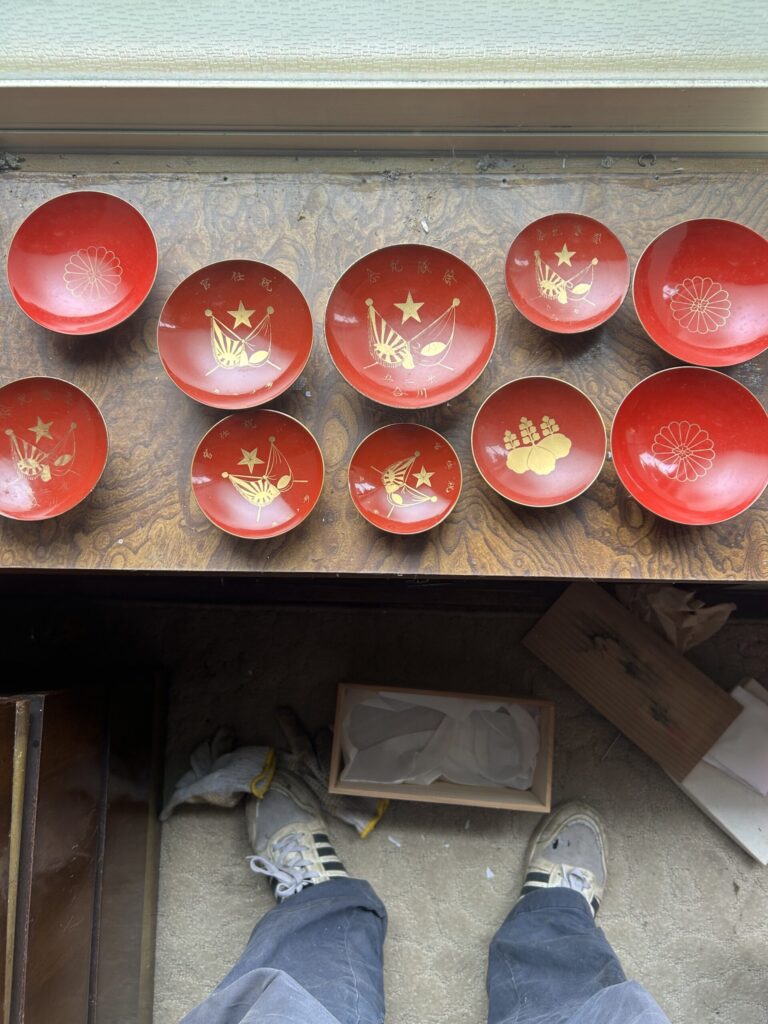
大日本帝国陸軍 第七師団 歩兵第二十五連隊 記念杯、任官、除隊記念軍杯
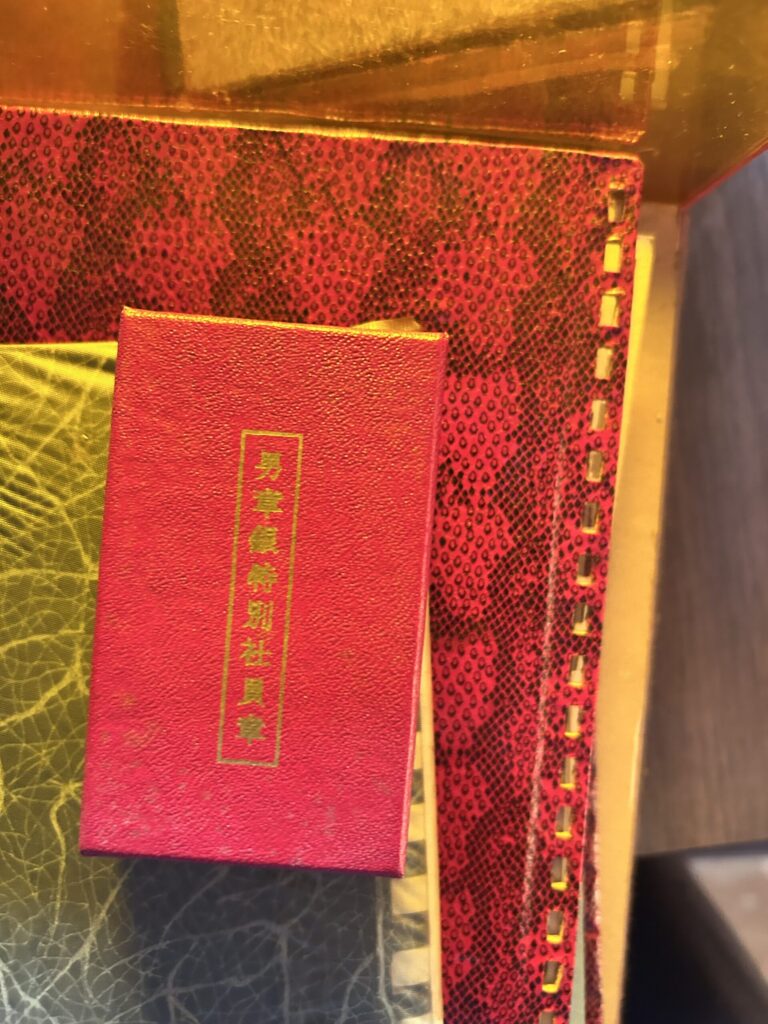
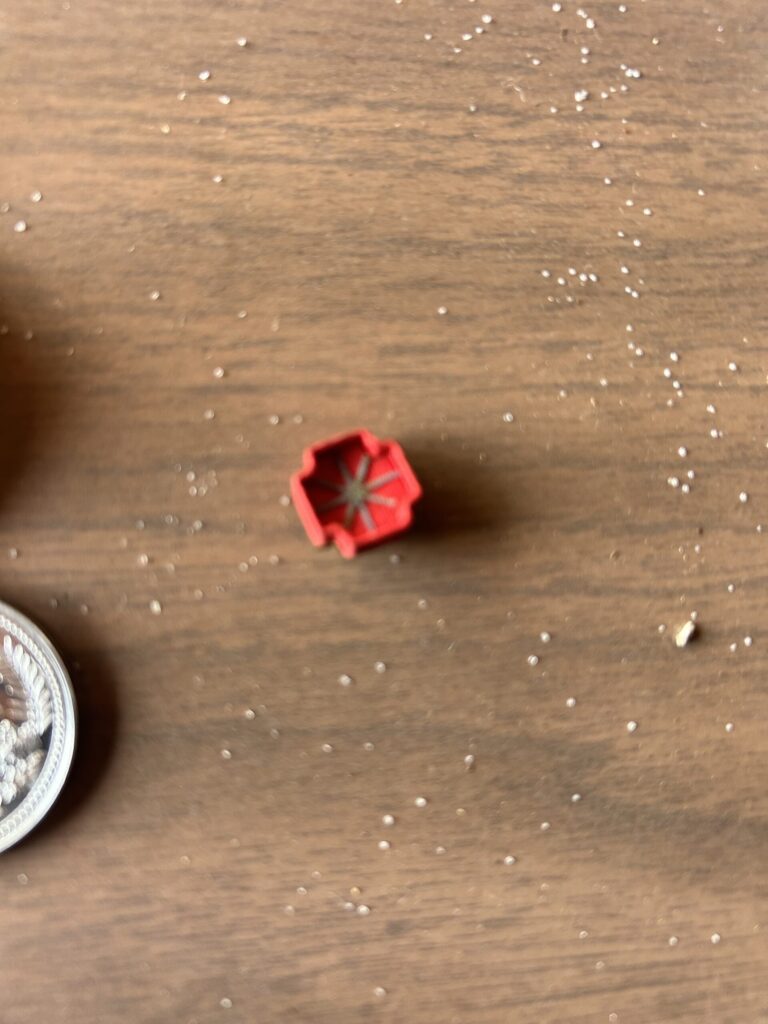
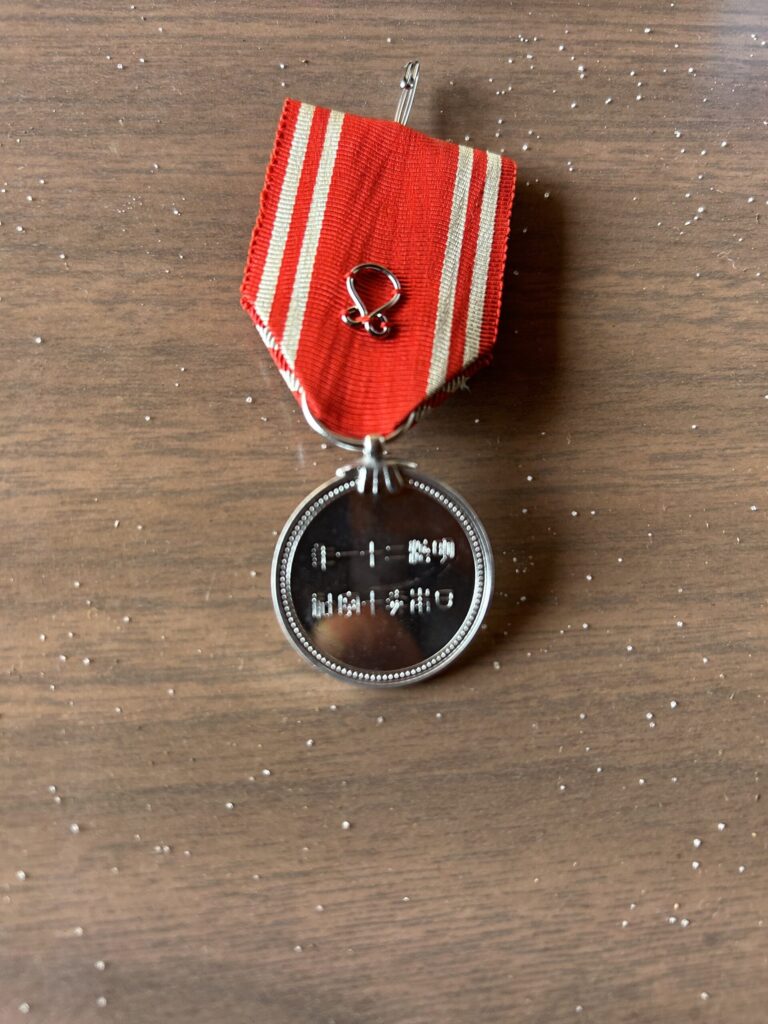
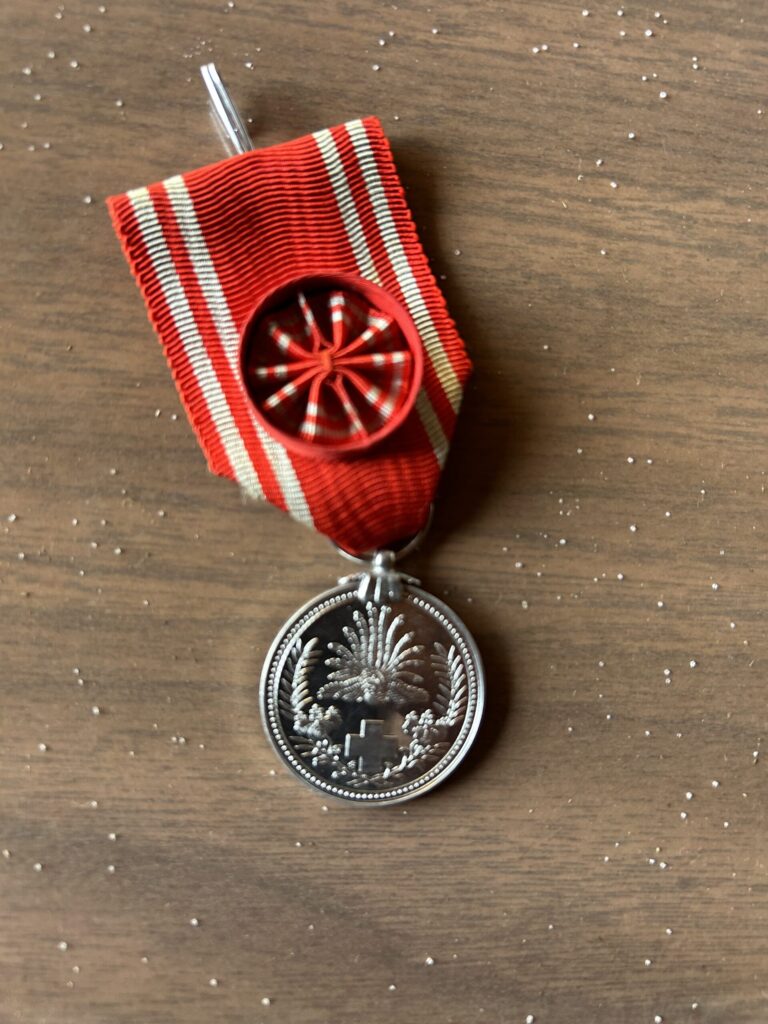
屋根裏部屋のダンボールから発見。昭和21年贈呈? 日本赤十字社 男章銀特別社員章
製造が昭和21年となっており、箱入りでかなり状態が良く、劣化していない。故人がタイから昭和21年6月15日バンコク湾から出航し、浦賀湾入港が昭和21年6月27日らしいので、帰国した年に功労として贈呈されたものと思われる。(ビルマ戦陣回顧録本人記載引用)
後、北カ会関係の資料もあるが、個人情報を含む為掲載を自粛。
以上が発見した資料群です。
戦前→戦時中→終戦→終戦後を完璧になぞる記憶。特に戦時中何が起きていたか故人の経験の回想や、終戦時の証明書などは特出していると感じています。私は実務家で学者ではありませんが、私なりに発見者としての責務、調べた結果を掲載致しました。間違いがあれば申し訳なく思います。天国にいる故人様や、その戦友達、戦争で散った英霊の魂の叫びを後世に伝える為に御遺族が寄贈を選択した気持ちを無駄にすることなく、記憶として回覧出来る事を喜んで頂ければとの想いで作成させていただきました。
想いを紡ぐ。それが、軌跡の遺品整理。
Memories of a Sanitary Soldier: An Archival Inventory
Rescued at the “Water’s Edge” of History
This archive has been created at the heartfelt request of the bereaved family to share the memory of what was discovered. With their gracious permission, these invaluable historical materials and wartime artifacts were rescued from the brink of loss.
From the “Geneva Convention Certificate” issued in the war-ravaged Burma campaign, to the embarkation onto the repatriation ship, the DDT disinfection (quarantine) upon arrival in Japan, and finally, the return to the local train station—this complete timeline was fiercely preserved as a single, unbroken sequence by a single individual for over 80 years after the war.
In light of global ethical frameworks, we publish this catalog in accordance with the professional ethics of archival science, which demand the preservation and sharing of interconnected memory. Furthermore, this publication carries a profound ethical meaning inherent in the practice of estate-clearing (遺品整理): it is an act of honoring the deceased, weaving the thoughts of our ancestors into the future, and paying the ultimate respect and tribute to the late individual.
Table of Contents
- Certificate of Appreciation: Celebration of the 2,600th Anniversary of the Founding of Japan, Meiji Jingu Sacred Fire Relay
- “Certificate of Excellence” from Hokkaido Prefectural Government: Youth School Academic Inspection
- Commendation: Commendation by the Youth Training Inspector of the Sapporo Regimental District
- Letter of Appreciation: Resignation of the Yuni Village Youth Association Iwanai Branch Chief due to Military Induction
- Award of Merit: Certification of Technical Proficiency by the Commander of the Northern Medical 3rd Unit
- English Identification Slip (ID Tag) for Mitsugu Kawaii
- Hand-signed “Name Card” Envelope for Mitsugu Kawaii
- Official Imperial Japanese Army Envelope (For Archival Storage)
- Military Service Record: War Trail of Sanitary Soldier Mitsugu Kawaii
- Repatriation Transport Certificate: Record of Return to Yuni Station, Hokkaido
- Medical Fact Certification: Record of Mitsugu Kawaii’s Malaria Contraction
- Repatriation Certificate: Issued by the Uraga Repatriation Support Bureau
- Baggage Clearance Tag: “CLEAR FOR SHIPMENT”
- Identification Certificate: Authorized Sanitary Personnel under International Convention (Geneva Convention)
- Memoirs of the Burma Campaign:Compiled by “Hoku-ka-kai” (Veterans’ Association of the 121st Communication Hospital)
Detailed Inventory
1. Certificate of Appreciation: Celebration of the 2,600th Anniversary of the Founding of Japan, Meiji Jingu Sacred Fire Relay
- Recipient: Mitsugu Kawaii
- Date: July 1940 (Showa 15)
- Signatories: Kyuichiro Totsuka (Governor of Hokkaido); Usaburo Chizaki (President of Otaru Shimbun)
2. “Certificate of Excellence”: Youth School Academic Inspection
- Recipient: Mitsugu Kawaii, 5th Year, Kawauchi Youth School, Yuni Village
- Date: February 11, 1942 (Showa 17)
- Issuer: Hokkaido Prefectural Government
- Summary: Recognized for outstanding academic performance during the 1941 inspection.
3. Commendation: Sapporo Regimental District Youth Training Inspector
- Recipient: Mitsugu Kawaii, Iwanai Youth School
- Date: November 6, 1942 (Showa 17)
- Signatory: Colonel Hiroshige Taniuchi, Sapporo Regimental District Training Inspector
- Significance: A record of the moment education shifted toward military mobilization.
4. Letter of Appreciation: Chief of Yuni Village Youth Association, Iwanai Branch
- Recipient: Mitsugu Kawaii
- Date: May 16, 1943 (Showa 18)
- Crucial Phrase: “Upon resignation due to military induction (call-up)…”
- Significance: A poignant record of a community leader being sent to the front lines.
5. Award of Merit: Technical Proficiency by Northern Medical 3rd Unit
- Recipient: Sanitary Private 2nd Class Mitsugu Kawaii
- Date: September 25, 1943 (Showa 18)
- Signatory: Medical Colonel Atsujiro Yasunaga
- Content: Commendation for mastery in “Academic Arts and Techniques” (Medical/Sanitary skills).
6. English Identification Slip (ID Tag) for Mitsugu Kawaii
- Unit: The 121st Communication Hospital
- No.: 391
- Rank: Sanitary Sup. Private (Superior Private)
- Significance: An international identification used under Allied/Red Cross management.
7. Hand-signed “Name Card” Envelope for Mitsugu Kawaii
- Inscriptions: “Name Card” (Katakana); “Kawaii Mitsugi” (English Cursive); “Mitsugu Kawaii” (Kanji); “/(121FH)” (Unit Abbreviation: 121st Field Hospital).
8. Official Imperial Japanese Army Envelope
- Used for the secure storage and transport of these vital records.
9. Military Service Record: War Trail of Sanitary Soldier Mitsugu Kawaii
- Unit: 121st Communication Hospital
- Signatory: Medical Colonel Urami Fujiwara, Director of the 121st Communication Hospital.
- Date: July 5, 1946 (Showa 21)
10. Repatriation Transport Certificate: Return to Yuni Station
- Date: July 7, 1946 (Showa 21)
- Route: From Muroran Main Line (unspecified station) to Yuni Station.
- Significance: The “Last Ticket” home, arriving on the day of the Tanabata festival.
11. Medical Fact Certification: Malaria Contraction
- Location: Near Maymyo, Burma (Myanmar)
- Disease: Malaria
- Date of Onset: October 23, 1944 (Showa 19)
- Issuer: Medical Lt. Colonel Urami Fujiwara
- Significance: An extremely rare primary medical document proving that the rear communication hospital (the 121st Communication Hospital) was strictly and officially functioning as an organized institution during the active Burma campaign.
12. Repatriation Certificate (Uraga Repatriation Support Bureau)
- Recipient: Mitsugu Kawaii
- Arrival Date: July 5, 1946 (Showa 21)
- Significance: Contains rations coupons for rice, miso, and soy sauce—the physical proof of returning to civilian life.
13. Baggage Clearance Tag: “CLEAR FOR SHIPMENT”
- Number: 84545
- Significance: Proof of passing Allied military censorship.
14. Quarantine Certificate (Uraga Quarantine Station)
- Vessel Name: Jisei-maru
- Treatments: Vaccinations and D.D.T. disinfection.
- Date: July 3, 1946 (Showa 21)
15. Identification Certificate (Sanitary Personnel under International Convention)
- Date: August 15, 1945 (The day of surrender)
- Issuer: Commander of the 15th Army
- Significance: A “Shield of International Law” (Geneva Convention) issued on the final day of the war to protect medical personnel.
16. Equipment Return/Retention List (121th Communication Hospital)
- Items: Canteen (1), Mess Tin (1), Mosquito Net, etc.
- Strategic Analysis: Proves the veteran officially returned his gear, yet physically brought back the items of his fallen comrade “Oikawa” as a sacred memento.
17. Glossary of Rescued Documents (Bilingual Master List)
- Saving deposit pass-book (貯)
- Certificate of the unpaid salaries (俸)
- Certificate authorized by Red Cross (認)
- Certificate relative to disease (事)
- Certificate for being at the front (従)
18. Memoirs of the Burma Campaign (Hoku-ka-kai Edition)
- A collective record of the 167 survivors of the 121st Communication Hospital. An extremely rare publication found in only a few libraries across Japan.
19. Physical Artifacts: Mess Tin and Canteen
- Discovered in a storage shed. Engraved with the name “Oikawa,” which differs from the deceased. These are believed to be the cherished mementos of a comrade who fell in Burma.
20. Commemorative Sake Cups (7th Division, 25th Infantry Regiment)
- Lacquered cups marking military appointments and discharges, representing the pride of the “Bear Division” of Asahikawa.
21.Discovered in a cardboard box in the attic: A Silver Special Member Medal (Male Ribbon) from the Japanese Red Cross Society, presented around 1946 (Showa 21)?
The manufacturing date is marked as 1946. It comes with its original box and is in excellent condition, showing no signs of deterioration. According to the deceased’s personal notes in the “Burma Campaign Memoirs,” they departed from Bangkok Bay, Thailand, on June 15, 1946, and arrived at Uraga Bay on June 27, 1946. Therefore, it is believed that this medal was awarded in the same year of their return to Japan in recognition of their distinguished service.
Conclusion
This collection represents a seamless memory spanning from the pre-war era, through the heat of battle, to the moment of surrender and the decades of post-war life. The memoirs and the certificates issued at the moment of the war’s end are of exceptional historical significance.
As a practitioner—not a scholar—I have published these results as part of my responsibility as the discoverer. I hope this digital archive honors the wishes of the bereaved family to ensure that the “cries of the soul” of the deceased, his comrades, and the spirits who fell in battle are never forgotten.
Weaving thoughts into the future. That is the miracle of memento sorting.
I have taken the utmost care in transcribing these, but some errors or missing words may still occur. If you have any concerns, please check the source materials.
Keiji Tazawa
CEO, LRA Association LLC
Cultural Heritage Preservation Practitioner