

1945年の終戦から81年。節目の年を過ぎ、生存者の証言が失われつつある今、私たちが「歴史保全型遺品整理」の現場で救い出した一冊の私家版史料が、重い沈黙を破る。
『ビルマ戦陣回顧録』。
そこには、特定の国や個人を糾弾する次元を超えた、「戦争というシステムがいかに人間を、そして組織を狂わせていくか」という普遍的な悲劇が、生還したビルマ派遣第121兵站病院戦友会の手により記録されていました。
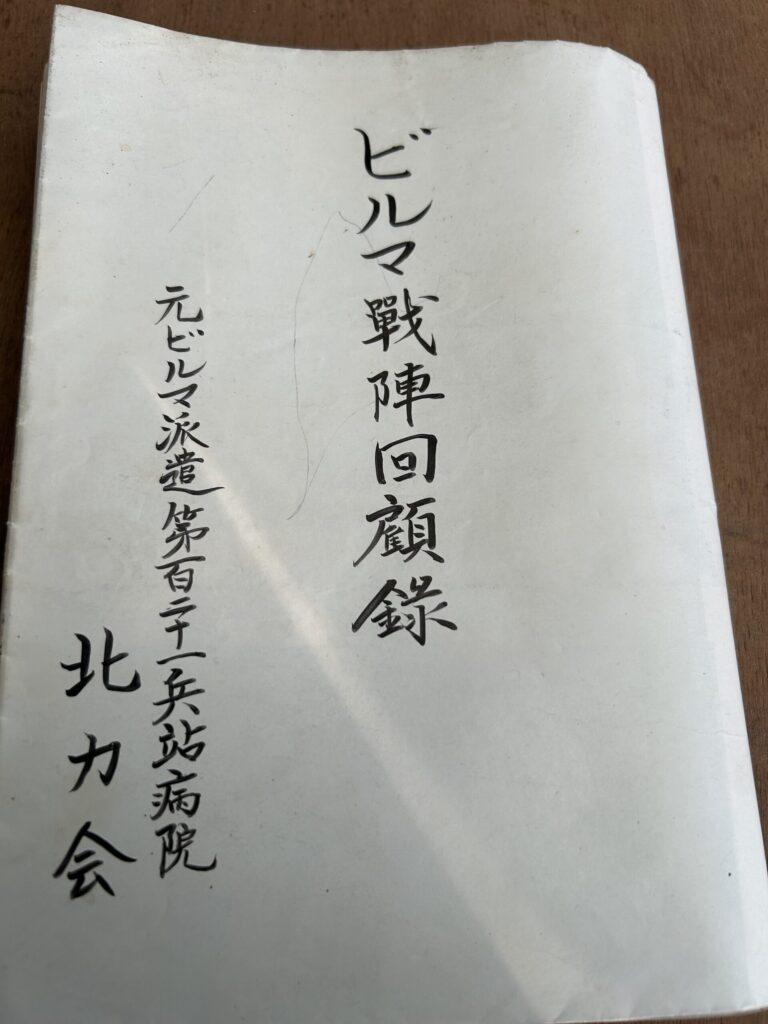
現在、戦友会は事実上消滅しており、この記録を残さなければ167名の声と記憶は忘却の彼方へと消えてしまう事から、歴史の空白を埋める遺品整理士として私は彼らの意思を継ぎ、想いと届けたかった声をデジタル化する事で、現代に紡ぎたいと思います。
この、ビルマ戦陣回顧録の発刊元である戦友会「北カ会」の会合資料や写真、いかに消滅していったかまでのプロセスを含む会合資料も保全している為、この第121兵站病院ビルマ戦陣回顧録が裏付けられた資料である事を明記させていただきます。
歴史の公平性を保ち、真の和解を目指すために。私はこの消えかけていた生の記録を紐解こうと思う。
著作権など、あらゆる法律に抵触しない様、引用という形を取らせていただき、各国の専門家の研究の一助となる様願っています。
目次
- 1. 蹂躙される人道:赤十字を襲う鉄の雨
- 2. 組織の自壊:メイミョウの「闇」と規律の喪失(内部からの腐敗)
- 3. 真実の和解へ:お互いを傷つけ合う「戦場」という異常空間
- 歴史保全型遺品整理としての誓い
- Table of Contents
- 1. Humanity Overrun: The Iron Rain that Fell on the Red Cross
- 2. Organizational Collapse: The “Darkness” of Maymyo and the Loss of Discipline (Corruption from Within)
- 3. Toward True Reconciliation: The Abnormal Space of the “Battlefield” Where All Wounded Each Other
- My Pledge as a History-Preserving Estate Specialist
1. 蹂躙される人道:赤十字を襲う鉄の雨
戦争は、文明が築き上げた「法」という理性をいかに破壊するのか。波田忠夫氏(当時衛生兵)の手記は、1929年のジュネーブ条約で守られるべき「病院」が、標的にされていた記憶です。
「西の空に高度六千位、四機編隊(中略)機からパラパラと光ったものが降った。そらきた、大変だと病室に駆け込み、全員待避、防空壕に入れと叫ぶ。重患が自分も連れていって下さいと叫ぶ。」(引用『ビルマ戦陣回顧録』92頁)
この爆撃と機銃掃射は、明らかに戦時国際法(ジュネーブ条約)への挑戦でした。しかし、ここで私たちが直視すべきは「戦争という状況下では、いかなる高邁なルールも容易に無効化される」という冷厳な事実です。敵味方ともに、人道というブレーキを失っていく。それが戦争の第一の狂気だと思う。
2. 組織の自壊:メイミョウの「闇」と規律の喪失(内部からの腐敗)
一方で、戦争の狂気は組織の「内側」をも侵食。大谷義明氏が目撃したメイミョウ(後方司令部)の実態は、軍事史学の専門家をも沈黙させるほどに凄惨な、組織腐敗の記録だった。
※本史料(ビルマ戦陣回顧録)に記された大谷氏の記録は、軍事ライター・石動竜仁氏が執筆したYahoo!ニュースのエキスパート記事「『愚将』牟田口廉也中将の遊興逸話の真偽」https://news.yahoo.co.jp/expert/articles/6dd19491667954231fae95b1b7a3a88ae2fa1879にて、インパール作戦における日本軍の組織腐敗を検証する第一級の歴史的記録として大きく取り上げられ、真面目な歴史論争の一助となっています。
「第一線では食料も弾丸もなく日夜死の戦いをしている時、明妙(メイミョウ)の軍は清明荘の遊女にひたっている高官が私達の目に入っていた。(中略)閣下(牟田口司令官)専用の女も内地より特別輸入した。」(『引用 ビルマ戦陣回顧録』209頁)
「特に一般兵邦人以外に軍司令部の高官の外来も多く診療も気をつかわねばならない。また昭和十九年春頃インパール作戦が始まり第一線では食料も弾丸もなく日夜死の戦いをしている時、明妙(※メイミョウ)の軍は清明荘の遊女にひたっている高官が私達の目に入っていた。
その清明荘には治療部の目線にあり、大阪から来た飛田遊廓の経営で、司令部専用の料亭。大阪より家財全部軍用列車で持ち込んでの商売、女は大阪の一流の女性、金と物は内地以上の待遇、その中に閣下(※牟田口廉也司令官)専用の女も内地より特別輸入した。その彼女当時二十一歳、八頭身形で清明荘一の美人、たまたま軍医部の○○大尉の診断で〇〇〇〇で健康を害し、手術の必要となり、治療部は〇〇大尉の術者、〇〇軍曹の助手、準備は〇〇上等兵と私、来院した彼女、閣下の専用でありなかなか強気であり、診断にも手術にもならずこまったあげく軍医の命令通り、全身麻酔をかけて眠らせて簡単な〇〇で実施すると話されて実施されたが〇〇は思うようにいかず次回に手術すると中止された。
(中略)軍医部の○○大尉の報告で閣下のお話もあり、再度手術となった。その時は〇〇〇〇の用意をして無事おわり。経過も良好で順調に全快した。(後略)」
(出典:『ビルマ戦陣回顧録』209頁、大谷義明「ビルマ派遣従軍の想い出」より引用/※プライバシー保護および配慮のため、一部の個人名や詳細な病状表現を〇〇と伏字化しています)
インパール作戦という無謀な作戦により数万の将兵が餓死する中、後方では軍用列車で遊廓の家財を運び込み、司令官の私情が最優先される。これは単なる「個人の不徳」ではなく、
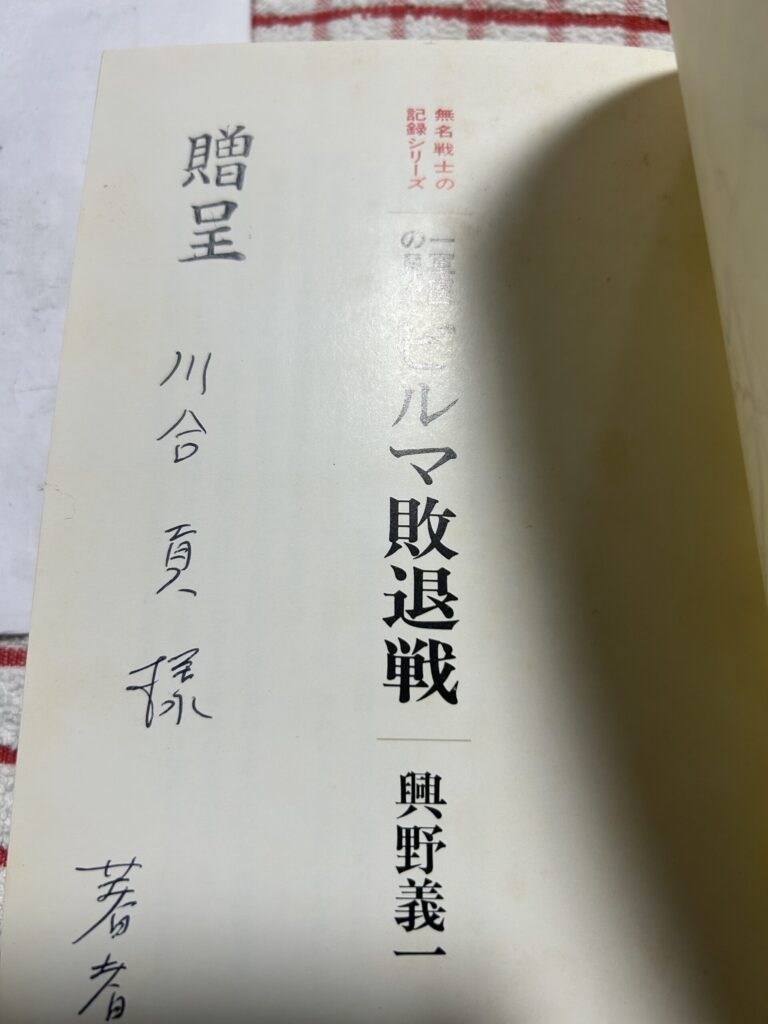
自国民(兵士)の命を軽んじ、身内の享楽を優先する。驚いたのが、再手術が終了した頃に、前線の視察に向かったと思うとの記述。また、「一軍医が見たビルマ敗退戦」を書いた興野義一氏も、第121兵站病院だった。発刊した際、故人に贈呈している。
これこそが、外部の敵よりも恐ろしい「戦争がもたらす組織の狂気」だと感じた。
3. 真実の和解へ:お互いを傷つけ合う「戦場」という異常空間
波田氏が見た「空からの暴力」と、大谷氏が見た「内部からの腐敗」。
これらを同時に直視することは苦痛を伴います。しかし、歴史の公平性とは、自らの被害(国際法違反の爆撃)と、自らの非(組織の腐敗と規律の欠如)の両方を等しく記録に留めることだと思う。この資料は、あと165名の生々しい記憶が書かれています。
私自身この資料を読んだ時、故人の生涯を通して得た経験や、どの様な気持ちでいたか、映像を見る様にリアルに感じることができた事が、筆を取らせているのだと思う。
戦争は、人を悪魔に変えるだけでなく、そして組織そのものを「おかしく」してしまいます。
この『ビルマ戦陣回顧録』を私たちが救い出した意義は、過去の罪を数え上げることではなく、「戦争という環境下では、誰もが、そしてどんな組織も、正気ではいられなくなる」という教訓を次世代へ引き継ぐことにあると思うんです。
その「痛み」を共有することこそが、かつての敵味方、そして戦場に消えた魂との、本当の意味での和解(Reconciliation)に繋がると私は思います。資料を廃棄の水際で救った私の活動の意義は、故人、先人の想いを後世に繋げる事。それが遺品整理士の役割なんだと思っています。
歴史保全型遺品整理としての誓い
戦後81年。遺品整理の現場から救い出される史料は、もはや「ゴミ」でも「過去の遺物」でもありません。それは、私たちが二度と同じ狂気に陥らないための、人類共通の記憶です。
私はこれからも、こうした貴重な声を、客観的かつ公平な視点で未来へ繋いでまいります。それが少しでも、世界の戦争を無くすための一助になる事を信じているからです。
Beyond the Brink of Disposal: The Truth in the 81st Year After the War
“The Madness of War” Told Through Historical Records and the Path to True Reconciliation
Eighty-one years have passed since the end of the war in 1945. As we move past this milestone and the testimonies of survivors continue to fade, a single privately published historical document—rescued from the front lines of “History-Preserving Estate Liquidation”—breaks the heavy silence.
The title: Memoirs of the Burma War Front(Biruma Senjin Kaikoroku).
Beyond the mere condemnation of specific nations or individuals, this document records a universal tragedy: “how the system of war drives both individuals and organizations into madness.” It was compiled by the veterans’ association of the 121st Logistical Hospital, which was deployed to Burma.
Today, this veterans’ association has effectively ceased to exist. Without preserving these records, the voices and memories of these 167 individuals would vanish into the abyss of oblivion. As an estate specialist dedicated to filling the voids of history, I have taken up their mantle. By digitizing their thoughts and the voices they wished to convey, I seek to weave their legacy into the modern age.
I have also preserved meeting minutes, photographs, and records detailing the process of the group’s eventual dissolution from “Hokuka-kai,” the veterans’ association that published these memoirs. I hereby state that these materials serve as authenticating evidence for the Memoirs of the Burma War Front of the 121st Logistical Hospital.
To maintain historical impartiality and strive for true reconciliation, I intend to unravel these fading records of raw experience. In doing so, I will present these as “citations” to ensure compliance with all laws, including copyright, in the hope that they will assist the research of experts worldwide.
Table of Contents
- Humanity Overrun: The Iron Rain that Fell on the Red Cross
- Organizational Collapse: The “Darkness” of Maymyo and the Loss of Discipline (Corruption from Within)
- Toward True Reconciliation: The Abnormal Space of the “Battlefield” Where All Wounded Each Other
My Pledge as a History-Preserving Estate Specialist
1. Humanity Overrun: The Iron Rain that Fell on the Red Cross
How does war destroy the “law” and “reason” established by civilization? The memoirs of Mr. Tadao Hada (then a medical orderly) recall how a “hospital,” which should have been protected under the 1929 Geneva Convention, became a target.
“In the western sky, at an altitude of about 6,000 meters, a formation of four aircraft… something shiny fell from the planes with a clatter. ‘Here it comes! This is bad!’ I shouted as I rushed into the ward, ‘Everyone evacuate! Get to the air-raid shelter!’ Severely wounded patients cried out, ‘Please take me with you!'” (Cited from Memoirs of the Burma War Front, p. 92)
This bombing and strafing was a clear defiance of international humanitarian law. However, what we must confront here is the cold, hard fact that under the conditions of war, even the most noble rules are easily invalidated. Both friend and foe alike lose the “brakes” of humanity. This, I believe, is the primary madness of war.
2. Organizational Collapse: The “Darkness” of Maymyo and the Loss of Discipline (Corruption from Within)
On the other hand, the madness of war also erodes an organization from the “inside.” The reality of Maymyo (the rear headquarters) witnessed by Mr. Yoshiaki Otani was a record of organizational corruption so gruesome it might strike even military historians silent.
“In particular, there were many outpatients who were high-ranking officers from the Military Headquarters, in addition to general Japanese soldiers, and we had to be very careful with their treatment. Furthermore, when the Imphal Campaign began in the spring of 1944, while those on the front lines were fighting a life-and-death struggle day and night without food or ammunition, we saw high-ranking officers in Maymyo indulging themselves with courtesans at the Seimei-so villa.
The Seimei-so was within sight of the medical department; it was a restaurant exclusively for the headquarters, managed by the Tobita Brothel from Osaka. They had brought in all their household goods from Osaka via military train to conduct business. The women were top-tier from Osaka, and their treatment in terms of money and goods was better than back in Japan. Among them, a woman exclusively for His Excellency [Commander Renya Mutaguchi] was specially ‘imported’ from the mainland. She was 21 years old at the time, with a tall, slender figure—the most beautiful woman at Seimei-so.
It happened that Captain XX of the medical department diagnosed her with [REDACTED], and her health was failing, necessitating surgery. The surgical team consisted of Captain XX as the surgeon, Sergeant XX as the assistant, and Corporal XX and myself for preparation. When she arrived, being His Excellency’s exclusive mistress, she was quite defiant, making both diagnosis and surgery difficult. Left with no choice, following the medical officer’s orders, she was put under general anesthesia. It was explained that the surgery would be performed as a simple [REDACTED], but the [REDACTED] did not go as planned, and the operation was suspended until the next time.
…Following a report from Captain XX of the medical department and a talk with His Excellency, a second surgery was performed. This time, preparations for [REDACTED] were made, and it ended successfully. Her recovery was good, and she returned to full health.”(Cited from: Memoirs of the Burma War Front, p. 209, “Memories of Service in the Burma Deployment” by Yoshiaki Otani. Note: For privacy and sensitivity, some names and specific medical conditions have been redacted as [REDACTED] or XX.)
While tens of thousands of soldiers were starving to death due to the reckless Imphal Campaign, those in the rear were using military trains to transport furniture for brothels, prioritizing the commander’s personal desires. This was not merely “individual immorality.” It was a disregard for the lives of one’s own citizens (soldiers) in favor of internal hedonism. What shocked me was the description suggesting that the commander headed to the front lines for inspection just as the second surgery was completed.
Furthermore, Giichi Kyono, who authored The Burma Retreat as Seen by a Medical Officer, was also part of the 121st Logistical Hospital. Upon the publication of these memoirs, a copy was presented to him.
This, I felt, is the “organizational madness brought by war”—something even more terrifying than an external enemy.
3. Toward True Reconciliation: The Abnormal Space of the “Battlefield” Where All Wounded Each Other
It is painful to look simultaneously at the “violence from above” witnessed by Mr. Hada and the “corruption from within” witnessed by Mr. Otani. However, I believe that historical impartiality means recording both one’s own suffering (bombings in violation of international law) and one’s own faults (organizational corruption and lack of discipline) with equal weight. This document contains the vivid memories of 165 others.
When I read these materials, I felt the experiences and emotions of the deceased so realistically—as if I were watching a film—that it compelled me to take up my pen. War does not only turn people into demons; it makes the organization itself “malfunction.”
The significance of our rescue of these Memoirs of the Burma War Front lies not in counting past sins, but in passing down a lesson to the next generation: “Under the environment of war, no one—and no organization—can remain sane.”
I believe that sharing this “pain” leads to true reconciliation with former enemies, former allies, and the souls that vanished on the battlefield. The significance of my work in saving these documents from the brink of disposal is to connect the thoughts of the deceased and our ancestors to future generations. That, I believe, is the role of an estate specialist.
My Pledge as a History-Preserving Estate Specialist
Eighty-one years after the war, the historical materials rescued from estate liquidations are no longer “trash” or “relics of the past.” They are the collective memory of humanity, necessary to ensure we never fall into the same madness again.
I will continue to pass these precious voices on to the future from an objective and fair perspective. I do this in the belief that it will, in some small way, contribute to a world without war.
Mr. Otani’s account, as documented in these memoirs (Memoirs of the Burma War Front), has been prominently featured in a Yahoo! News Expert article by the esteemed military writer Ryuji Isurugi, titled “The Veracity of the Anecdotes of Pleasure-Seeking by the ‘Incompetent General’ Lieutenant General Renya Mutaguchi.”
In his analysis, Isurugi identifies these records as a primary historical source of the highest caliberfor verifying the organizational corruption that plagued the Japanese military during the Imphal Campaign. As a result, this document is now recognized as a vital contribution to serious, evidence-based historical discourse, providing crucial insights that help resolve long-standing debates regarding military conduct and systemic failure during the war.
https://news.yahoo.co.jp/expert/articles/6dd19491667954231fae95b1b7a3a88ae2fa1879