
引き続き行っている、室蘭市本輪西町での生前整理の現場から、日本の宗教、古い天理教関係の資料が見つかった。
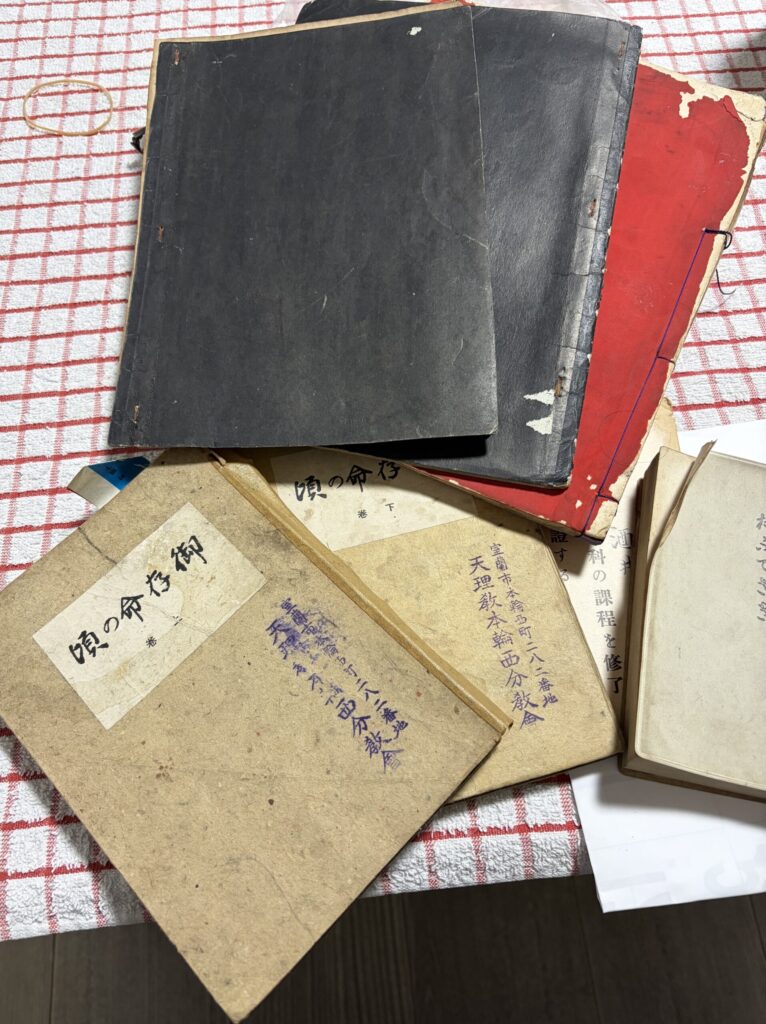
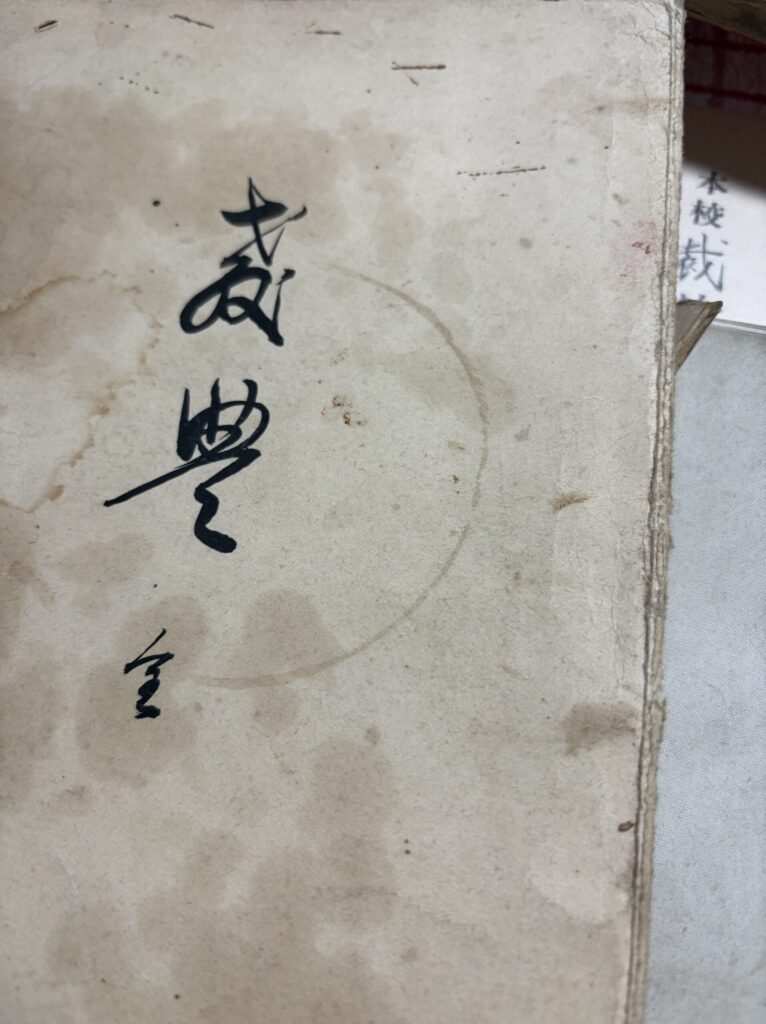
今回見つかった資料の中には、戦後間もない昭和23年(1948年)刊の高野友治『御存命の頃』がありました。
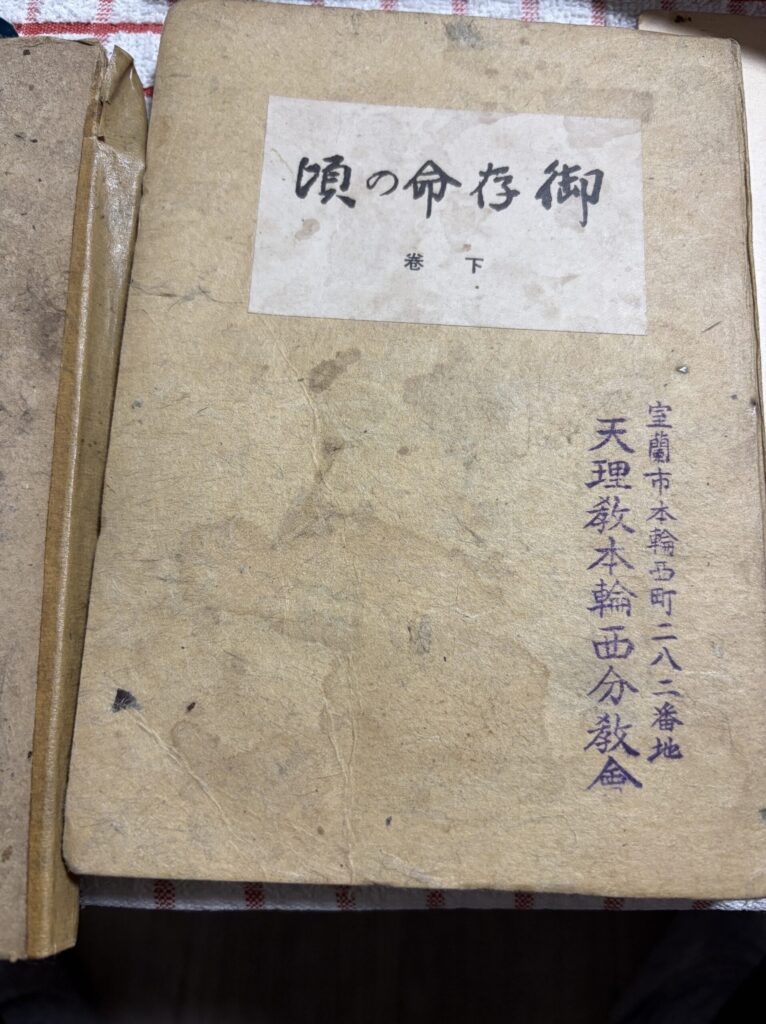
高野友治による『御存命の頃』は、1936年の刊行後、1947~48年にも刊行されています。
今回の昭和23年刊について、国立国会図書館やCiNii Booksの公開書誌を確認すると、1948年版の所蔵は限定的だった。
そして、この現物には本輪西分教会の印が残されています。
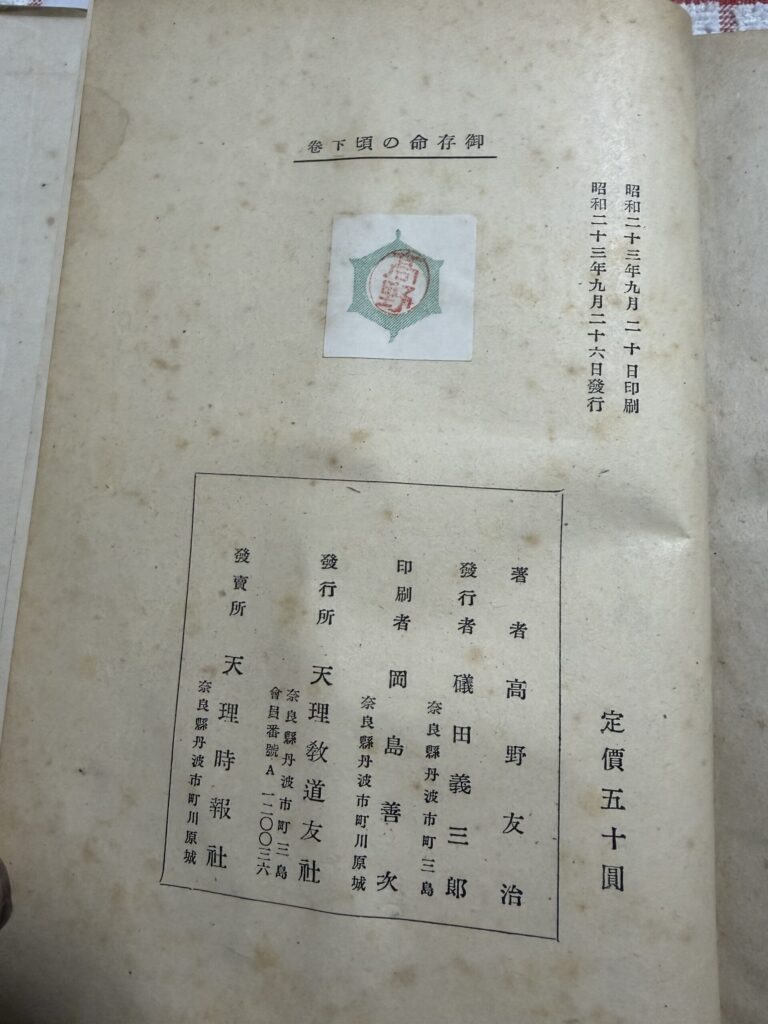
単に古い本というだけではなく、どこで、誰によって読まれていたのかを考える手掛かりが、実物そのものに残されていました。
目次
明治期の『御かぐら歌』
電気もつかない中ヘッドライトをつけ、祭壇を整理している時のこと。古めかしいビニールに包まれた資料らしきものを見つけ、僕はそのビニールを取り外して中身を精査した。
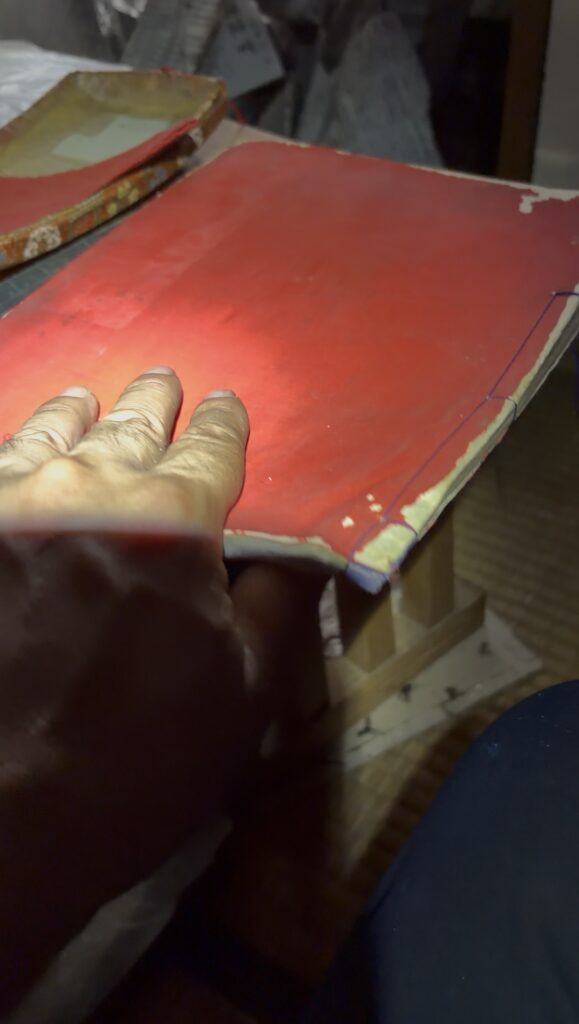
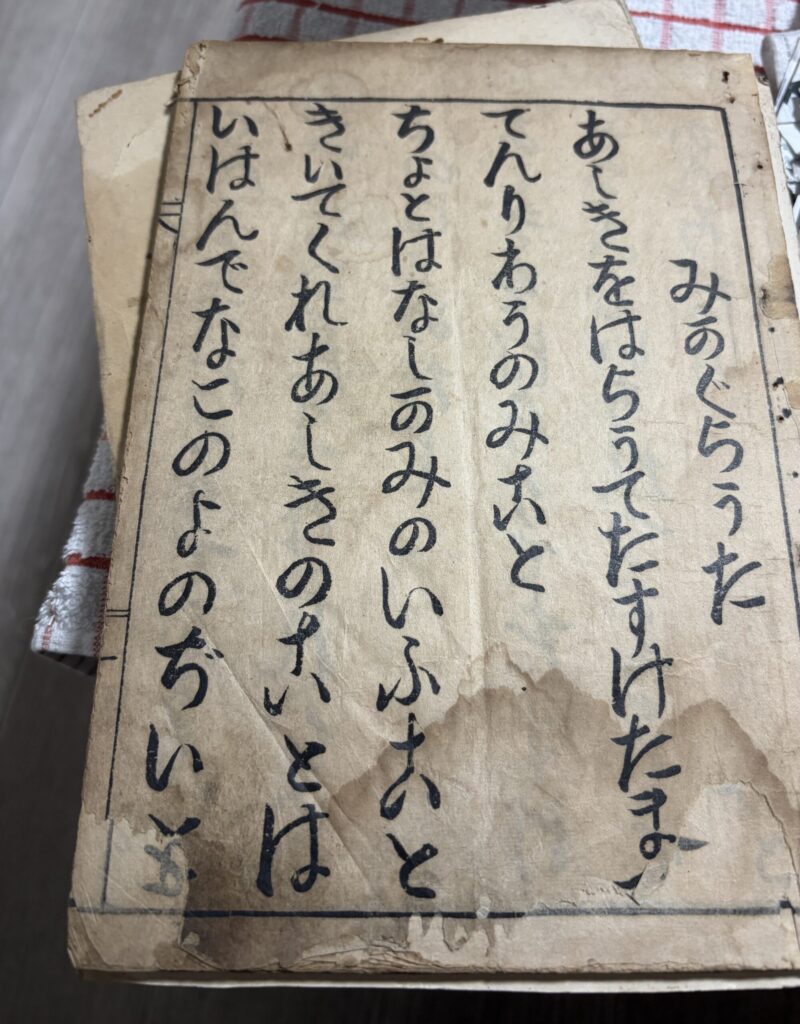
もう一つ、今回の資料の中にあったのが、明治期に発行されたと思われる『御かぐら歌』だった。
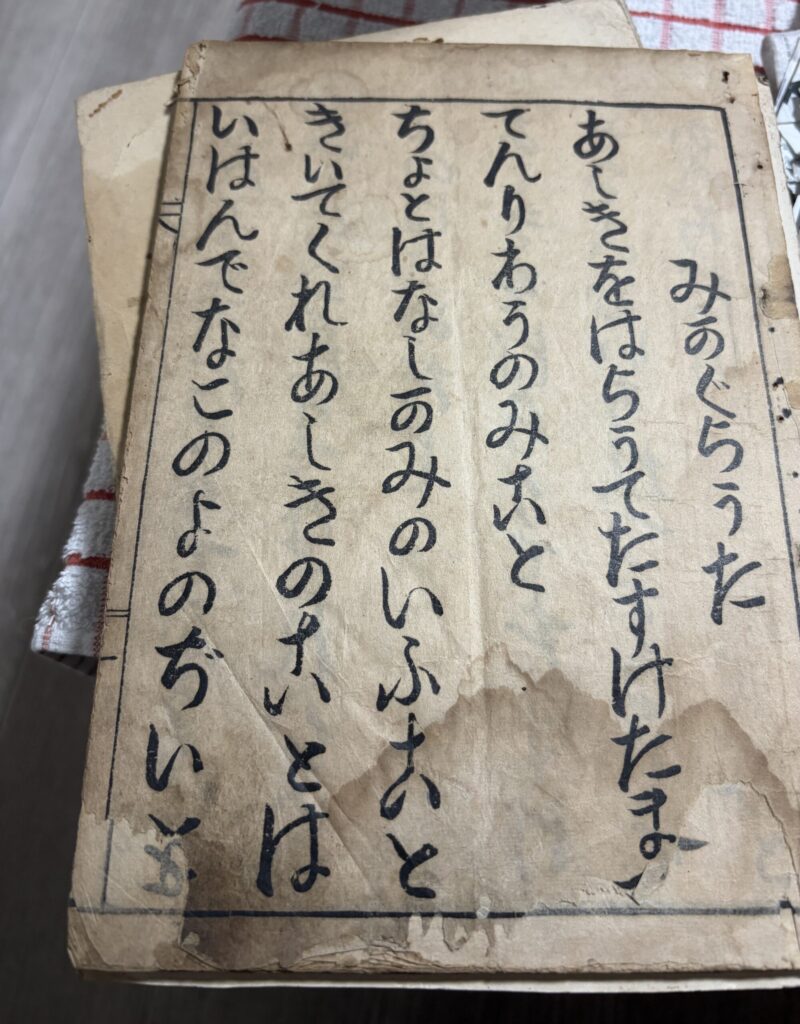
公開書誌では、明治21年(1888年)の刊本や、明治34年(1901年)の再版が確認されています。
書誌上の著者は中山美支(中山みき)。
CiNii Booksの著者典拠でも、「中山美支」は「中山みき」として登録されています。
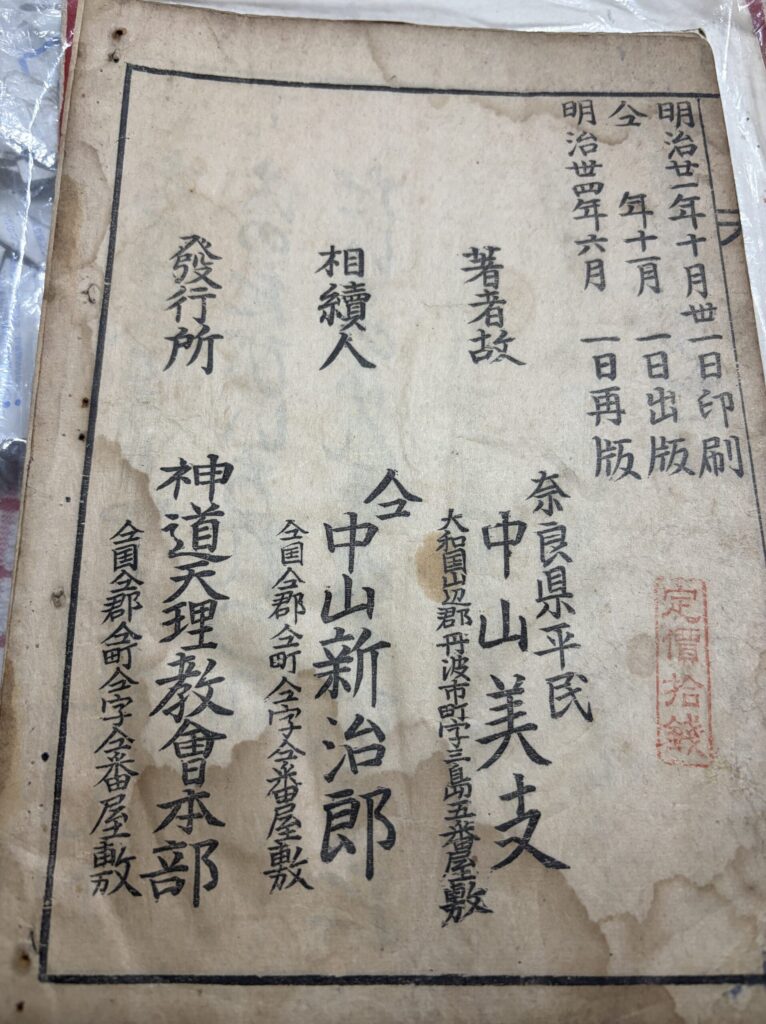
今回確認している1901年版は、明治21年(1888年)に刊行された『御かぐら歌』の再版で、奥付には、
明治21年10月31日印刷
同年11月1日出版
明治34年5月26日再版印刷
同年6月1日再版発行
と記されています。
そして、そこには、
「著者故 奈良縣平民 中山美支」
さらに、
「相續人兼発行者 仝 中山新治郎」
と記されています。
つまりこれは、中山みき(おやさま)の『御かぐら歌』の明治34年(1901年)再版です。
後見返しには、
「神道直轄 天理教會所本部藏版」
という蔵版記も残されています。
公開書誌を見ると、この1901年版について確認できる所蔵館は、CiNii Books上では天理大学附属天理図書館1館です。所蔵館はまだ調べる必要はあり、市場では数点確認が取れましたが、外国にある様な感じでした。
なお、1888年版についても、CiNii Booksには所蔵1館として記録されている個体があります。別レコードでは第16丁欠落の個体も確認されています。
そのため、今回の『御かぐら歌』は、明治期の天理教草創期に関わる初期刊本・再版資料として、書誌的にも非常に興味深い資料だと考えています。
「これは貴重だ」と声を掛けてくださった方
今回の資料をSNSで紹介したところ、天理大学を卒業された方から、こんな言葉をいただきました。
「わたくしは天理教でもないのに、天理大学出身で、後輩に天理図書館の職員もおります。こうした資料が散逸してしまうのは、本当に残念なことだと思いますので、ぜひとも、お力になれたらと思います。」
そして、資料について「貴重だ」との言葉とともに、天理図書館につなぐこともできるのではないかという申し出をいただきました。
ただ、資料を見た第三者がその価値を感じ、散逸を避けるために専門機関との接続を申し出てくださったこと。
そのこと自体が、今回の資料を記録していくうえで大切な出来事だと思っています。そして、とても嬉しかった。僕の理想だった。
そして、そこに写っていたのは……
昭和50年代の資料をめくっていたときのことです。
そこに写っていた人物を見て、「え!?」と驚きました。。
正直、こんな事があるのかと。。
以前、別の生前整理の現場から資料を救出した、故・川合貢さんでした。
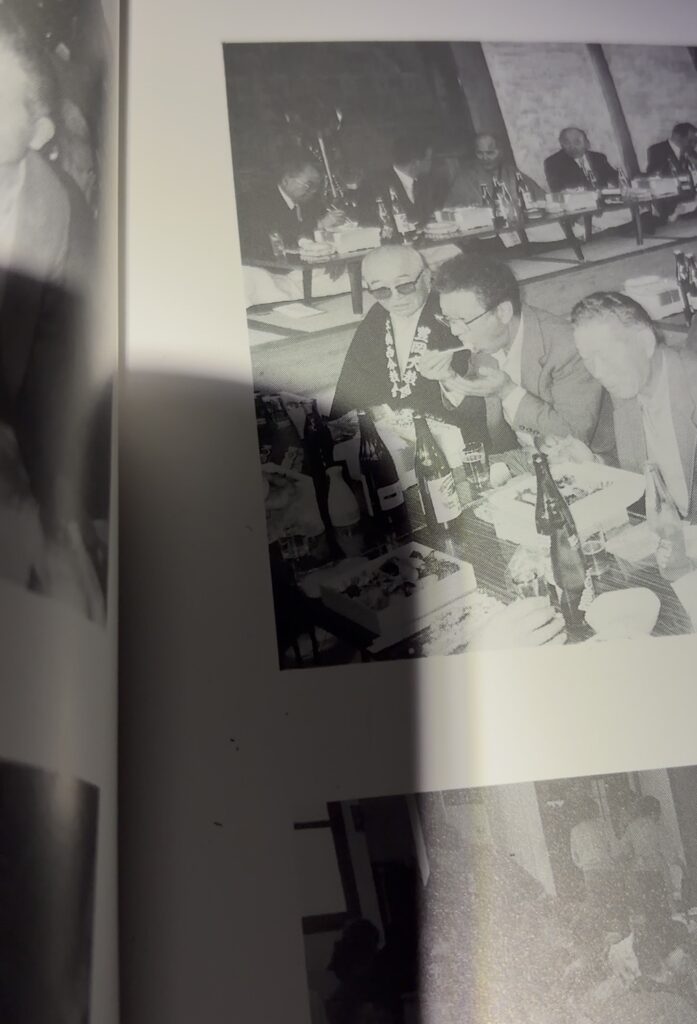
僕のブログや実績で、何度も紹介したビルマ資料群の、衛生兵の方です。
川合さんについては、これまでにビルマ戦線で衛生兵として過ごした記録、復員関係資料、戦友会資料などを発見し、保存につなげてきました。
その川合さんが、晩年、天理教の活動の中にいる姿が、今回、まったく別の家庭から見つかったのです。
戦争中の川合さん。
そして、晩年の川合さん。
別々の場所で見つかった資料が、ひとりの人生をつないでいく。
戦争の中にいた一人の青年。
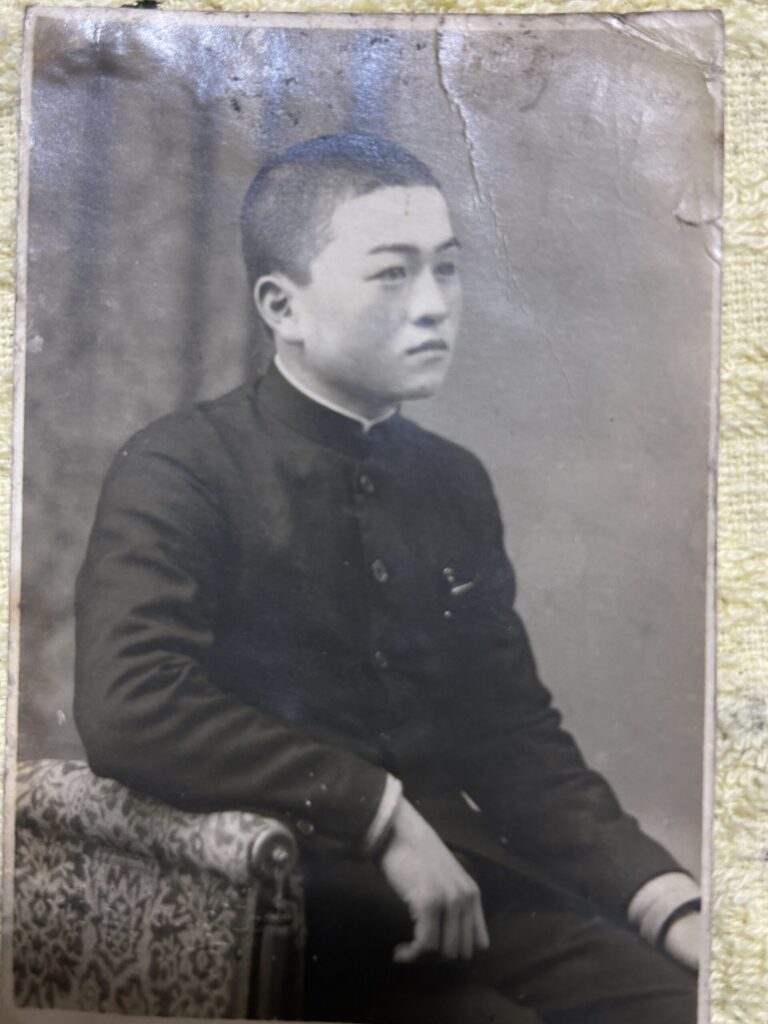
※少年期の川合さん。
復員し、その後の人生を歩み、晩年には天理教の活動の中にいた一人の男性。
その人生の断片が、何十年もの時間を越えて、別々の家庭に残された資料から再びつながりました。
資料が残していたもの
一人の人間の人生は、一つの家の中だけで完結しているわけではありません。
家族が保管していた資料。
地域に残された資料。
誰かが大切にしていた一冊の本。
そして、別の場所に残されていた写真。
それぞれが別々の場所にあっても、思いがけないところで一人の人生につながることがあります。
今回の資料についても、御依頼者としっかりご相談しながら、適切な専門機関への相談を進め、僕のブログでも大切に記録していきたいと思います。
こうして資料を追っていると、時々、本当に不思議な感覚になります。
まるで、故人に導かれているような。
また、ひとつの人生がつながりました。
歴史の空白を埋める遺品整理士。
Again, a Life of the Deceased Has Been Reconnected
As part of an ongoing estate-clearance project in Hon-Rawanishi, Muroran City, I came across historical materials related to Japanese religious history, including old documents and publications associated with Tenrikyo.
Among the materials was a copy of Gozonmei no Koro by Yuji Takano, published in Showa 23 (1948), just after the end of the war.
Gozonmei no Koro by Yuji Takano was first published in 1936 and was subsequently published in editions dating from 1947 to 1948.
According to publicly available bibliographic records from the National Diet Library and CiNii Books, holdings of the 1948 edition are limited.
The copy found at this site also bears the seal of the Hon-Rawanishi Tenrikyo Church.
It was not simply an old book. The physical copy itself preserved clues that could help reveal where it had been kept and by whom it may have been read.
Table of Contents
- The Meiji-Era Mikagura-uta
- Someone Said, “This Is Valuable”
- And Then, There Was Someone in the Photograph…
- What the Materials Preserved
The Meiji-Era Mikagura-uta
It was during the process of organizing the altar, with no electricity available and only a headlamp to light the way, that I came across what appeared to be historical materials wrapped in an old plastic covering.
I removed the plastic covering and carefully examined what was inside.
Another item among the materials was Mikagura-uta, which appears to have been published during the Meiji era (1868–1912).
Publicly available bibliographic records confirm editions of Mikagura-uta published in Meiji 21 (1888) and a reprint from Meiji 34 (1901).
The bibliographic record identifies the author as Nakai Miki (中山美支), also known as Nakayama Miki (中山みき).
CiNii Books’ authority records also identify “Nakai Miki (中山美支)” as Nakayama Miki (中山みき).
The 1901 edition examined here is a reprint of Mikagura-uta, originally published in 1888. Its colophon records:
Printed: October 31, Meiji 21 (1888)
Published: November 1, Meiji 21 (1888)
Reprinted: May 26, Meiji 34 (1901)
Issued: June 1, Meiji 34 (1901)
The colophon further states:
“Author: The late Miki Nakayama, a commoner of Nara Prefecture”
and
“Successor and Publisher: Shinjiro Nakayama”
In other words, this is the Meiji 34 (1901) reprint of Mikagura-uta, the work of Nakayama Miki (Oyasama).
The rear endpaper also bears the collection statement:
“Owned and published by the headquarters of the Shinto-direct Tenrikyo Church.”
According to publicly available bibliographic records, the 1901 edition is currently recorded as being held by only one institution in CiNii Books: the Tenri Central Library of Tenri University.
Further investigation is still needed to determine the full extent of surviving holdings. Several copies have also been identified on the used-book market, although some appear to be located outside Japan.
As for the 1888 edition, CiNii Books likewise records an individual copy held by one institution. Another bibliographic record documents a copy with the 16th leaf missing.
For these reasons, the Mikagura-uta found this time is, in my view, a particularly interesting bibliographic artifact as an early publication and reprint associated with the formative period of Tenrikyo during the Meiji era.
“This Is Valuable,” Someone Told Me
After I introduced these materials on social media, I received the following message from a person who graduated from Tenri University:
“Although I am not a member of Tenrikyo, I graduated from Tenri University, and I have a junior colleague who works at the Tenri Library. I would be truly sorry to see materials like these become scattered and lost, so I would very much like to see if I can be of help.”
Along with describing the materials as “valuable,” they also offered the possibility of connecting them with the Tenri Library.
The fact that someone who had simply seen the materials recognized their value and offered to help connect them with a specialized institution so that they would not become scattered and lost—
That itself was an important event in documenting these materials.
And, honestly, it made me very happy.
It was exactly what I had hoped for.
And Then, There Was Someone in the Photograph…
While going through materials from the Showa 50s (1975–1984), I came across something unexpected.
I looked at the person in the photograph and thought, “Wait…what!?”
Honestly, I could hardly believe it.
It was the late Mitsugu Kawai, whose materials I had previously rescued from another estate-clearance site.
He was the army medic whose wartime materials from Burma I have featured repeatedly on this blog and in my record of preservation work.
Regarding Kawai, I have previously discovered and helped preserve records of his time as a medic on the Burma Front, materials related to his repatriation, and records of his comrades’ association.
Now, a photograph showing Kawai in his later years, participating in Tenrikyo activities, has been found in an entirely different household.
Kawai during the war.
And Kawai in his later years.
Materials discovered in completely different places have come together to connect the story of one person’s life.
One young man who found himself caught in the midst of war.
This is Kawai during his childhood.
After returning home from the war, he went on to live his life, and in his later years, he became involved in Tenrikyo activities.
Fragments of his life, preserved in materials kept in completely different households, have now become connected again across the passage of several decades.
What the Materials Preserved
A person’s life does not necessarily remain contained within a single household.
Materials kept by a family.
Materials that remained within a local community.
A single book that someone once treasured.
And a photograph preserved somewhere else.
Even when such things remain in entirely different places, they can sometimes unexpectedly come together to reconnect the story of one person’s life.
For these materials as well, I will carefully consult with the client and proceed with discussions with appropriate specialized institutions, while continuing to document them with care on this blog.
As I continue following these materials, I sometimes find myself experiencing something truly difficult to explain.
It is almost as if the deceased are guiding the way.
Once again, one person’s life has been reconnected.
An estate-clearance professional who fills the gaps in history.