

2026年11月17日。
合同会社LRAは、酒井家に残されていた350点を超える歴史資料を「サクルー原野開拓資料」として、御依頼者の意向の下、滝上町教育委員会へ寄贈しました。
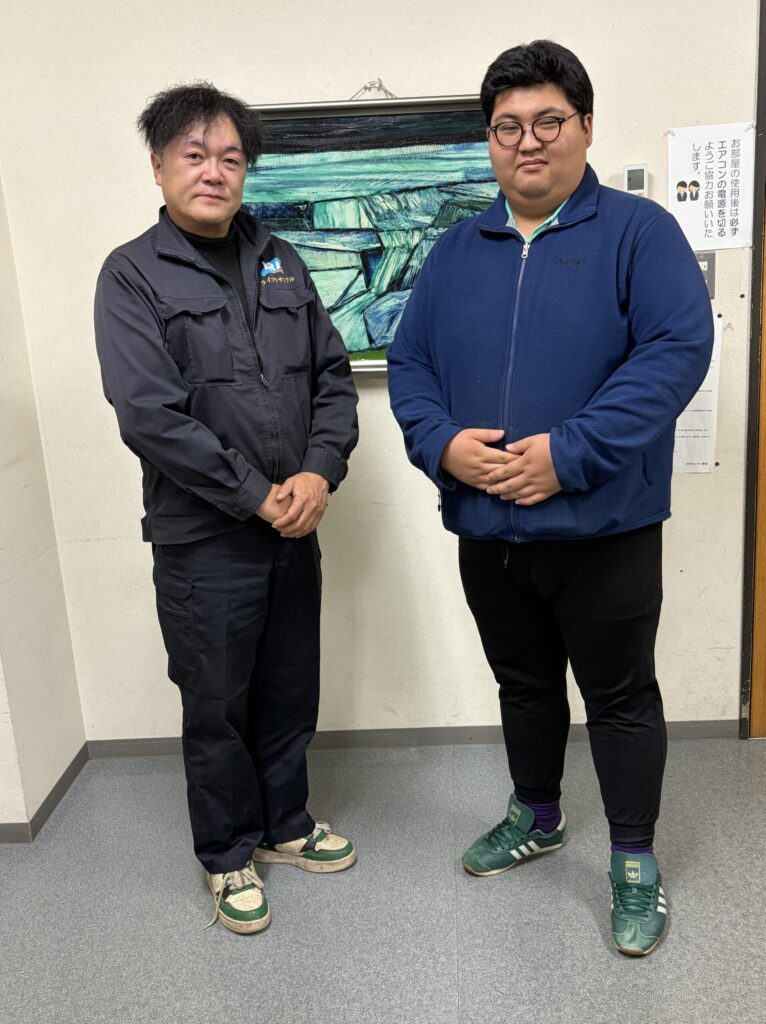
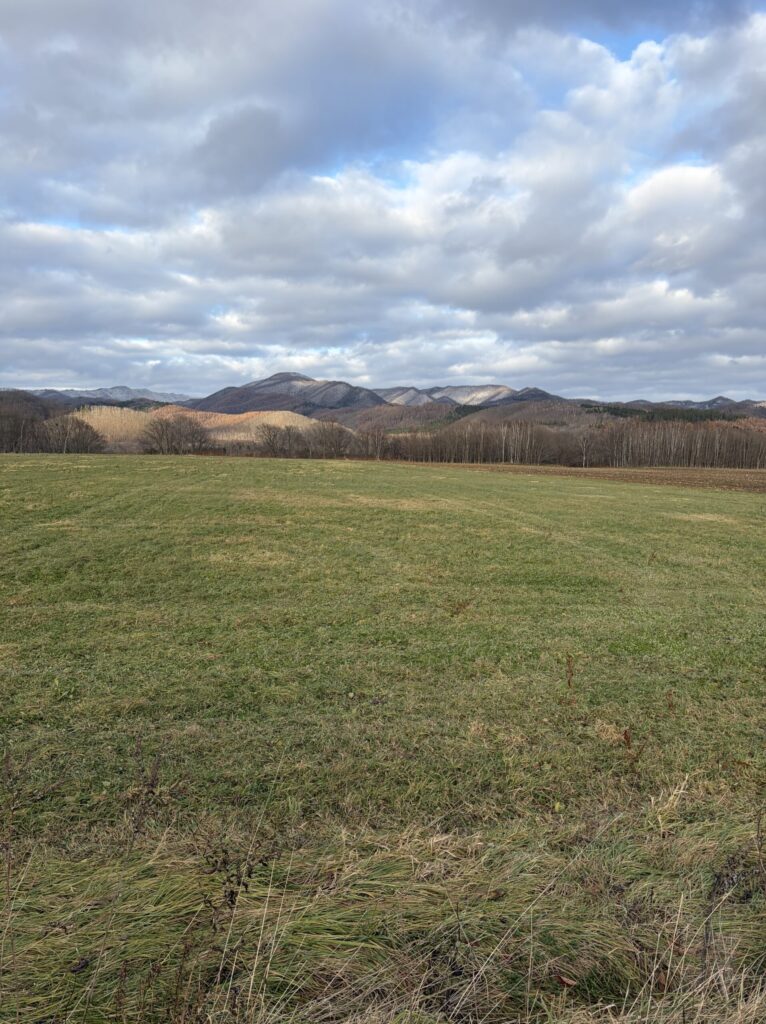
※滝上教育委員会荒井様と。
以前、当社のウェブサイトでも紹介した酒井家の資料。当初、私が遺品整理の現場で見つけたのは、処分されるはずだった写真や文書の数々でした。
開拓に関する記録、家族の歩み、地域の暮らしを伝える写真。そして、実際にその時代を生きた方の記憶。
一つひとつを確認していく中で、これらは酒井家だけの歴史にとどまらず、北海道・滝上町の地域史を考えるうえでも重要な手掛かりを含んでいることが分かってきました。資料発見当初は100点を超える記録の保全から始まりましたが、整理を進めるうちに当初把握していた以上の記録が見つかり、最終的に350点を超える資料群を町へ引き継ぐことができました。
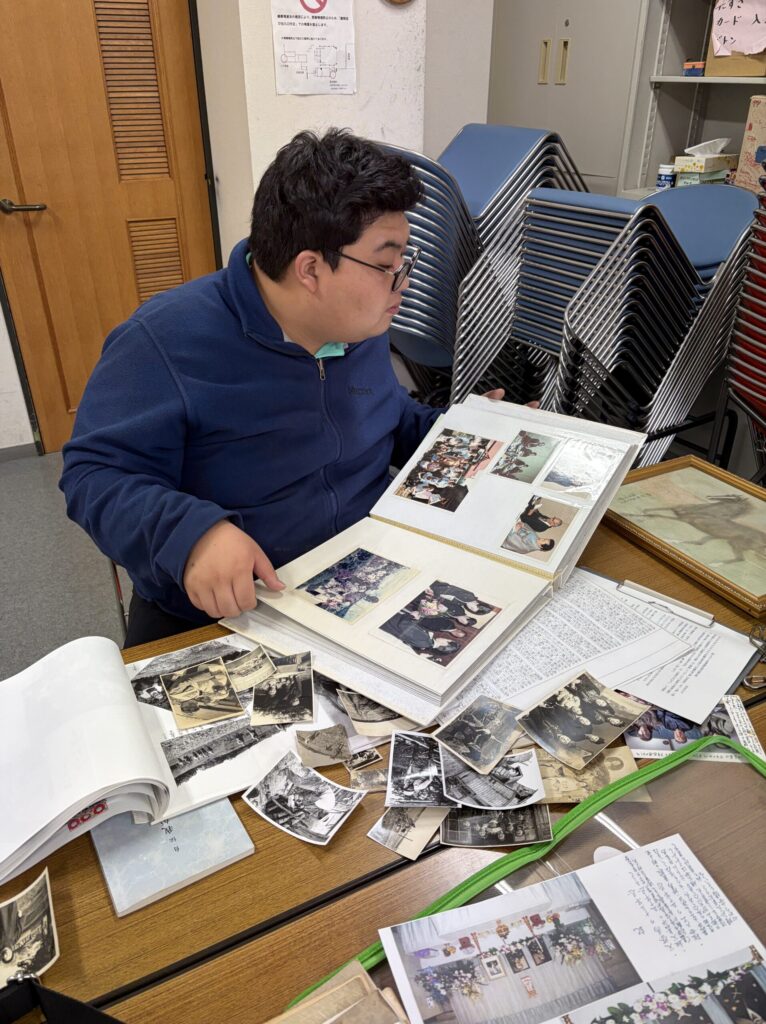
※資料を確認する荒井様
ふるさと研究会会長も「心臓がバクバクする」と興奮した寄贈当日
寄贈の当日は、滝上町教育委員会の担当者だけでなく、滝上町ふるさと研究会の会長、竹内正美様も駆けつけてくださり、一緒に資料をご覧になりました。
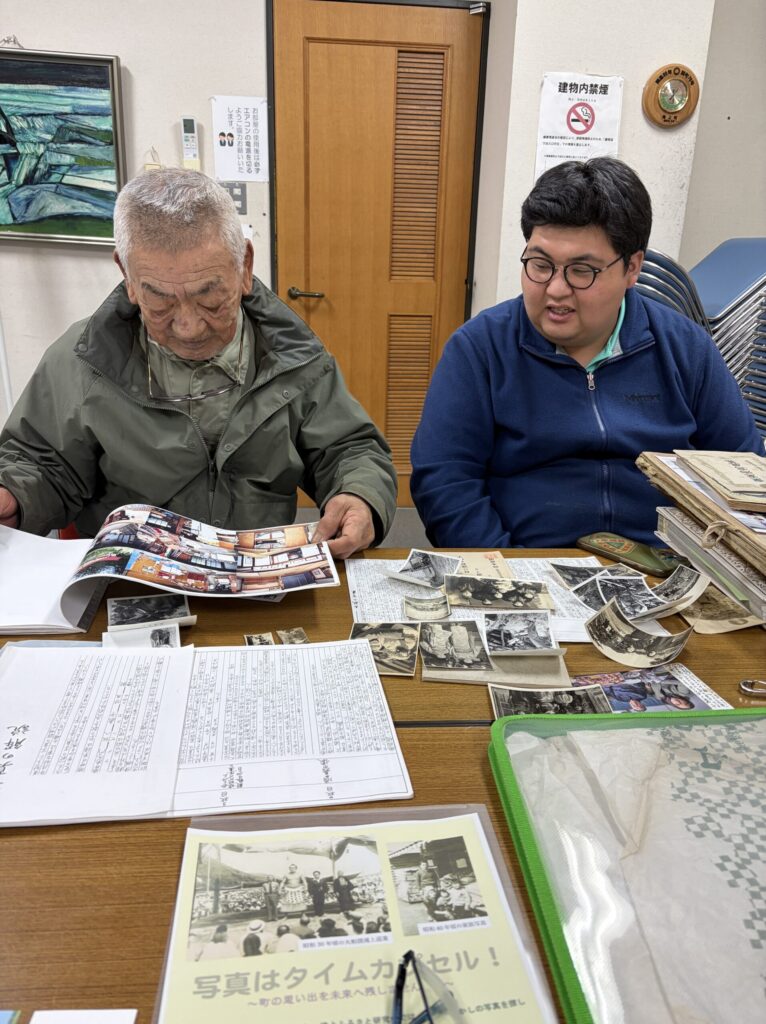
※資料を真剣に見る竹内会長
目の前に広げられた膨大な資料を前に、教育委員会の方々とふるさと研究会会長は口を揃えて「これは非常に希少なものだ」と評価してくださいました。特にふるさと研究会の会長は、資料の希少性と歴史的価値の高さに「心臓がバクバクする」と、抑えきれない喜びと興奮をあらわにされていました。
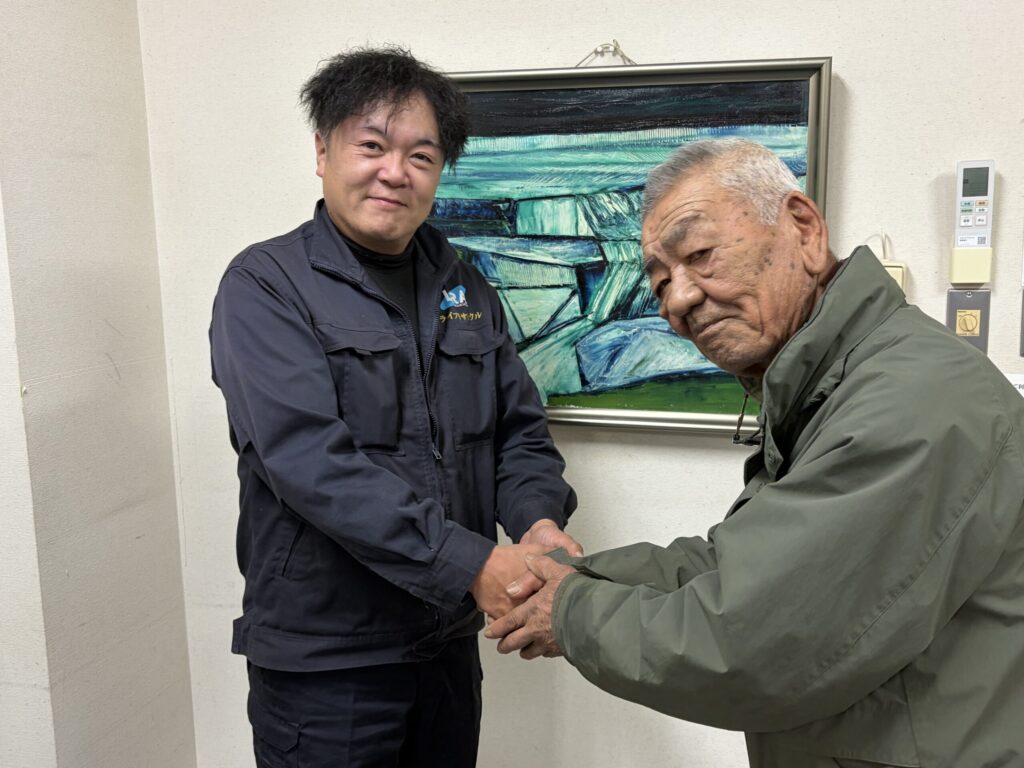
一軒の家から見つかった記録が、地域の歴史を研究し守り続けてきた方々の心をこれほどまでに動かしたことに、私も深い感銘を受けました。
酒井家に残されていた開拓の記録
今回の資料群の中心となるのは、サクル原野の開拓に関係する記録です。
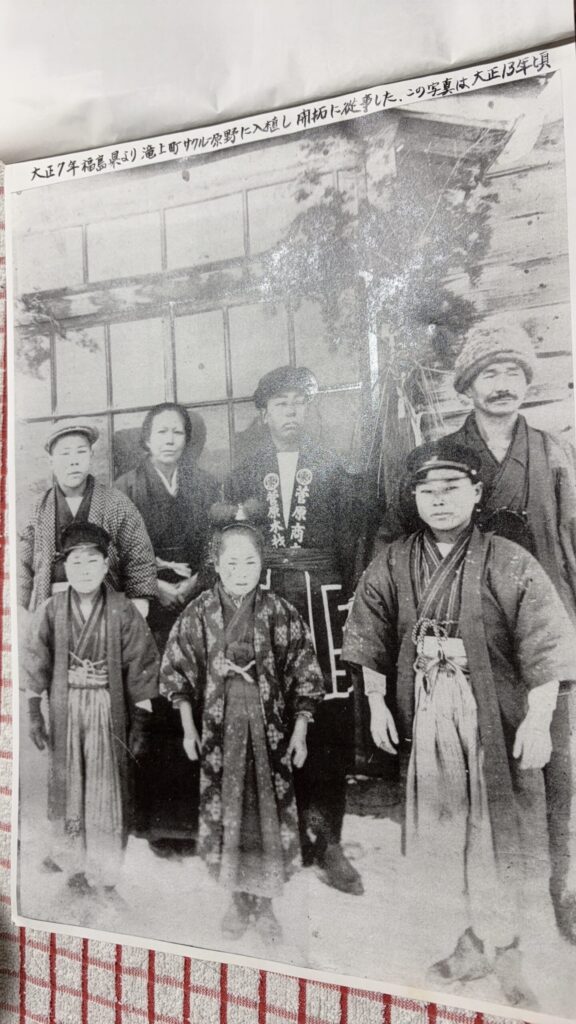
道立図書館や、地元の図書館にも所蔵されている自伝、酒井啓馬さんによる『我が生涯の思い出』をはじめ、弟・酒井三郎さんの『酒井三郎一代記』、酒井毅さんによる補足記録などが残されています。この補足資料は凄い。数々の写真に対して、何があったのか余す事なく説明文書がある事。写真だけの点だと、いつ何処で写されているのかわからない事がありますが、それに対してなんの作業か、何年頃か、場所の番地までしたためられているのです。当時の生々しい一次証言が、写真と共にある事で歴史が立体化しています。
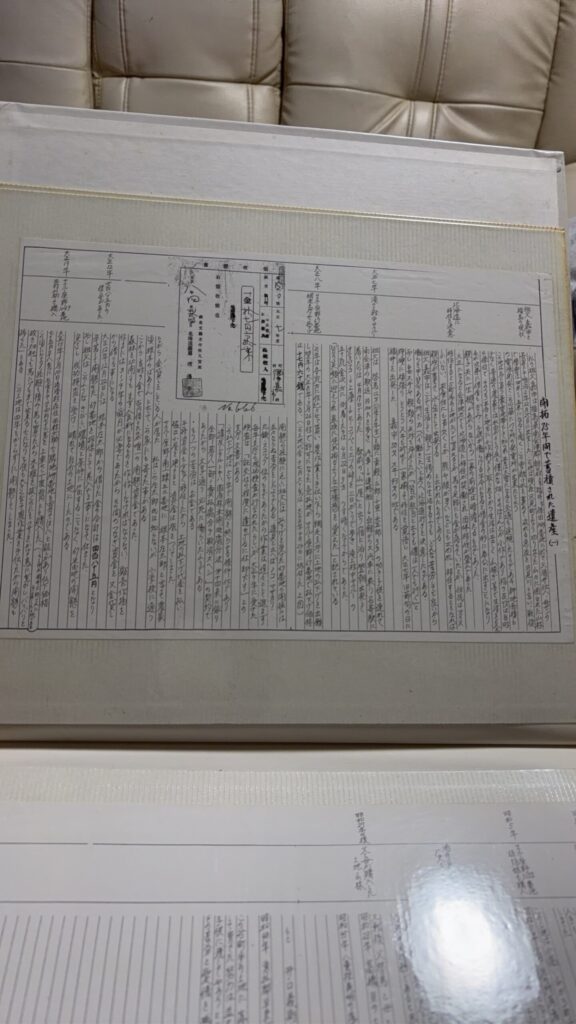
中には、興味深い内容も書かれており、どの様な事を移民前に福島の地で噂になっていたかなどです。
資料の一部抜粋。
「大正になると会津地方でも北海道に移住が推奨され、団体移住が盛んであった。移住すると5町歩の土地がタダで貰えるとか、馬の足跡にも金が落ちてたとか、「住民はアイヌしかいない」衣食住にも事欠くとか、熊やオオカミが多いなどとも言われ、移住するともなれば親族が集まって水盃をして出発する と言われたものである。」
当時の会津地方の噂話では、道北には住民はアイヌ民族しかいない。という認識だったみたいです。
また、福島から意を決して入植を決めた酒井きいちさんに関する記録では、実際に入植した土地の番地まで確認でき、本人の写真も複数残されていました。
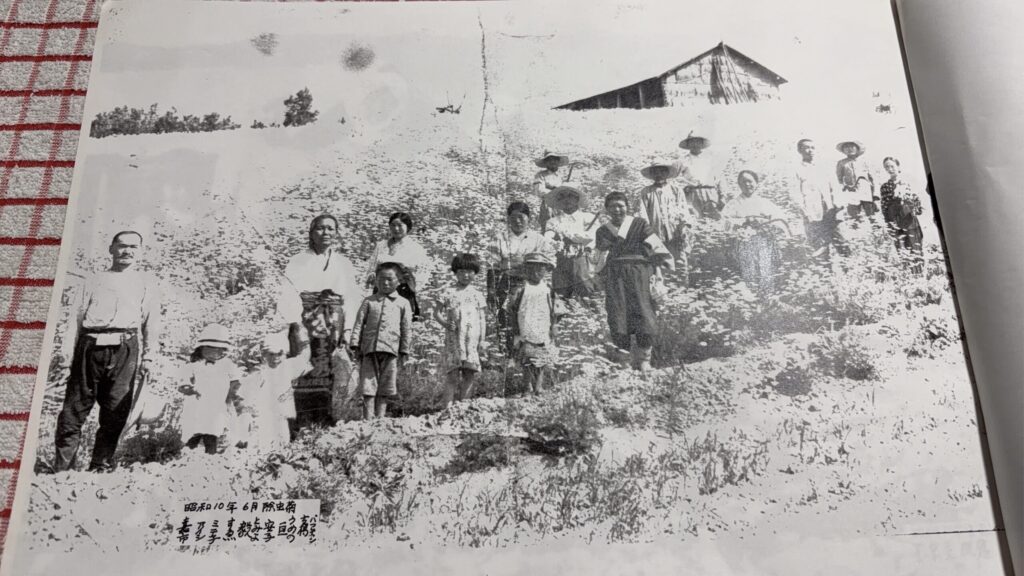
開拓の歴史は、これまでにも文章や地域の記録を通じて伝えられてきました。しかし、誰が、どこに入植し、どのような人生を歩んだのか。本人の写真や土地に関する具体的な記録、家族に伝えられてきた説明が結びつくことで、その歴史はより具体的な姿を見せてくれます。
酒井啓馬さんについても、大正時代から晩年、そして葬儀に至るまでの記録が残されていました。一人の人物の生涯を、これほど長い時間軸でたどることができる資料群は、地域の人物史を考えるうえでも極めて興味深いものです。
写真が伝える滝上の暮らし
資料には、酒井家の家族写真だけでなく、時代の異なる写真や、地域の風景、暮らしを伝える写真も含まれていました。写真には、文章だけでは伝わりにくい当時の様子が残されています。
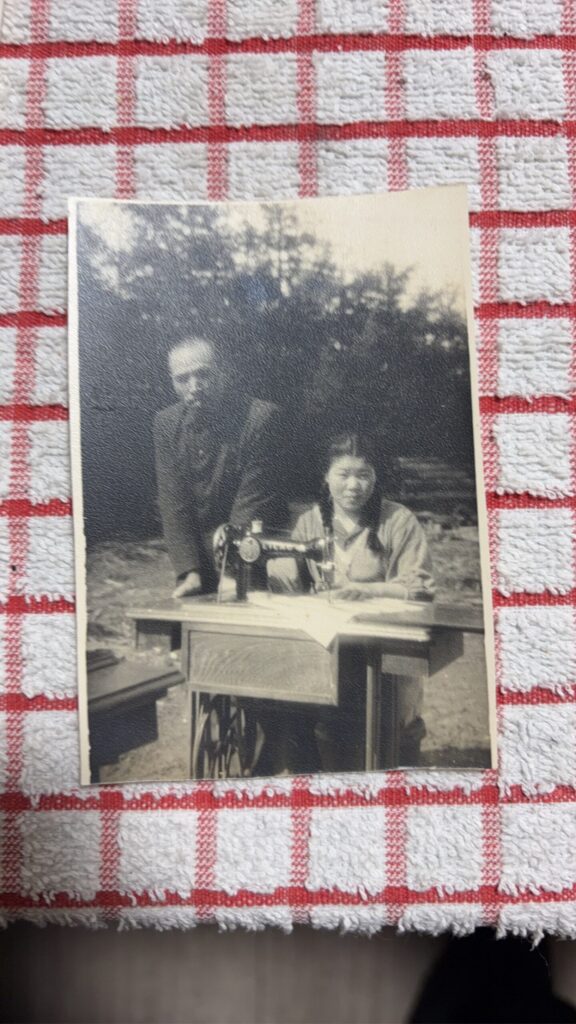
また、裁縫・裁断科の修了を示す証書や、先生と一緒に実習をしている写真も残されていました。これは単なる古い写真ではなく、滝上で学び、技術を身につけていった一人の女性の生活史を伝える記録です。
さらに、水引に関する台帳や写真も残されていました。一冊の台帳、一枚の写真、そして実際にその時代を知る方の記憶。それぞれを結びつけることで、地域で営まれてきた仕事や暮らしが見えてきます。
戦後の滝上を伝える希少な写真――食糧配給公団 北海道滝上支所
今回の資料群の中でも、個人的に希少性が高いと感じ、別の視点からも強く注目しているものがあります。
「食糧配給公団 北海道 滝上支所」と記された写真です。写真には酒井毅さん本人も写っています。
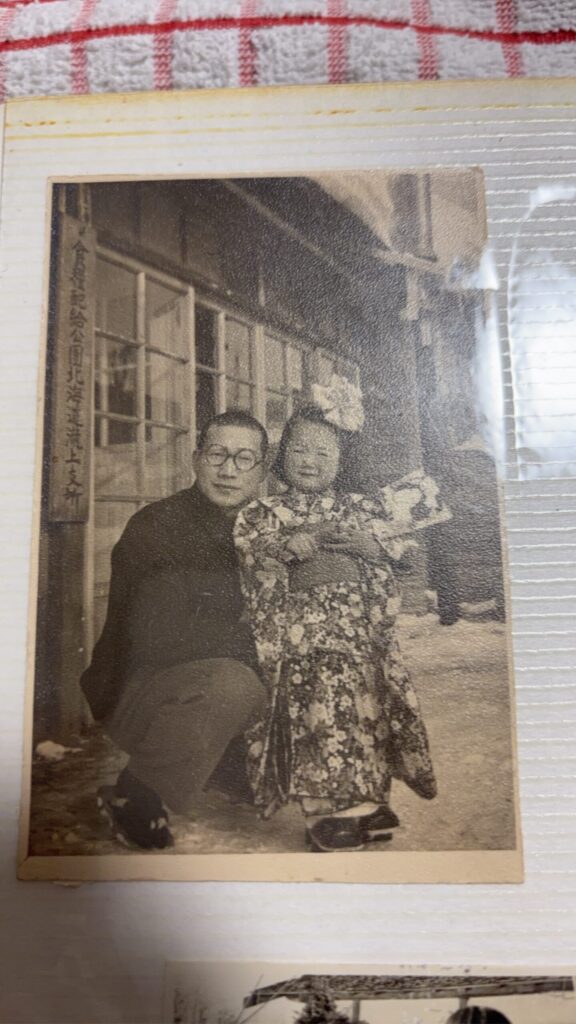
※毅さんと女の子が写っている左上に、食料配給公団北海道滝上支所とハッキリ書かれている。
食糧配給公団は、戦後の日本で食糧配給を担った組織で、1947年に設立され、1951年に廃止されました。北海道内にも配給組織のネットワークが広がっており、北海道立文書館には食糧配給公団北海道支局の塩谷出張所に関する文書などが所蔵されています。また、昭和館には『食糧配給公団史料 地方支局之部』が残されています。
一方、今回の写真に記された滝上支所について、地元の資料館でも関連する記録を探していただきましたが、担当者からは「見たことがない」との話がありました。
もちろん、これだけで同様の写真や記録がほかに存在しないとは言えません。しかし、食糧配給公団という限られた期間に活動した組織の地方拠点を、具体的な名称とともに伝える極めて希少な写真であることは確かです。さらに、そこに酒井毅さんが写っていることから、酒井家の人物史と戦後の滝上の社会を結びつける手掛かりにもなります。
昭和26年発行『皇室御寫眞集』
もう一つ、今回の資料群に含まれていた出版物があります。昭和26年(1951年)発行の『皇室御寫眞集』です。
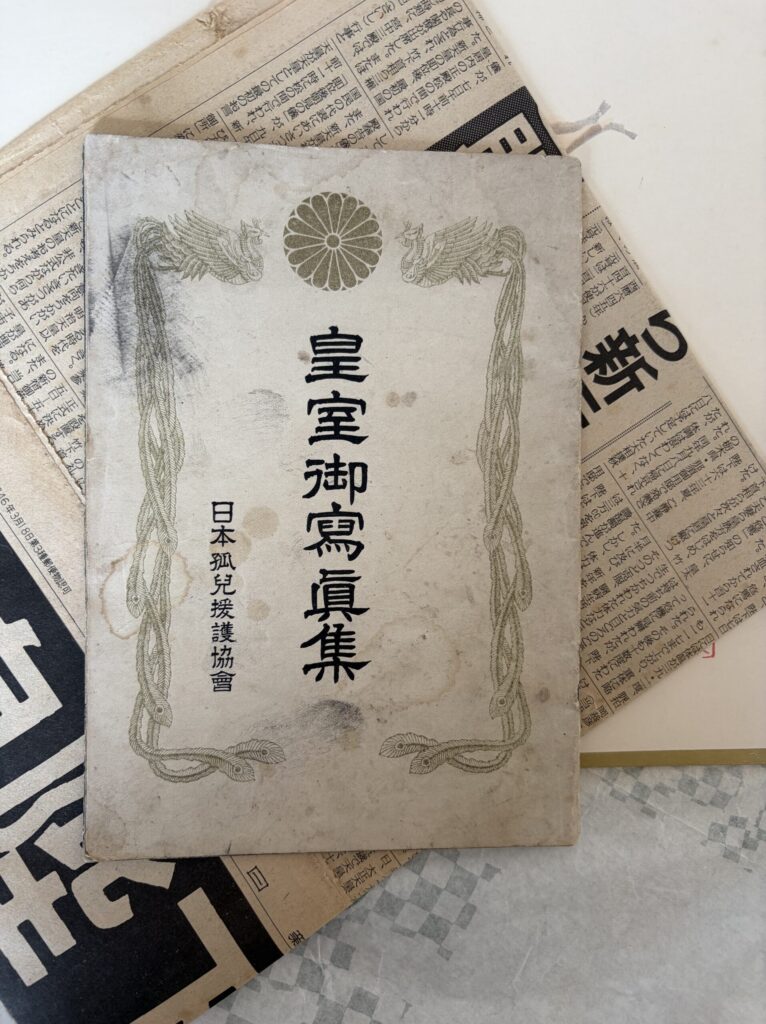
日本孤児援護協会が発行した全16頁の冊子で、奥付には編集・発行人として美平晴道氏の名前が記されています。冊子には皇室に関する写真が収められており、戦後間もない時期に発行された出版物として、当時の社会や出版文化を知る手掛かりになります。また、児童福祉に関係する写真も含まれています。
発行された昭和26年は、食糧配給公団が廃止された年でもあります。今回の資料群には、戦後の食糧配給に関係する写真と、同じ時代に発行された皇室写真集が残されていました。それぞれ性格の異なる資料ですが、一つの家に残されていたものが、戦後の日本社会を別々の角度から伝えていることは興味深い点です。
一つの家に残されていた、複数の時代の記録
今回、酒井家に残されていた資料を整理していく中で、改めて感じたことがあります。歴史は、必ずしも博物館や公文書館だけに残されているわけではありません。一軒の家の中に、開拓した人の記録があり、その土地の情報があり、家族の写真があり、仕事や学びの記録がありました。それらが長い年月を経て、一つの家に受け継がれていたのです。
今回の資料群は、次のような複数の歴史につながっています。
箇条書き 酒井家の人々の生涯と家族の歴史
箇条書き サクルー原野の開拓と入植の記録
箇条書き 滝上町の暮らしや地域の生活史
箇条書き 裁縫や水引など、地域の仕事と文化
箇条書き 戦後の食糧配給制度と地域行政
箇条書き 昭和26年発行の皇室写真集に見る戦後の出版物
これらを一つの資料群として捉えることで、酒井家の歴史だけではなく、滝上町の地域史を多角的に考えることができます。
処分されるはずだった記録を、次の世代へ
これらの記録が、今後の調査や地域の歴史を伝える活動につながっていくことを願っています。また、酒井啓馬さんの生涯やサクル原野の開拓を伝える展示についても、ふるさと研究会会長竹内様から構想が提案されておりました。
一人の開拓者の人生を、残された記録からたどることができれば、それは地域の歴史を次の世代へ伝える貴重な機会になるでしょう。
遺品整理の現場では、古い写真や文書が、ほかの家財と一緒に処分されようとしていることがあります。しかし、家族にとって身近な記録であっても、地域にとっては失われれば二度と取り戻せない歴史資料である場合があります。今回の酒井家の資料も、そうした現場から始まりました。
一つの家に残されていた記録を確認し、調べ、関係する方々と共有し、最終的に地域へ引き継ぐ。私たちが行っているのは、遺品整理という仕事の中で、処分されるはずだった記録を次の世代につなぐことです。
ふるさと研究会会長をはじめ、地域の方々にこれほど喜んで迎えられた350点を超える資料が、これから滝上町の歴史を知るための新たな手掛かりとなり、次の世代に活用されていくことを願っています。
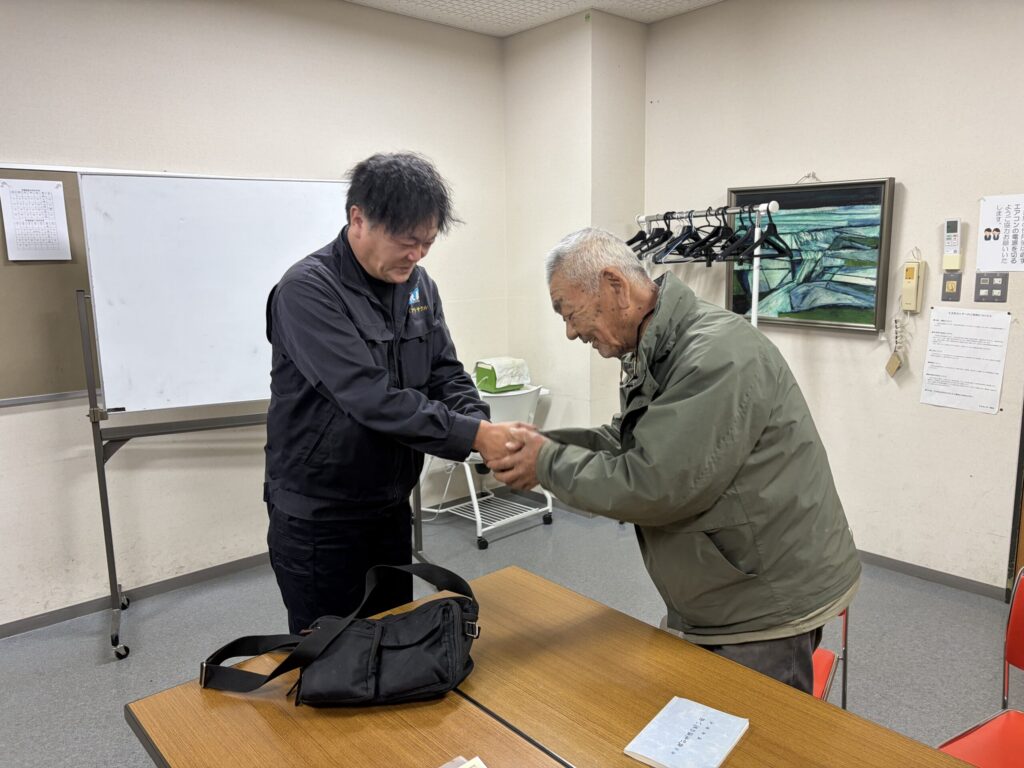
追伸。文化センターによる前、酒井家が開拓したサクルー原野をみてきました。
郷土史料として寄贈する前に、先人、故人の軌跡を見たかったのと、きっとこの場所へ帰りたかったのではないか、そう思い手を合わせ御供養致しました。
これから地域の郷土史として、永遠に保全されます。
それは、社会にもう一度歴史として表に出る事を意味します。
僕はそれを、究極の供養だと思っています。
歴史の空白を埋める遺品整理士より。
Over 350 Items of “Sakuru Wilderness Pioneer Materials” Donated to the Takinoue Town Board of Education
November 17, 2026.
In accordance with the client’s wishes, LRA LLC donated over 350 historical items preserved by the Sakai family to the Takinoue Town Board of Education as the “Sakuru Wilderness Pioneer Materials.”
*Pictured with Mr. Arai from the Takinoue Board of Education.
These are the Sakai family materials previously introduced on our website. When I first came across them at an estate cleanout site, they were simply a collection of old photographs and documents slated for disposal.
Records of land development, the family’s history, photographs depicting local life, and the living memories of those who experienced that era firsthand.
As I examined each item one by one, it became clear that these materials went beyond the history of the Sakai family alone—they contained vital clues for understanding the regional history of Takinoue Town in Hokkaido. What began as the preservation of just over 100 records at the time of discovery grew as we sorted through them, uncovering far more than initially realized. Ultimately, we were able to pass on a collection of over 350 historical items to the town.
*Mr. Arai examining the materials.
On the Day of the Donation: Even the Local History Society President Exclaimed, “My Heart Is Pounding!”
On the day of the donation, not only did staff from the Takinoue Town Board of Education attend, but Mr. Masami Takeuchi, President of the Takinoue Town Furusato (Local History) Research Society, also rushed over to examine the materials together with us.
*President Takeuchi earnestly examining the materials.
Looking at the vast array of materials spread out before them, both the Board of Education staff and the Local History Research Society President unanimously praised the collection, remarking, “These are extraordinarily rare.” In particular, the Society President expressed uncontainable joy and excitement at the rarity and high historical value of the items, saying, “My heart is pounding.”
I was also deeply moved to see how records found inside a single home could touch the hearts of those who have dedicated themselves to researching and preserving the region’s history.
Pioneer Records Preserved by the Sakai Family
At the core of this collection are records related to the pioneering of the Sakuru Wilderness.
These include Keima Sakai’s autobiography, Memories of My Life (Waga Shogai no Omoide), which is also housed in both the Hokkaido Prefectural Library and the local library, alongside his younger brother Saburo Sakai’s Chronicle of Saburo Sakai (Sakai Saburo Ichidaiki) and supplementary records written by Takeshi Sakai. These supplementary materials are truly remarkable. They provide exhaustive written explanations detailing the exact events depicted in numerous photographs. While standalone photographs often leave us guessing when and where they were taken, these notes meticulously record the specific type of work being performed, the approximate year, and even the exact lot numbers of the locations. Having these vivid, firsthand testimonies paired directly with the photographs brings history to life in three dimensions.
Some of the writings contain fascinating details, such as the rumors circulating in Fukushima prior to emigration.
Here is an excerpt from the documents:
“By the Taisho era, migration to Hokkaido was being encouraged even in the Aizu region, and group settlements became popular. Rumors swirled that migrants would receive five chobu (approx. 12 acres) of land for free, that gold was lying even in the footprints of horses, that ‘the only residents are the Ainu,’ that basic food, clothing, and shelter were scarce, and that the area was overrun with bears and wolves. When someone decided to migrate, relatives would gather to share a farewell cup of water (mizusakazuki)—a ritual reserved for those parting forever—before sending them off.”
Judging from the rumors circulating in the Aizu region at the time, the prevailing perception was that Northern Hokkaido was inhabited solely by the Ainu people.
Furthermore, records concerning Kiichi Sakai, who resolved to leave Fukushima and settle there, even allow us to confirm the exact lot numbers of the land he pioneered, alongside multiple surviving photographs of him.
The history of this pioneering era has been passed down through written accounts and regional records. Yet, when personal photographs, concrete land records, and explanations handed down through the family come together, they reveal a much clearer picture of who settled where, and what kind of lives they led.
For Keima Sakai as well, records remain spanning from the Taisho era through his later years, all the way to his funeral. A collection that allows us to trace a single individual’s life across such a long timeline is exceptionally compelling from the perspective of regional biographical history.
Life in Takinoue Told Through Photographs
The collection includes not only Sakai family portraits, but also photographs from various eras capturing local landscapes and everyday life. These images preserve glimpses of the past that are difficult to convey through text alone.
Additionally, a certificate of completion for a sewing and tailoring course, along with photographs of practical training sessions with an instructor, were found among the items. Rather than being mere old snapshots, these records tell the life story of a woman who studied and acquired practical skills in Takinoue.
Furthermore, ledgers and photographs related to mizuhiki (traditional Japanese decorative cord-tying) were also found among the items. By connecting a single ledger, a single photograph, and the memories of someone who actually lived through that era, the work and daily life sustained within the community come vividly into focus.
A Rare Photograph Capturing Postwar Takinoue — The Food Distribution Public Corporation, Hokkaido Takinoue Branch
Among all the items in this collection, there is one that I personally find exceptionally rare and have been examining closely from a different perspective.
It is a photograph inscribed with the words: “Food Distribution Public Corporation, Hokkaido Takinoue Branch” (Shokuryo Haikyu Kodan Hokkaido Takinoue Shisho). Takeshi Sakai himself also appears in the photo.
*In the upper left corner of the photo showing Takeshi and a young girl, the words “Food Distribution Public Corporation, Hokkaido Takinoue Branch” are clearly written.
The Food Distribution Public Corporation was an organization responsible for food rationing in postwar Japan, established in 1947 and abolished in 1951. Its distribution network extended throughout Hokkaido; the Archives of Hokkaido holds documents concerning the Shioya Sub-branch of the Hokkaido Regional Bureau, while the Showa-kan (National Showa Memorial Museum) preserves Historical Materials of the Food Distribution Public Corporation: Regional Bureaus Section.
Regarding the Takinoue Branch inscribed on this photograph, staff at the local museum searched for related records at our request, but told us they had “never seen anything like it.”
Of course, this alone does not prove that no other similar photographs or records exist elsewhere. However, it is undeniably an extraordinarily rare photograph that documents a local office of an organization active for only a brief period, complete with its specific official name. Furthermore, Takeshi Sakai’s presence in the image serves as a vital clue linking the personal history of the Sakai family to postwar Takinoue society.
The 1951 (Showa 26) Publication Imperial Family Photograph Album
There is one more publication included in this collection: the Imperial Family Photograph Album (Koshitsu Goshashinshu), published in 1951 (Showa 26).
Published by the Japan Orphan Relief Association (Nihon Koji Engo Kyokai), this 16-page booklet lists Harumichi Mihira as its editor and publisher in the colophon. Featuring photographs of the Imperial Family, it serves as a valuable clue to understanding the society and publishing culture of early postwar Japan. It also includes photographs related to child welfare.
Notably, 1951 (Showa 26) was the very year the Food Distribution Public Corporation was abolished. Within this single collection, we found both a photograph tied to postwar food rationing and an Imperial Family photograph album published in that exact same era. Although these two items differ completely in nature, it is fascinating that materials preserved within a single household illuminate postwar Japanese society from two entirely different angles.
Records of Multiple Eras Preserved Within a Single Home
While sorting through the materials preserved by the Sakai family, I was reminded once again of an important truth: history is not preserved exclusively in museums or public archives. Inside a single family home, there were records of the pioneers who settled the land, details of the property itself, family photographs, and documentation of work and education. All of these had been passed down within one household over the course of many years.
This collection connects to multiple facets of history, including:
箇条書き The lives and family history of the Sakai family
箇条書き Records of pioneering and settlement in the Sakuru Wilderness
箇条書き Everyday life and local social history in Takinoue Town
箇条書き Local occupations and culture, such as sewing and mizuhiki
箇条書き The postwar food rationing system and local administration
箇条書き Postwar publications, as seen in the 1951 Imperial Family photograph album
By viewing these items as a unified collection, we can examine not only the history of the Sakai family, but also the regional history of Takinoue Town from multiple perspectives.
Passing On Records Slated for Disposal to the Next Generation
I sincerely hope these records will lead to future research and initiatives that pass down the history of the region. In fact, local residents have already shared ideas for an exhibition chronicling Keima Sakai’s life and the pioneering of the Sakuru Wilderness. Being able to trace a single pioneer’s life through surviving records will offer a precious opportunity to share local history with the next generation.
At estate cleanout sites, old photographs and documents are often on the verge of being discarded alongside other household goods. Yet, even records that seem ordinary to a family can be irreplaceable historical materials for a community—once lost, they can never be recovered. The Sakai family collection began at just such a site.
Examining records left inside a home, researching them, sharing them with relevant parties, and ultimately passing them on to the community—through our work in estate cleanout, we strive to bridge records slated for disposal to the next generation.
So warmly welcomed by the President of the Local History Research Society and members of the community, I hope these more than 350 items will serve as new clues for understanding the history of Takinoue Town and be actively utilized by generations to come.
P.S. Before stopping by the cultural center, I visited the Sakuru Wilderness that the Sakai family had pioneered.
Before donating these items as local historical materials, I wanted to see the footsteps of the pioneers and those who have passed away. Believing they must have wished to return to this place, I put my hands together and offered a prayer for their souls.
From now on, they will be preserved forever as part of the region’s local history.
This means stepping back into society once more as living history.
I believe that is the ultimate form of memorializing the departed.
From an estate cleanout specialist bridging the blanks in history.