

皆さん今晩は。
前回のお話の続き。伊達政宗の叔父、角田石川氏の御支族の家系図を発見した生前整理も終わりを迎えようとしています。
そんな中、お仏壇を運ぼうとした時に手が滑り、床に落とした際にポロッと現れた古い巾着袋。
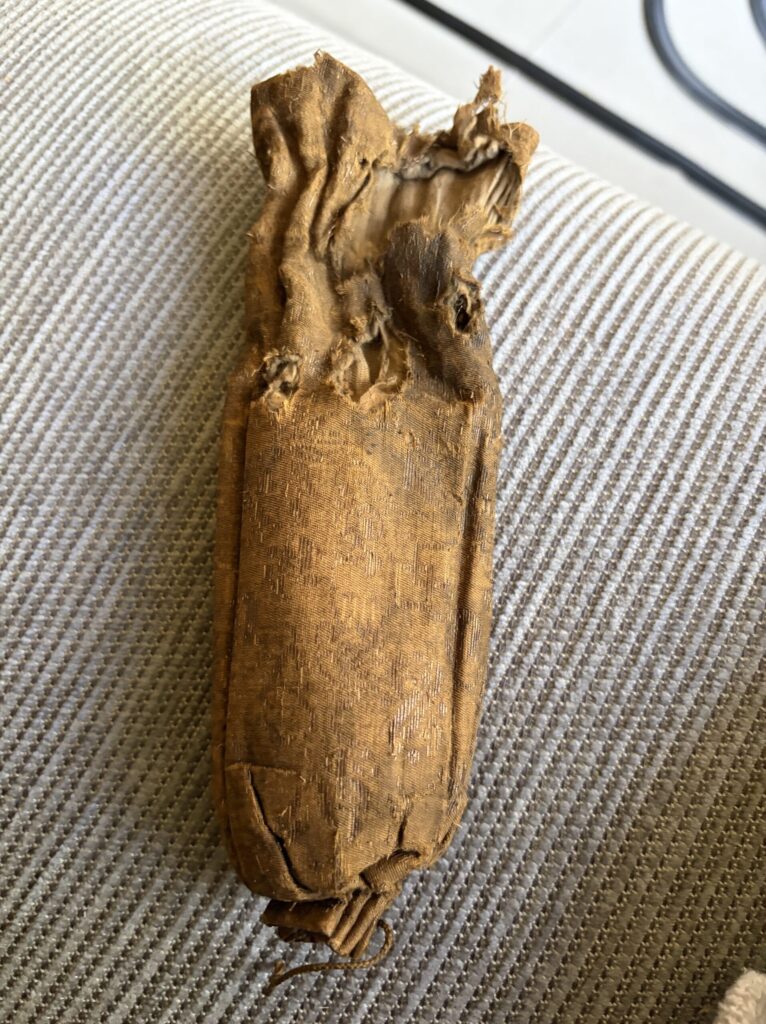
「ワシはここにいる。一緒に処分するな!」
そんな声が聞こえてきそうな登場の仕方だった。
くまなく整理して物がない状態を2度も確認していたので驚いた。
見つからない筈です。隠し扉に入っていたのですから。
時代を感じさせる古びて色褪せたその巾着袋の様なものは、手触りだと、何か紙が束である様な感覚。。
「お金かもしれない」
そう思い、開いて中を確認する事に。
すると中から出てきたものは、、
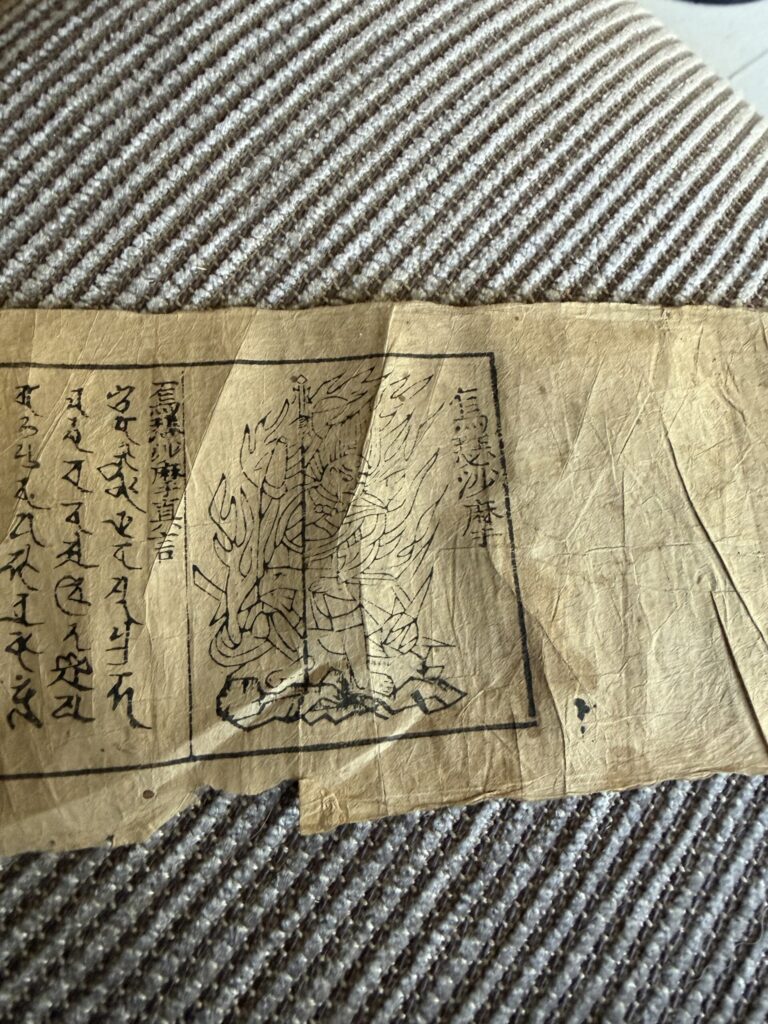
明王様!?
そう、これはかなり長い、新品の包帯が色褪せた状態の様な和紙。完全に伸ばせば下手したら10mは有りそうな、「九重守」(ここのえまもり)だったのです。
「お金か?」とよぎった数分前の自分を戒め、「すみませんでした!」と手を合わせて合掌致しました。。
時代からして、江戸時代後期から、明治くらいでしょうか。
その時頭をよぎったのは、家系図に書かれていた石川家の御支族の歩みだった。
千石船を購入し、栄華を極めた後、沈没し苦境に立たされていた石川家の御支族の歴史。
旅の安全・難破防止
江戸時代は「お伊勢参り」など長旅をする人が増えましたが、道中の行き倒れや、船の難破による水難事故が多発していました。九重守を懐に入れておくことで、旅先での災難をすべて身代わりになって防いでくれるとされました。
確証はないが、水難にあって絶対絶命の時、この九重守を開いて一族の不運や厄災を払おうとしたのではないか、その様に考えました。
九重守の効果が最強とされた最大の理由は、「普段は開けずに封印しているから」です。
江戸時代の人々は、普段から神仏のパワーを使い果たしてしまうのではなく、箱の中に強力なエネルギーをギュッと閉じ込めておき、「一生に一度の本当のピンチ」にだけその封印を解いて、一気に神仏の力を爆発させるという使い方をしていました。だからこそ、他のどんなお守りよりも信頼されていたのです。
そして開いた後も、一族を守ってくれたこのお守りを、大事に次世代に繋いできた、そう思えてならないのです。
ご依頼者様に報告し、いつもお世話になっている住職様にお話をしたところ、私と同じ意見でご依頼者様に繋げた方が良いとの事で、和紙が急激に傷まない様すぐ元に戻してご説明致しました。
きっと御先祖様や明王様達が隠し扉から出てきたのは、「ここにおるから、子孫に繋げろ。処分するな」
と、言われた気がしたので、それも伝えました。
この九重守と、伊達政宗の叔父の系譜。誇りある血筋を絶やす事なく、後世の子孫に繋げる事は何よりもの記憶の保全であると思います。
そんな昼休みに、近くのスーパーの駐車場でトラックを停めていると、サイドミラーに一羽のカラスが留まりました。皆様もわかる通り、あまりない事ですよね。
カラスは私をじっと見つめ、私もじっと見つめました。暫く続いた後に、もしかしたら神様の使いで「お前のやった事は正しい。よくやった!」と言われている様な気がして、少し誇らしく思いました。
真意はどうであれ、今回の生前整理も意義のある忘れられない現場となりそうです。
ラストスパート、頑張りたいと思います。
English Translation: “Wait! Do Not Discard Me. I Am Right Here.”
“Wait. Do not discard me. I am right here.”
Hello everyone.
Following up on my previous report, the estate clearance for the branch family related to the Kakuda-Ishikawa clan (the lineage of the legendary warlord Date Masamune’s uncle) is nearing its final stage.
In the midst of this, a small miracle occurred. As I was moving the family’s Buddhist altar (Butsudan), it slipped and touched the floor. From a hidden compartment that I hadn’t noticed despite checking twice before, an old, faded pouch fell out.
It was as if a voice called out: “I am here! Do not throw me away with the waste!”
The pouch felt thick, as if filled with a bundle of old papers. For a moment, I thought it might be hidden money, but when I opened it, I was humbled by what I found.
It was a “Kokonoe-mamoru” (The Ninefold Amulet)—an extraordinarily long scroll made of ancient Washi paper. If fully unfurled, it would likely reach nearly 10 meters in length. It dates back to the late Edo or early Meiji period.
Immediately, the family history I had been researching flashed through my mind. This branch of the Ishikawa clan had once reached the heights of prosperity through maritime trade, only to fall into a long period of hardship after their ships sank.
The Amulet of Ultimate Crisis:
In the Edo period, a Kokonoe-mamoru was the ultimate shield. It was specifically carried for safety at sea and to ward off shipwrecks. The true power of this amulet lay in the fact that it was kept “sealed.” People believed in preserving the divine energy within the scroll, saving it for the “once-in-a-lifetime ultimate crisis.” Only in that desperate moment would the seal be broken to unleash the full protection of the deities.
I realized that the ancestors must have gripped this scroll during their absolute lowest point, praying for the survival of their lineage. After protecting the family, this amulet was carefully hidden away to be passed down to future generations.
I consulted with the local priest (Master Hayashi), who is a close ally in my work. He shared my conviction: “This must be reconnected to the descendant.” I carefully returned the scroll to the client, explaining that the ancestors and the protective deities had revealed themselves from the hidden door to say, “We are here. Do not let our memory be discarded.”
Later that day, during my lunch break, a crow landed on the side mirror of my truck and stared at me for a long time. It felt like a divine messenger confirming my path: “What you have done is right. Well done.”
This estate clearance has become another unforgettable scene in my mission. Through the LRA Model, I continue to stand at the “water’s edge” to ensure that the pride and the soul of these lineages are never lost to the void.
I am a guardian of traces. I am a weaver of memories.