
遺品整理。それは単なる片付けではなく、失われゆく「水際の記憶」を救い出す最後のチャンスです。
今回、一人の男性が遺した古い書類や写真の中に、私たちは日本の激動期を見つけました。
北海道での青年団活動、軍隊への召集、そして最前線ビルマ(ミャンマー)での衛生兵としての献身。終戦後のタイでの抑留、そして英語で記された帰還への決死の記録。そう、第二次世界大戦の記憶です。
もし、これらがゴミとして処分されていたら、一人の日本人が誠実に生き抜いた証(あかし)は、永遠にこの世から消えていました。
ビルマ戦線(白骨街道などで知られる悲劇の地)において、銃を持つのではなく「死にゆく者を看取る」任務にあった衛生兵の記録は、
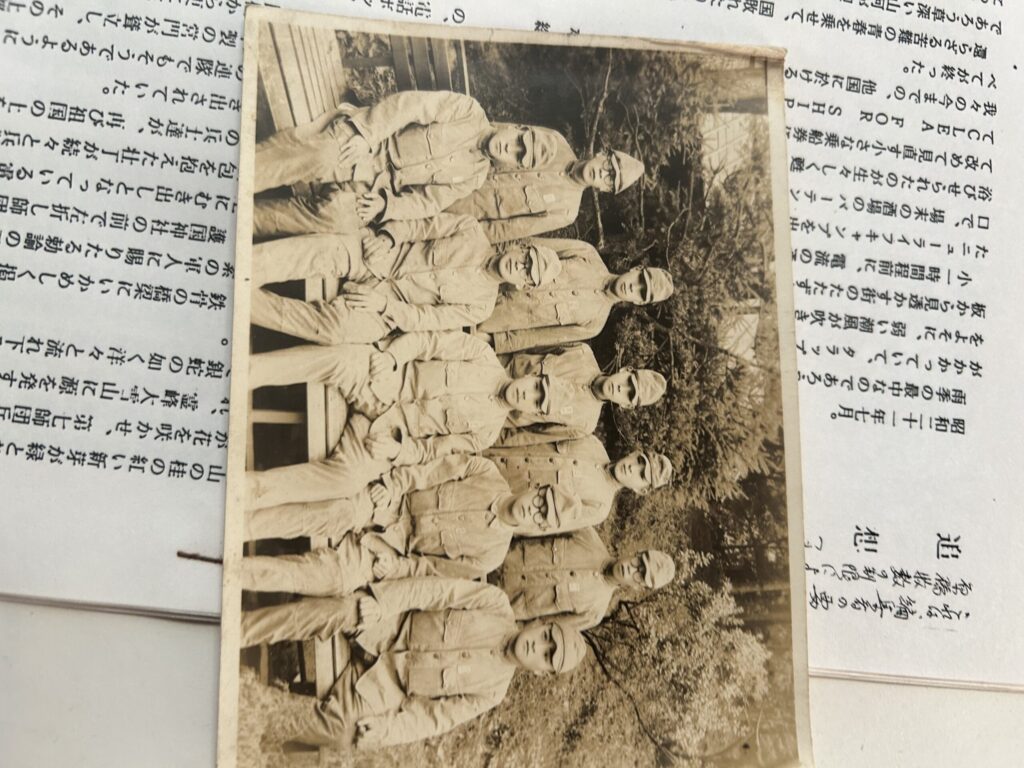
見つかったのは、北海道出身のある男性の記録です。
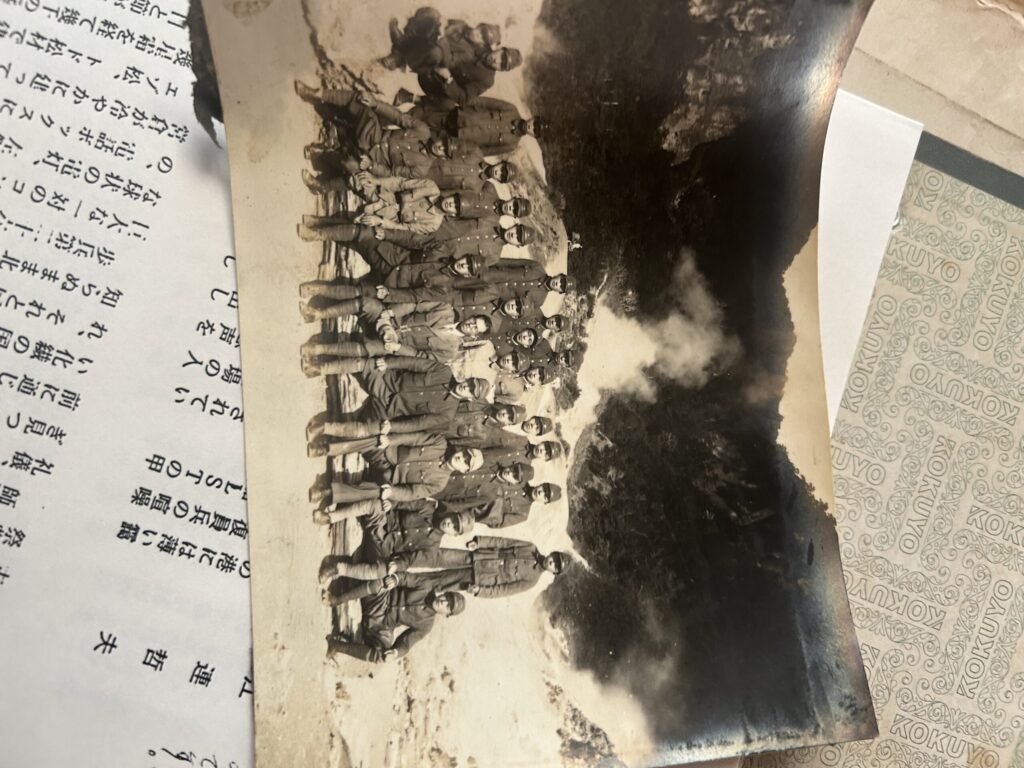
- 戦前、地域のリーダーとして活躍した感謝状。
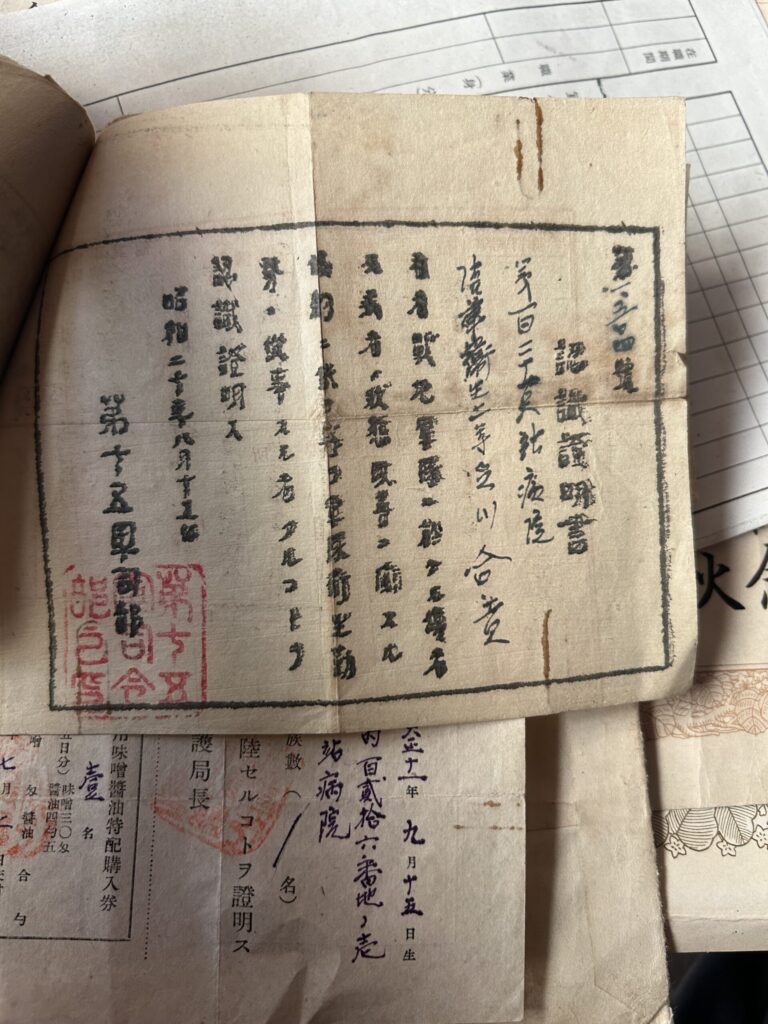
- 戦時下、北部軍で「優秀な衛生兵」として表彰された賞詞。
- 地獄のビルマ戦線、そしてタイでの野戦病院勤務。
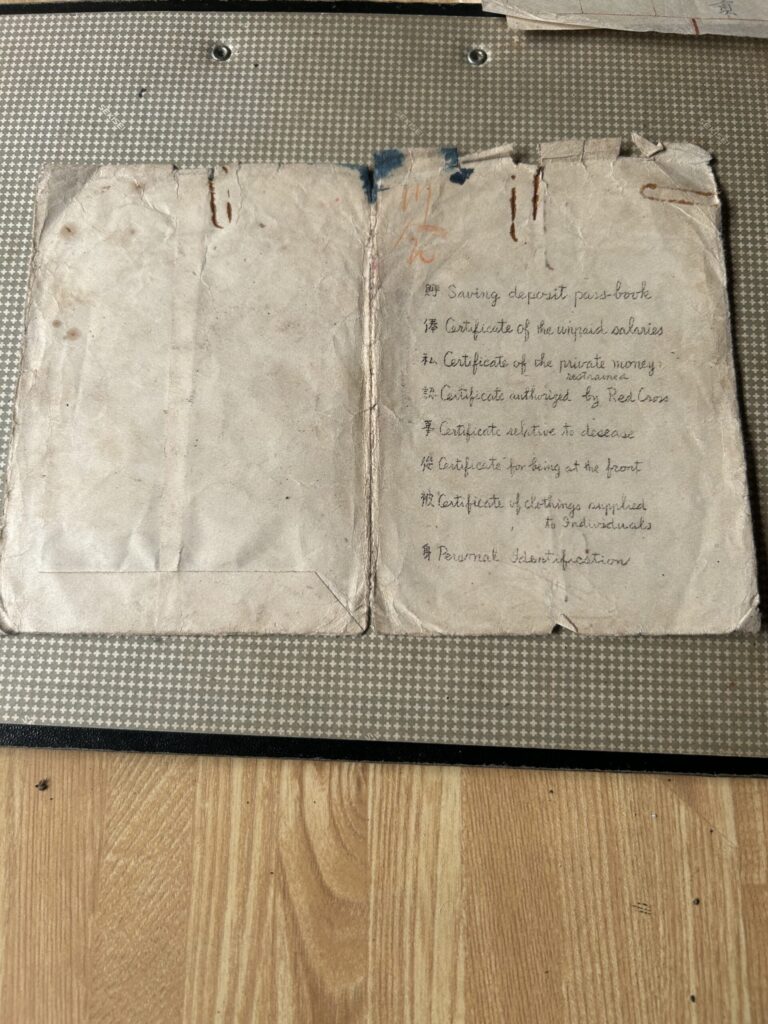
- 終戦後、連合国軍の管理下で自らの権利を証明するために綴った「英語の書類リスト」。
- そして、無事に日本へ帰り、戦後復興を支えた履歴書。
一兵卒の人生が、これほどまでに「点」ではなく「線」として、一つの欠落もなく残っていること。英雄の軌跡が、戦争による破壊、命の尊さ、そして地獄の生還をし、復興の時を生きた。
その英雄の足跡が、私に語りかけてくる。
戦争の惨さを軌跡を持って私に語りかけてくるのです。「もうこんな事は二度と繰り返してはならない」と。
故人がそう、語りかけてきました。
私は依頼者の許可を得て、東京都内の博物館に(実名は伏せております)お話しを伺いましたが、
とてもお話に興味を持って下さりました。
現在も整理中なので、随時追加資料が出たらまとめて送るつもりです。その数、現状で20数点。
英雄の軌跡を、どうぞ宜しくお願い致します。
水際の記憶を救う遺品整理人より。
Tracking a Hero of the Burma Campaign: Saving “Memories at the Water’s Edge” Through Estate Disposal
The Last Chance to Rescue a Legacy
Estate disposal is far more than just clearing out a home; it is the final opportunity to rescue “memories at the water’s edge” before they drift into oblivion.
Among the old documents and photographs left by the deceased, we have unearthed a vivid chronicle of Japan’s most turbulent era. It is the life story of a man from Hokkaido: his leadership in the local youth association, his conscription, his selfless devotion as a medic on the front lines in Burma (present-day Myanmar), his internment in Thailand after the war, and his desperate, resolute records written in English to secure his repatriation.
These are the memories of World War II.
Had these items been discarded as waste, the evidence of a Japanese man who lived through those years with such integrity would have been lost to this world forever.
In the Burma campaign—a site of immense tragedy often remembered for the “White Bone Highway”—the records of a medic, whose mission was not to bear arms but to “tend to the dying,” are of incomparable historical value.
What we discovered were the footprints of a man from Hokkaido:
• Pre-war: Certificates of appreciation for his leadership within the community.
• Wartime: Commendations for his service as an “Outstanding Medic” in the Northern Army.
• The Front: Records of service in the hell of the Burma campaign and at field hospitals in Thailand.
• Post-war: A “List of Documents in English” prepared under Allied command to assert his rights and identity.
• The Return: A resume detailing his contribution to post-war reconstruction after his safe return to Japan.
It is remarkable that a single soldier’s life remains not as disconnected fragments, but as a continuous “line” without a single missing link. This hero’s trajectory speaks of the destruction of war, the sanctity of life, the survival of hell, and the era of rebuilding.
His footsteps speak to me.
Through this legacy, the deceased speaks of the cruelty of war, whispering a solemn plea: “Never let this be repeated.”
With the permission of the family, I have consulted with Mr. Oyama, a curator at the Peace Memorial Museum (commissioned by the Ministry of Internal Affairs and Communications), which preserves the memories of repatriates.
Mr. Oyama expressed profound interest in these findings, and we are now moving forward with the donation of this hero’s trajectory. As the organization process is ongoing, I intend to send additional materials as they are uncovered. Currently, the collection stands at over 20 items.
I entrust these footsteps of a hero to the future.
From an Estate Organizer Saving Memories at the Water’s Edge.